
A nine-year-old in Gatineau, Quebec, picks up a tin whistle and starts making music. By seventeen, the same kid is producing records for local bands in his mother's basement in Ancaster, Ontario. Daniel Roland Lanois turns 75 on September 19, 2026, and the distance between those two moments contains one of the strangest careers in modern recording.
From whistle to pedal steel
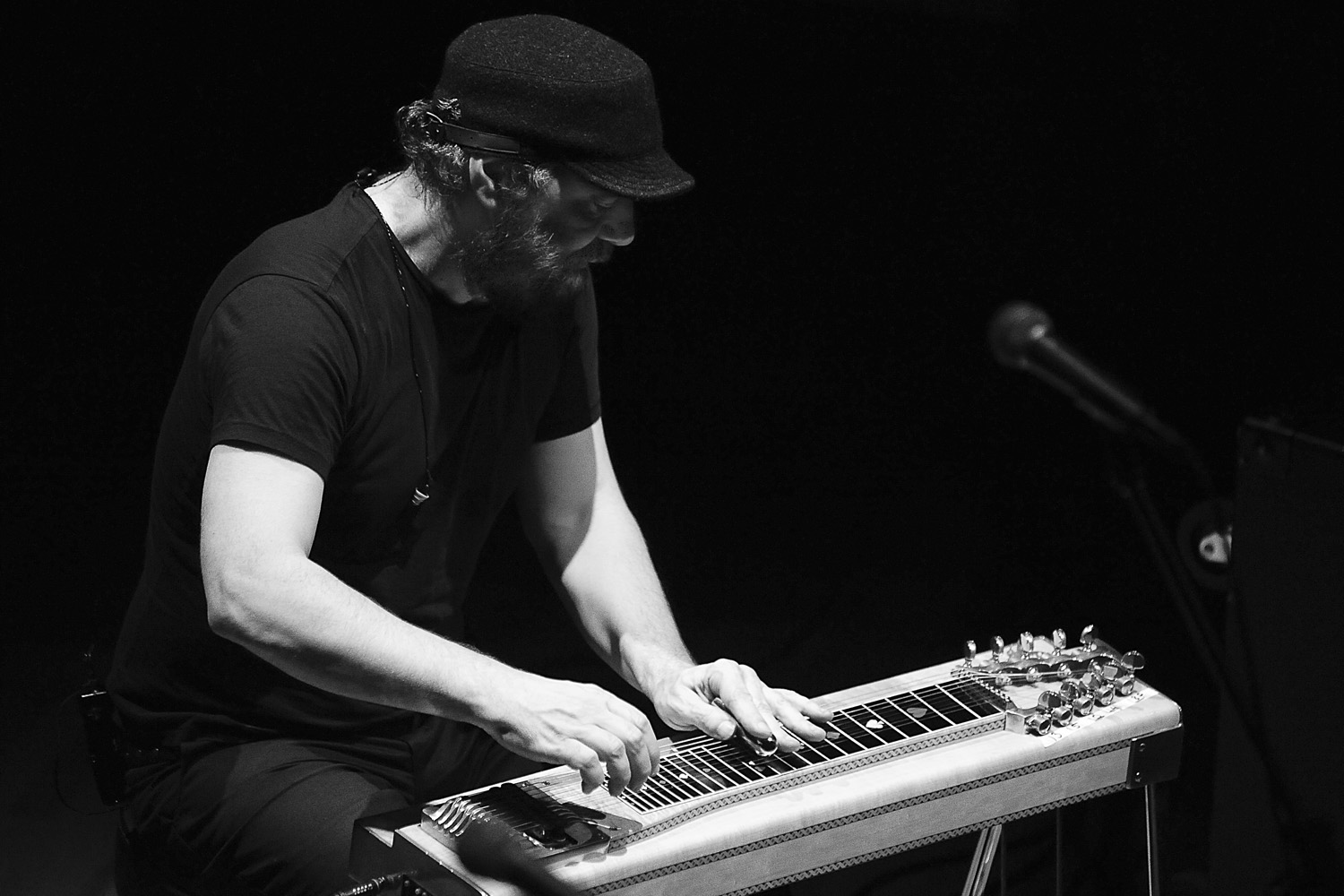
The whistle quickly gave way to a pedal steel guitar, an instrument that would define Lanois's sonic signature long before anyone outside Hamilton knew his name. He and his brother Bob recorded acts like Simply Saucer in that basement studio, capturing raw Canadian underground energy on whatever equipment they could assemble.
That basement operation eventually became Grant Avenue Studio, built inside an old house. The location mattered less than the philosophy taking shape there: treat the room as an instrument, let atmosphere do the work. Lanois was still a teenager when he understood that production wasn't about polish—it was about environment.
Lanois was still a teenager when he understood that production wasn't about polish—it was about environment.
A client list of rock legends
The client list that followed reads like a fever dream of late-century rock. Bob Dylan, Neil Young, Peter Gabriel, Robbie Robertson, Emmylou Harris, Willie Nelson. Lanois didn't just produce them; he pushed their sound into stranger, wetter, more reverberant territory. Harris found new space in her voice. Dylan found a swampy minimalism on Oh Mercy.
Then came Brian Eno and the birth of ambient music. The two producers collaborated on a series of records that treated texture as composition, where the pedal steel could sound like a foghorn or a prayer. That partnership spawned something even bigger: U2's The Joshua Tree in 1987, followed by Achtung Baby in 1991.
Grammy wins and genre blends
The Joshua Tree was 39 years ago. Achtung Baby is 35 years old now. Three albums that Lanois produced or co-produced won the Grammy for Album of the Year, and four more received nominations. The Parachute Club, the Neville Brothers, Chris Whitley, Ron Sexsmith, Nash the Slash—his fingerprints are all over them.
Lanois also kept making his own records, solo albums that blended blues rock, art rock, and acoustic music into something harder to categorize than his production work. His label, All Saints Records, became a home for that restless output. He wrote and performed the score for Sling Blade in 1996, a film now three decades old.
A detour into video games
Then came an unexpected detour. Lanois provided several vocal parts for the video game Red Dead Redemption 2, lending his voice to a character in a sprawling digital western. It was a strange fit—the ambient pioneer inside a blockbuster game—but it made perfect sense for someone who never treated genre boundaries as real.
The question that hangs over Lanois at 75 isn't what he's accomplished, but what he still hasn't finished. A man who started with a tin whistle and never stopped chasing atmosphere, who moved from a basement in Ancaster to the biggest studios on earth, remains harder to pin down than any single album or artist he's touched.
So here's the thing about Daniel Lanois: you can hear him everywhere and nowhere at once. He's the echo behind Dylan's voice, the shimmer under U2's guitars, the pedal steel crying through ambient fog. But ask what his own music sounds like, and the answer shifts depending on which decade you're asking from. At 75, he's still not done answering.