
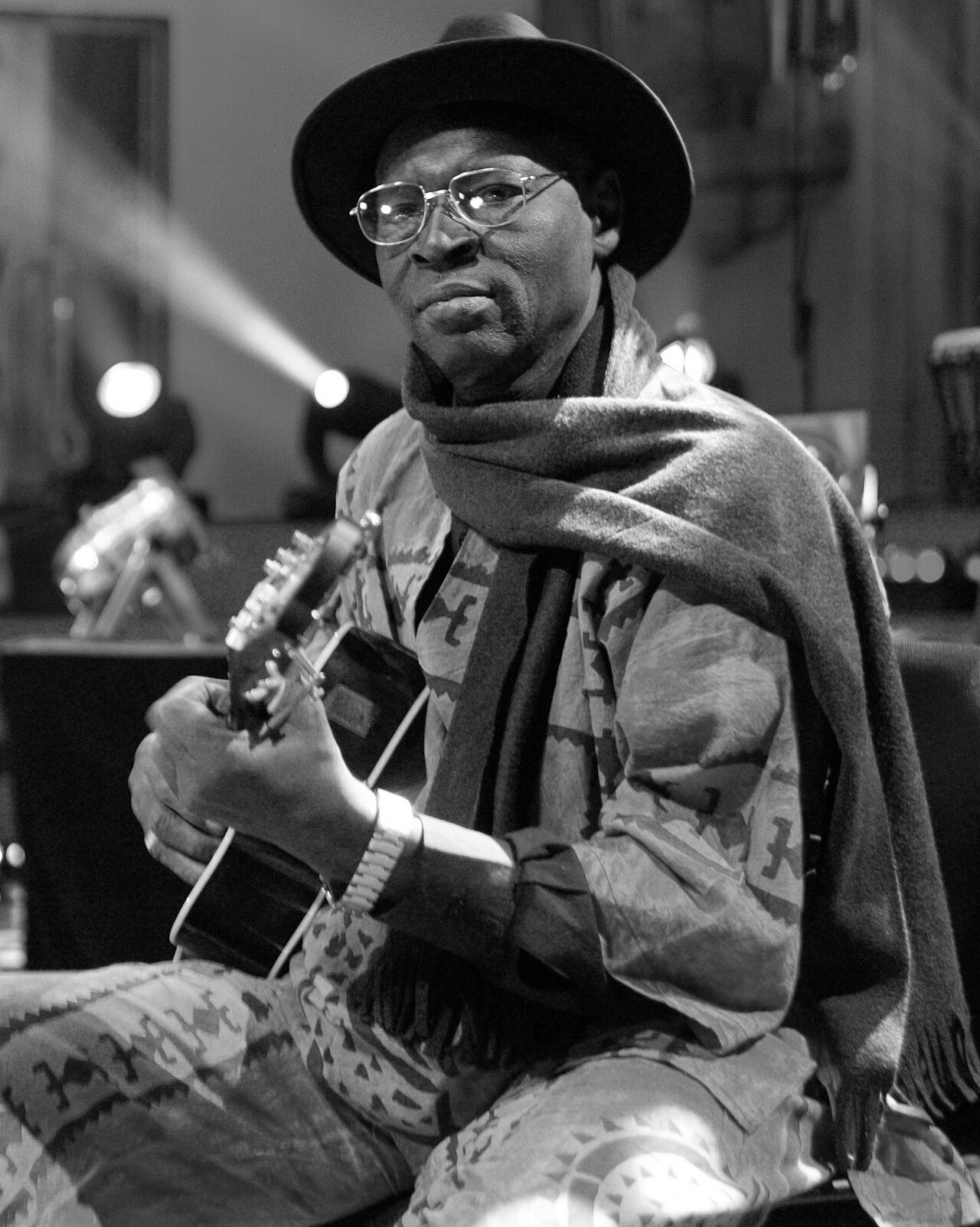
A boy in a village on the Niger River made a forbidden instrument from a tin can. He was Ali Farka Touré, later known as Mali's great singer and multi-instrumentalist, but in the village of Kanau on the Niger River in the Timbuktu region, he was just the tenth son of his mother — and the only one who survived infancy.
Breaking the griot caste rule
The nickname Farka, meaning 'donkey' and given by his parents for stubbornness, suited a child who refused to accept the rules of Malian society. Music was the work of the griot caste, a lower class, and Touré came from a 'noble' caste where playing an instrument was simply not allowed. So he broke the rule in secret, making a monochord from a tin can.
That small act of defiance became a way of life. In 1956, a performance by Guinea's national ballet, with its guitar playing, made him want to master the guitar himself. When Mali's national talent contests in the 1960s took him to Bulgaria as a representative, he bought his first guitar there and heard African-American music of that decade for the first time. He became an instant fan, especially of John Lee Hooker.
Radio Mali and the first recordings
Yet Touré always rejected the label 'African bluesman' that others gave him. His music combined traditional Malian styles with African-American blues, and he is considered a pioneer of African desert blues. Rolling Stone placed him at number 76 on its list of the 100 greatest guitarists of all time. Spin put him at 37. But for Touré, the blues was a kind of soap, and his own music was older than that. His path to that sound ran through Radio Mali in Bamako, where he worked as a sound engineer in the 1970s. That job gave him access to the only recording studio in the country at the time. He sent tapes to French labels and released a series of albums under his own name in the late 1970s and early 1980s.
The turning point for the wider world came in 1986, when British DJ Andy Kershaw found a 'red album' by Touré in Paris, buying it by chance because of its striking cover. When Kershaw played a few tracks on BBC Radio One, listeners reacted with unusual enthusiasm. That response reached Anne Hunt of World Circuit Records, who travelled to Mali and tracked Touré down by leaving a message at Radio Mali.
World Circuit, Ry Cooder and Niafunké
World Circuit brought him to Britain in the autumn of 1987, and his career in the West took off. His most notable collaboration came in 1994 with Talking Timbuktu, made with Ry Cooder. The album sold well on Western markets and won a Grammy for Best World Music Album. It also carried a sound that crossed borders without losing its roots. After Talking Timbuktu, there were no releases in America and Europe until 1999, when he returned with Niafunké, a more traditional album named after his hometown. It was recorded in an abandoned school because the producer believed a foreign studio would weaken the music. In 2004 Touré became mayor of Niafunké, spending his own money on road levelling, drainage canals and fuel for the town's generator.
Many years after that tin-can monochord, Touré's story still circles back to the idea that music was not a career he chose but a duty he could not escape. He was born in a place far from the studios and charts that later knew his name. What he built in secret as a boy became the sound that connected the Niger River to the Mississippi.
What he built in secret as a boy became the sound that connected the Niger River to the Mississippi.
He died in 2006, but his son Vieux Farka Touré and bands like Ali Farka Touré Band have carried the music forward. The boy who was told he could not play became the man whose guitar made the desert speak to the world.