
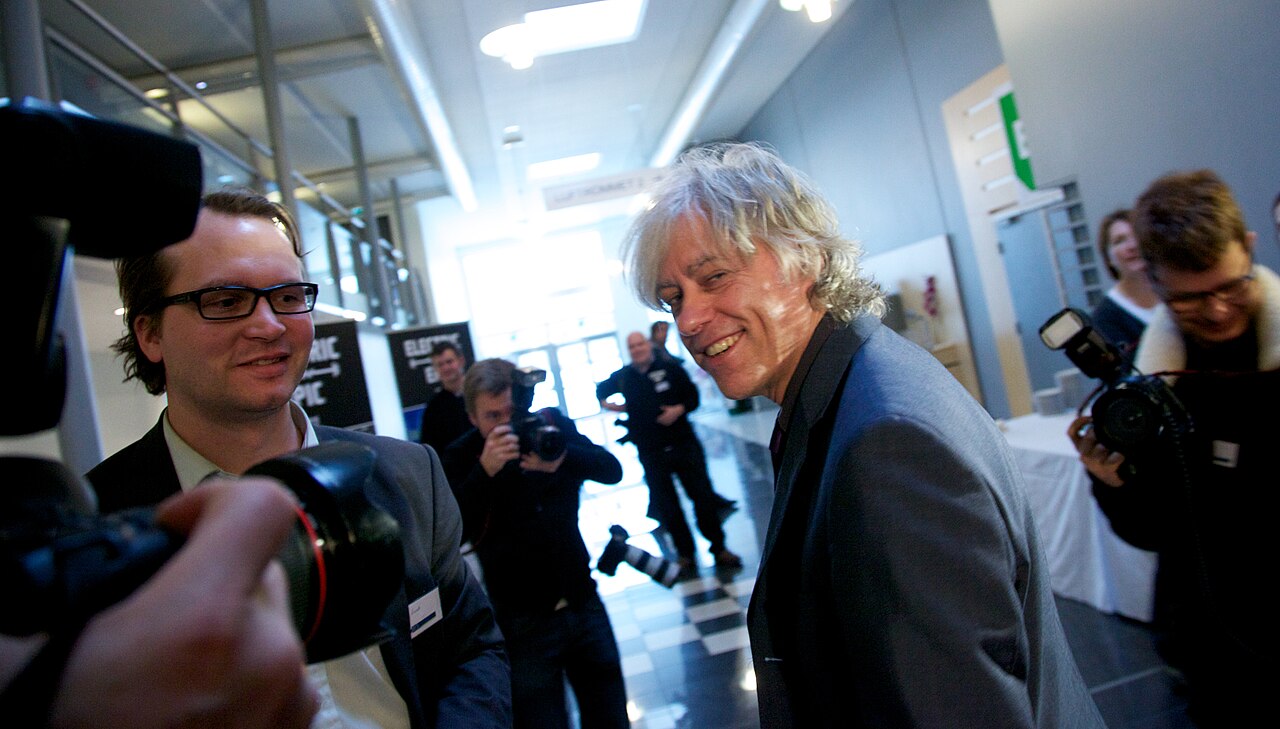
The song opens with a piano line so gentle it could be a lullaby, then a voice cuts through: 'The silicon chip inside her head gets switched to overload.' Bob Geldof, the Irish singer of The Boomtown Rats, wrote those words after reading about a sixteen-year-old girl in San Diego who opened fire on a school playground. When asked why she did it, Brenda Ann Spencer shrugged and said she didn't like Mondays. Geldof turned that chilling answer into 'I Don't Like Mondays,' the single that made his band famous far beyond the punk clubs of Dublin and London. He was born on October 5, 1951.
Geldof turned that chilling answer into 'I Don't Like Mondays,' the single that made his band famous far beyond the punk clubs of Dublin and London.
From Dún Laoghaire to the stage
Geldof was born on 5 October 1951 in Dún Laoghaire, a coastal town near Dublin. His full name was Robert Frederick Zenon Geldof, and the middle name caused him grief at Blackrock College, the Dublin school where classmates mocked him for it and for his poor rugby skills. He drifted through odd jobs after leaving Ireland: a spell as a butcher, time on a road crew, shifts at a cannery in Wisbech, England. None of it looked like a path to the stage.
By 1975 Geldof was back in Ireland, fronting a new band called The Boomtown Rats. They threw themselves into the punk movement that was shaking up British music, all fast guitars and sneering energy. The Rats stood out because Geldof could actually sing and because he never stopped talking. His mouth became as important as the music. On Irish television's The Late Late Show he tore into politicians and the Catholic Church with such fury that The Boomtown Rats found themselves effectively banned from performing in Ireland.
The Boomtown Rats go global
The breakthrough came in 1978 with 'Rat Trap,' a song that became the first new wave single to reach number one in the UK. A year later, 'I Don't Like Mondays' went global. The song took a real American tragedy and made it into something radio could play, which was exactly the kind of provocation Geldof loved. The Boomtown Rats were suddenly one of the most talked-about bands in the world, and their singer was the reason why.
Geldof left The Boomtown Rats in 1986 to go solo and publish his autobiography, but the bigger turn was already behind him. In 1984 he had watched a news report about famine in Ethiopia and decided he could not just sit there. He called Midge Ure, the frontman of Ultravox, and together they wrote 'Do They Know It's Christmas?' They gathered dozens of British pop stars into a studio on 25 November and recorded it as Band Aid. The single became the fastest-selling record in UK history, shifting more than three million copies.
That success led to Live Aid, the concert Geldof and Ure staged on 13 July 1985 at Wembley Stadium in London and JFK Stadium in Philadelphia. The BBC broadcast it for sixteen hours. At one point Geldof grabbed the microphone and yelled at viewers to stop wasting time and just donate, a moment that pushed giving to three hundred pounds per second. By the end, Live Aid had raised over one hundred and fifty million pounds for famine relief.
The scale of that achievement changed how the world saw pop music. Geldof was knighted at thirty-four, an honour that sat oddly on a man who had spent years attacking the establishment. He kept pushing the same idea: music could force governments to act. In 2005 he organised Live 8, a series of free concerts across eleven cities, and at the London show Pink Floyd played together in their classic lineup for the first time since 1981.
Geldof never stopped being difficult, opinionated, and impossible to ignore. The Boomtown Rats reunited in 2013 for the Isle of Wight festival, and in 2025 they toured to mark fifty years since the band began. But the moment that defines him remains that song about a school shooting, written by a man who understood that pop music could take the ugliest news story and turn it into something millions of people would sing.