
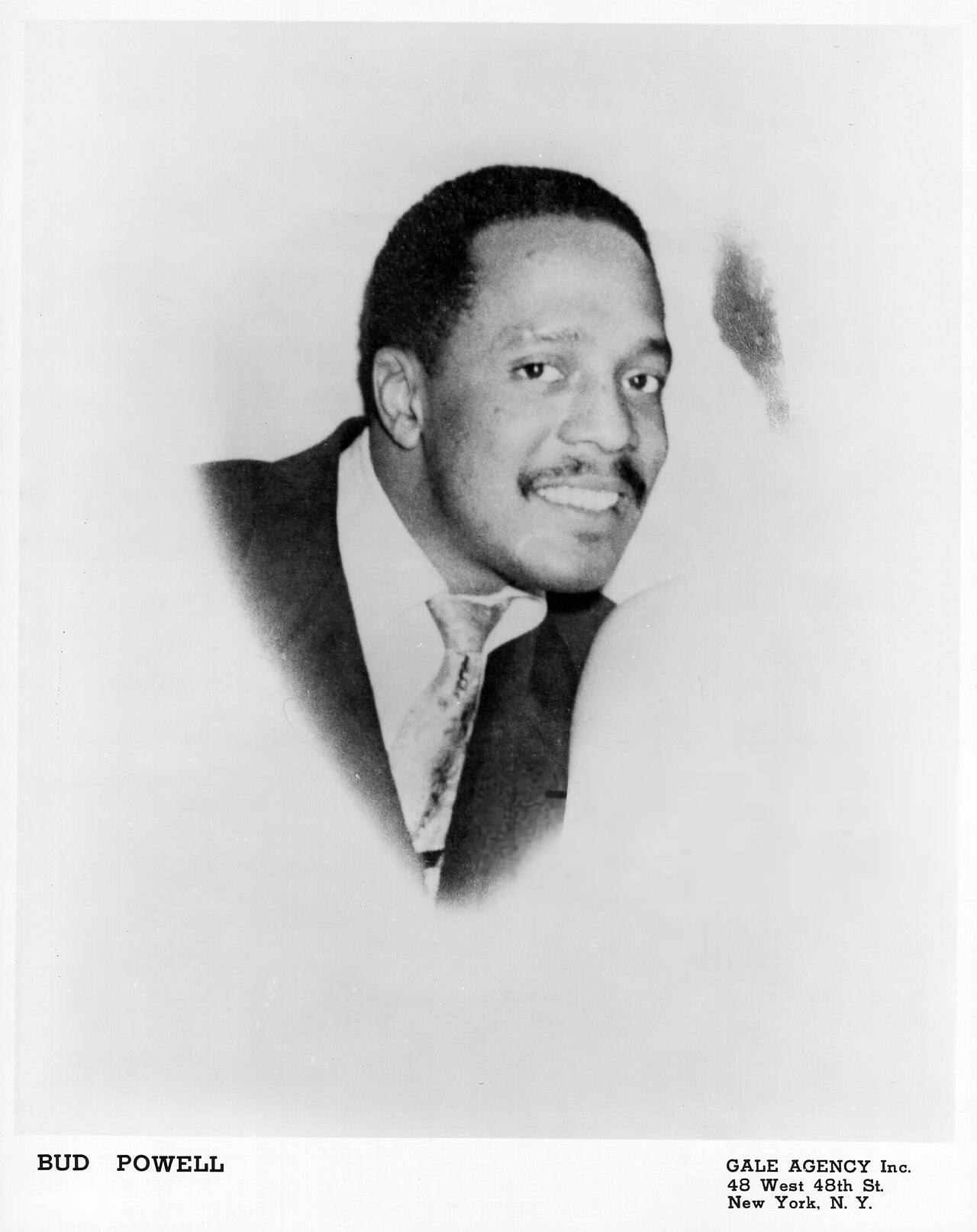
Fats Waller's left hand was a whole rhythm section, but a kid at a rent party in Harlem had other ideas. Earl Rudolph Powell, born September 29, 1924, stood up and played like Waller without the stride foundation — right hand sprinting, left hand just tapping accents. The crowd heard something that didn't quite exist yet. That kid would become Bud Powell, and the approach he was faking that night would reshape jazz piano entirely.
Harlem roots and early lessons
Powell arrived in the middle of the Harlem Renaissance with music already in the walls. His father played piano, his older brother William worked trumpet and violin, and his younger brother Richie would become a bebop pianist in his own right. At five, Powell started classical lessons with a West Indian teacher named Rawlins, hired by his father. By ten, swing had grabbed him, and the first jazz piece he mastered was James P. Johnson's Carolina Shout.
The radio did something the sheet music couldn't. Powell heard Art Tatum and tried to reconstruct that technique by ear — the runs, the harmonic density, the sheer velocity. By fifteen he was playing in his brother William's band and working clubs around New York. He had developed an attacking right-hand approach, deliberately different from the left-hand-driven stride and ragtime tradition. The left hand was no longer the engine.
Big band years and early troubles
In 1943 he joined Cootie Williams's big band, and the trumpet player's orchestra gave him a platform. Critics and musicians noticed the fluency, the advanced harmonic choices, the way he could cut through a full horn section. A year later, alcohol had already become a problem. In 1944, during a Philadelphia engagement, Powell got into trouble connected to drinking. The instability that would define chunks of his career had begun.
Then came 1945 and the beating. Police in Philadelphia assaulted Powell severely, and the damage sent him in and out of institutions for several years. The timing was brutal — just as bebop was codifying its language, one of its key pianists was being pulled off the bandstand. But he kept recording and performing through the late 1940s and early 1950s with Charlie Parker, Sonny Stitt, and Max Roach.
Defining modern jazz piano
Those sessions did more than document Powell's playing. They established what modern jazz piano technique could be — complex phrasing, rhythmic displacement, and a right hand that carried melodic information at horn-player speed. The trio records with Roach on drums and the quintet dates with Parker and Stitt became the reference points. Powell wasn't just accompanying soloists. He was competing with them.
Powell wasn't just accompanying soloists. He was competing with them.
By the middle to late 1950s, Powell was out from under guardianship and his health had partly recovered. He moved to Europe, where the pace and the pressures shifted. The move didn't erase the earlier damage, but it gave him a different context. His approach had already spread through the scene. Walter Davis Jr., Toshiko Akiyoshi, and Barry Harris all absorbed elements of what Powell had built at the keyboard.
The lineage runs straight through those names. Davis brought Powell's phrasing into hard bop. Akiyoshi carried it into big band arranging and her own trio work. Harris became one of the most influential piano teachers in jazz, and Powell's vocabulary was embedded in what he passed on. A style that started with a teenager imitating Fats Waller and chasing Art Tatum by radio ended up as the foundation for generations of players.
Powell died on July 31, 1966, sixty years before this anniversary. He was forty-one. The rent party kid who had once faked a Waller performance became the standard against which bebop piano was measured. In 2026, a hundred and two years after his birth, the right-hand riot he started still echoes every time a pianist treats the keyboard like a horn section.