
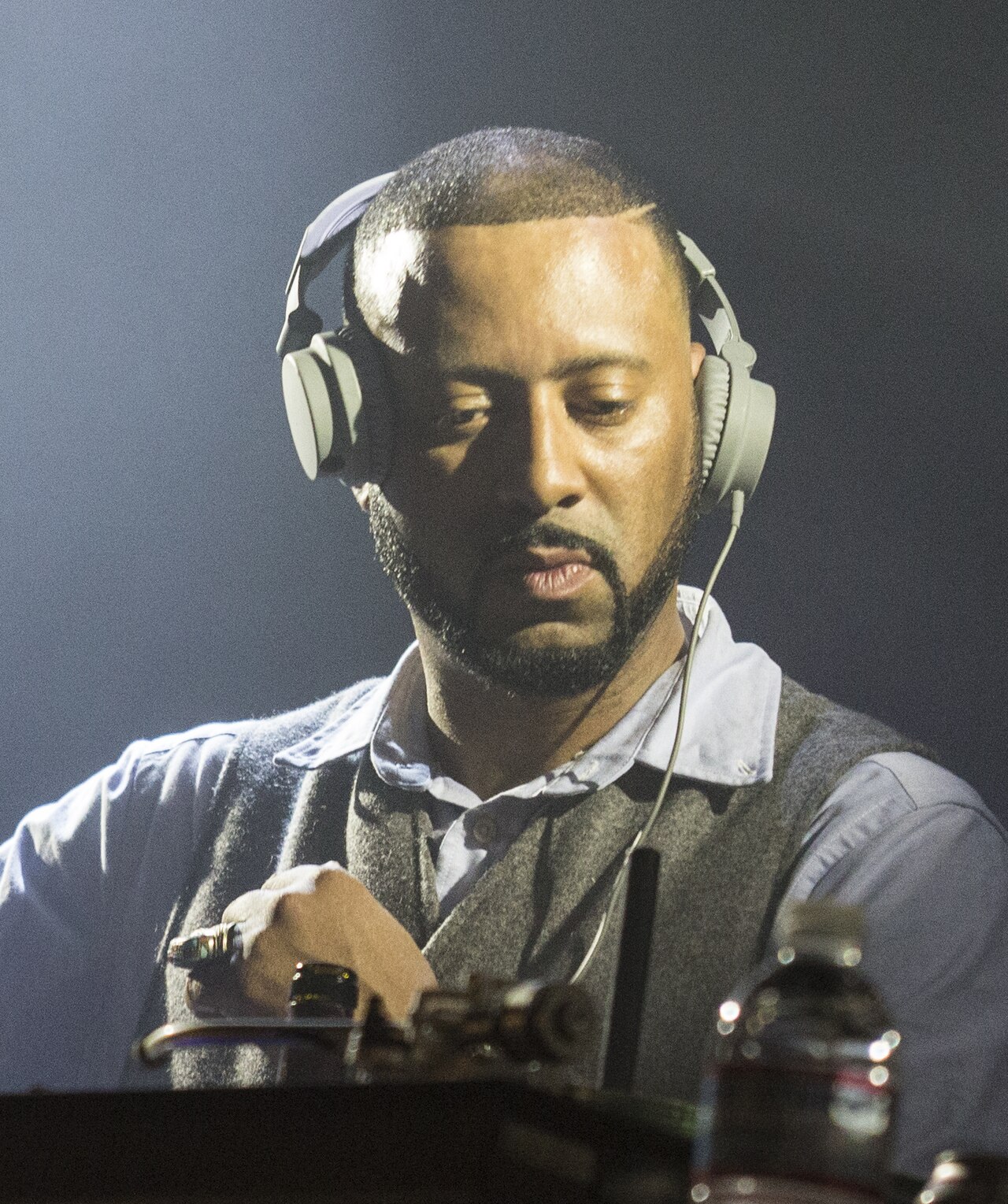
A 12-inch EP called 'Psyche Move' by the group Lootpack landed on the desk of Peanut Butter Wolf, founder of Stones Throw Records. The record had come out on Crate Diggas Palace, a studio in Oxnard, California, run by a young producer who had been making beats since childhood. That producer was Otis Lee Jackson Jr., better known as Madlib, the rapper, musician and record producer born in Oxnard on 24 October 1973.
Family roots and first samples
The name Madlib is an acronym for 'Mind Altering Demented Lessons in Beats', and it fits. He made his first sample at 11, lifting a record from his father's collection. His father, Otis Jackson Sr., was a musician, and music ran through the family: his mother Dora Sinesca Jackson was a musician too, his younger brother Michael 'Oh No' Jackson became a producer and rapper, and his uncle Jon Faddis played jazz trumpet. Madlib started producing professionally in the early 1990s, and his first commercial credit came producing for the rap group Tha Alkaholiks.
The studio Crate Diggas Palace became a hub for friends and collaborators including Oh No, Kankick, Dudley Perkins and M.E.D. When his father released that Lootpack EP on the Crate Diggas Palace label, it was the sound of a small scene in Oxnard making its own way. Peanut Butter Wolf heard it and signed Lootpack to Stones Throw. In 1999, Lootpack's debut album 'Soundpieces: Da Antidote' arrived.
Quasimoto and the alter egos
Madlib's first solo album came under the name Quasimoto, with 'The Unseen'. He recorded his vocals at a slow speed and then sped them up, creating the character's high, strange voice. Spin magazine named 'The Unseen' one of the 20 best albums of the year. He was no longer just a producer for others; he was building a whole cast of alter egos. He then stepped away from hip-hop with 'Angles Without Edges' by Yesterdays New Quintet, a jazz quintet made up of fictional musicians, all played by Madlib himself.
Blue Note Records noticed. The legendary jazz label invited Madlib to remake tracks from its archive, released as 'Shades of Blue'. The album mixed remixes with new interpretations of Blue Note originals. Around the same time, he began work with the rapper MF Doom on a project called Madvillain. Their album 'Madvillainy' was interrupted when a version leaked while Madlib was in Brazil. He rebuilt the record using a Boss SP-303 sampler and a turntable, and when it finally came out, it topped many critics' end-of-year lists. The same period also produced a collaboration with J Dilla as Jaylib, whose album 'Champion Sound' arrived in 2003. Madlib's crate-digging instincts kept pulling him toward unexpected partnerships.
The sampling method behind the sound
Madlib's style is defined by heavy sampling from wildly different, often obscure sources. He has said he sees himself first as a DJ, then a producer, and only lastly as an MC. He often makes tracks without a computer. That hands-on approach, built on digging through crates and trusting his ears, is what made him a favourite of everyone from Blue Note to Freddie Gibbs, with whom he released 'Piñata' and 'Bandana'. Uncut once called him a master of the lost art of sample-based music. His own touchstones include Miles Davis, Sun Ra and David Axelrod.
He has said he sees himself first as a DJ, then a producer, and only lastly as an MC.
Then came the fire. Madlib's house in Los Angeles burned down during the wildfires. He lost what he called decades of music and equipment. A crowdfunding campaign on Donorbox was launched to help Madlib and his family. It was a brutal blow for a man whose entire art is built on collected sounds, many of them irreplaceable.
The anniversary marks 53 years since Madlib was born in Oxnard. The kid who sampled his father's records at 11 went on to shape hip-hop, jazz and everything in between, not by chasing hits but by following his own strange, crate-digging instincts.