
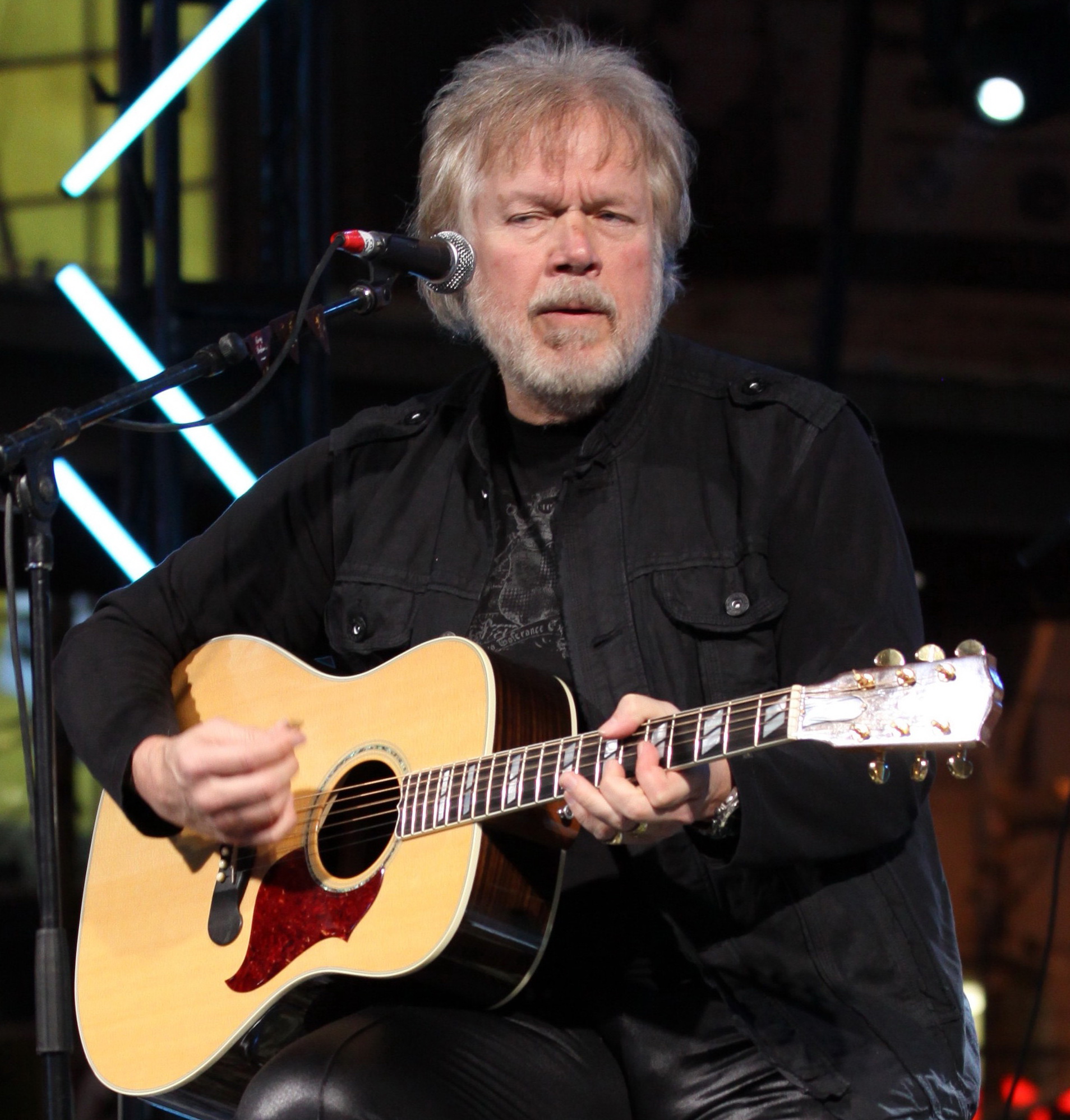
Standard tuning never quite fit Randy Bachman. Long before he became the guitarist behind some of the most recognizable rock songs of the late sixties, he treated the guitar as a laboratory for odd intervals and altered voicings. Born September 27, 1943, in Winnipeg, Canada, he would channel that restlessness into a career split between The Guess Who and, later, Bachman-Turner Overdrive. A birthday offers a good excuse to revisit the catalog he built across both bands and the guitar experiments that ran through it.
Early hits with The Guess Who
Before 'American Woman' dominated rock radio, The Guess Who introduced Bachman's melodic instincts on Wheatfield Soul, a sixties album that carried 'These Eyes.' That single became an international hit and gave the Canadian rock group an early breakthrough in the United States. Bachman wrote much of the material, blending rock with a bright pop sensibility that made the group easy to hum and hard to ignore. The Guess Who rode that formula to international recognition.
Among the songs Bachman wrote for The Guess Who, 'American Woman' became the track that refused to stay in its decade. The riff arrives like a slow threat, then the vocal turns the title phrase into a sneer. It is one of the most famous pieces in the group's catalog, and it showcased Bachman's ability to build a whole song around a simple, menacing guitar figure. By that point, The Guess Who had moved from Canadian success to international recognition, with a catalog full of concise rock songs that leaned on melody.
The riff arrives like a slow threat, then the vocal turns the title phrase into a sneer.
Building Bachman-Turner Overdrive
Bachman left The Guess Who in 1970, walking away at the height of that momentum. He then founded Bachman-Turner Overdrive, a harder-driving project built on his riffs and a more direct rock sound. The new group found commercial success quickly, and its catalog produced a signature in 'You Ain't Seen Nothing Yet.' Bachman-Turner Overdrive turned his guitar style into radio-friendly muscle, working within the same rock and pop blend he had sharpened in the sixties. The move also gave Bachman another platform for his experiments with guitar tone and unorthodox tunings.
Bachman's reputation as a guitarist rests on those riffs. He favored thick, melodic figures that other rock guitarists later used as reference points, and his experiments with non-standard tunings gave the lines a slightly wrong-footed tension. His style influenced a generation of players without requiring flashy solos to make the point. The songs themselves did the talking: short, hook-driven structures that felt raw but never sloppy. Bachman's guitar sound, built on careful tone choices and tunings, became a clear link between sixties pop and seventies rock.
Producer, host, and author
Beyond those groups, Bachman stayed busy as a producer and collaborator. He worked with various artists, including Neil Young, and contributed to film soundtracks when the material called for a particular guitar texture. He also stepped behind the microphone in a different way, hosting a rock and roll program on Canadian radio. Those broadcasts fed his reputation as a storyteller of backstage life, a role he later expanded in an autobiography that described both the creative process and the conflicts inside the groups.
The book did not sand down the tensions that followed the hits. Bachman wrote about the friction that came with shared success and the difficult exits that shaped The Guess Who and Bachman-Turner Overdrive. In the 2000s, he reunited with former Guess Who colleagues, a reminder that the catalog still had a life beyond the original run. He received multiple awards for his contribution to music, entered the Canadian Music Hall of Fame, and was appointed to the Order of Canada. Those honors reflected a career spent recording, producing, and touring well past the era that made him famous.
His solo work kept the same curiosity alive. The album 'Axe' arrived in the 1970s, a title that doubled as a nickname for his instrument and a statement of intent. Later, he returned to familiar chemistry through the project Bachman & Turner. Even as he continued to tour into old age, Bachman kept recording solo albums and chasing small changes in tone. That restlessness, rather than nostalgia, is what ties the separate chapters of his catalog together.
In 2026, Randy Bachman turns 83. The date lands in a catalog that stretches from 'These Eyes' to 'You Ain't Seen Nothing Yet' and beyond, with enough radio staples to keep classic rock playlists full. Fans around the world mark his birthday by returning to those songs, which still circulate on vinyl and streaming in equal measure. Perhaps the most telling detail is that a guitarist who began with unusual tunings in Winnipeg ended up writing some of the most immediately recognizable riffs in North American rock.