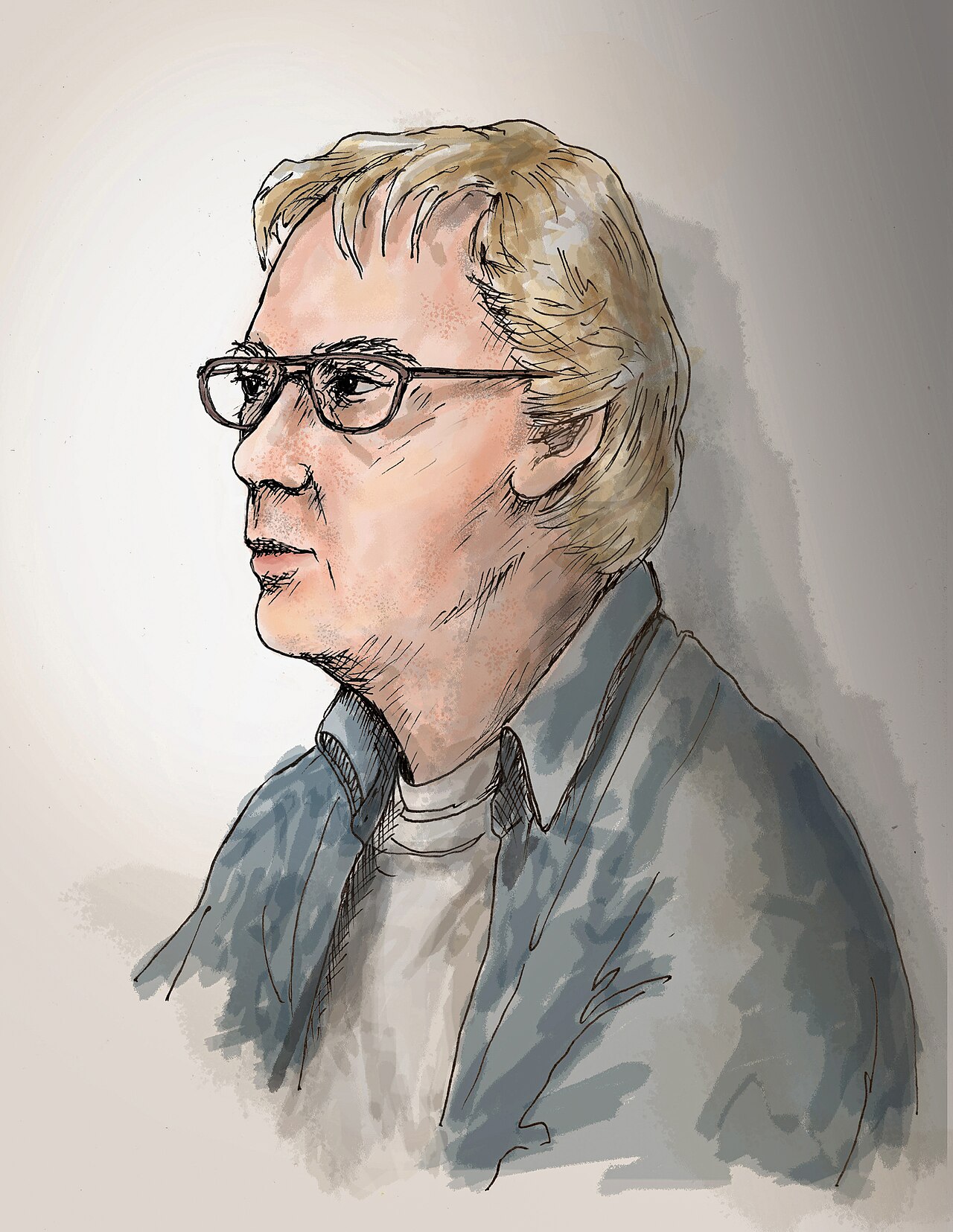
One synthesizer, a blank tape, and a refusal to compromise. In 1973, the ARP 2600 hummed on Klaus Schulze's workbench — a semi-modular beast patched into itself, generating a sound no one had quite captured on vinyl before. That machine became the sole voice on Picture Music, an album that distills the Berlin school ethos to its purest element: one man, one instrument, and a side-long journey into tone. Schulze, born on August 4, 1947, had already shed the skins of a drummer for Tangerine Dream and Ash Ra Tempel by this point, but this record marked a different kind of departure — a statement of absolute electronic self-sufficiency.
From Tangerine Dream to Ash Ra Tempel
The path to that solitary session wound through the heart of krautrock's cosmic explosion. Joining Tangerine Dream in 1969, Schulze sat behind the kit for Electronic Meditation, a 1970 debut that turned rock instrumentation inside out into a black hole of distortion. His tenure was a fleeting, foundational tremor; he left the same year the album dropped, moving immediately into the furnace of Ash Ra Tempel. Their self-titled 1971 release captured a band tearing itself apart in real time — a single, side-spanning freakout where Schulze's drumming was the earthquake driving Manuel Göttsching's guitar skyward.
By 1972, the collective chaos gave way to a loner's vision. Schulze's solo debut, Irrlicht, was a negation of his rhythmic past — no drums, no synthesizers, just a broken organ and manipulated orchestral tape loops creating a suffocating, pre-industrial drift. It was a bold reset, but the sequel, 1973's Cyborg, introduced the tool that would define him: the EMS VCS 3. That portable synth's pin-matrix logic crept into his bloodstream, but it was only a gateway. The real obsession arrived later that same year when he got his hands on an ARP 2600, a machine that offered a different kind of conversation.
Picture Music is the sound of that conversation. Recorded entirely with the ARP 2600, the album is a masterclass in monophonic tension, where a single melodic line filters through endless timbral shifts. The synthesizer wasn't just a keyboard; it was a self-contained orchestra of voltage-controlled oscillators and envelope shapers. The 1973 release presented a hypnotic paradox: music that felt sequenced and mechanical yet breathed with an organic pulse, a ghost in the machine long before the term became a cliché. It remains a collector's grail precisely because it documents a moment of raw, unadorned discovery.
Timewind and the Berlin school vindication
This minimalist architecture exploded into widescreen grandeur on 1975's Timewind, a record that earned Schulze the Grand Prix du Disque and cemented the grammar of the Berlin school. Here, the concept of the long-form vinyl side reached its apotheosis. Two compositions, two sides, no filler. The music didn't just develop; it seemed to terraform a landscape in the listener's mind, using analog sequencers to build endless, cascading staircases of notes. It was a commercial and artistic vindication, proving that an album structured like a classical symphony could thrive in the age of rock.
The introduction of the sequencer as a compositional force, not just an effect, reached a new zenith with 1976's Moondawn. For the first time, Schulze invited a collaborator into his solo sanctum — drummer Harald Grosskopf — to anchor the swirling electronic mists with a human heartbeat. The result was a propulsive, trance-inducing hybrid that predicted the coming decades of techno. The original vinyl pressing captures a distinct warmth, a pre-digital hugeness where Grosskopf's kit and the Moog synthesizer on 1977's Mirage occupy a vast, three-dimensional space that later CD masters often compressed.
Crossing the digital frontier
Schulze's relentless curiosity pushed him toward the digital frontier long before his peers. 1978's X was his first recording laid down in a digital format, a conceptual leap that invited classical textures — including a violinist — into the sequencer-driven framework. A year later, Dune, inspired by Frank Herbert's novel, painted desert soundscapes with analog grandeur. By 1980, on Dig It, the cold, crystalline chime of the Fairlight CMI sampling workstation signaled a new era, its digital glassiness slicing through the analog warmth that had defined his 1970s prime.
The collector's chase through Schulze's catalog is a pursuit of texture. Early German pressings on Brain or Virgin capture the raw, unmastered voltage of the EMS and ARP units. Later reissues on vinyl often remaster the low end for modern turntables, but purists hunt for the original 1975 Timewind gatefold for its uncompressed ambience. Even his late-period renaissance, particularly the 2008 collaboration Farscape with vocalist Lisa Gerrard, is a testament to a discography that never fully settled, spanning over 60 albums before his death on April 26, 2022.
A Klaus Schulze record is never just background hum. It is a physical anchor for a specific technology at a specific moment — the warm instability of a VCO drifting in a hot studio, the tactile click of a sequencer advancing a step. His influence seeped into ambient's DNA and hardened techno's spine, yet the records themselves remain singular objects. To pull Cyborg from a sleeve is to hold 53 years of electronic prophecy in your hands, a direct line to a Berlin bedroom where one man and his patch cables rewired the future of listening.