
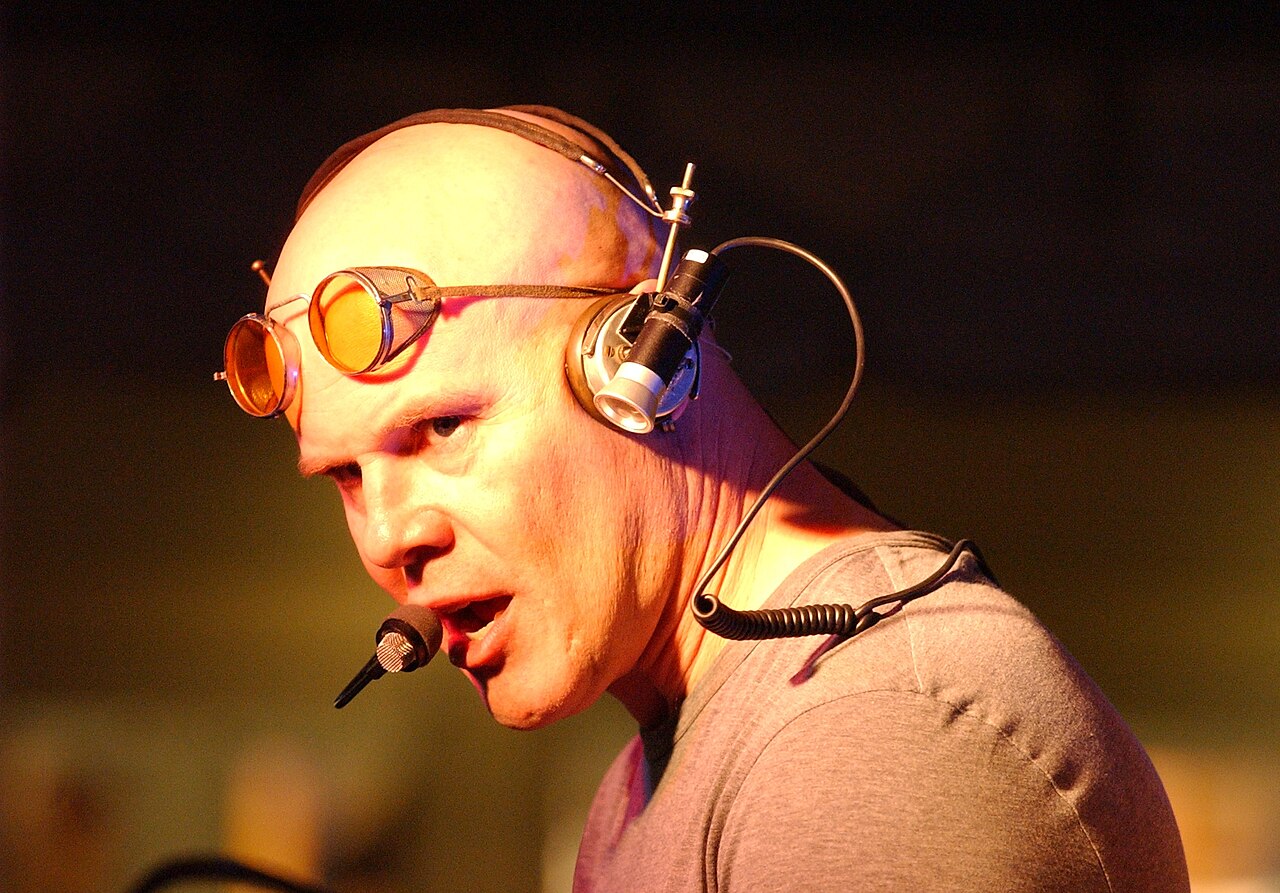
The name came from a piece of studio hardware. In the early 1970s, the London teenager Thomas Morgan Robertson was always fiddling with keyboards and tape, so friends called him "Dolby" after the noise-reduction process stamped on recording equipment. He kept the nickname, and by the time he needed a stage name, Thomas Dolby was the obvious choice. He was born on October 14, 1958.
Breakthrough with a science hit
The English musician, producer and songwriter broke through in the 1980s as part of the new wave movement. His 1982 single "She Blinded Me with Science" became his biggest commercial hit, climbing to number 5 on the Billboard Hot 100. The song's blend of synthesizers, spoken-word interjections and playful energy made Thomas Dolby a familiar name far beyond the London club scene.
The album behind that hit, The Golden Age of Wireless, reached number 13 on the Billboard album chart. Its songs set themes of radio technology, aircraft and submarines against ideas of relationships and nostalgia. Much of the instrumentation came from synthesizers and samplers, but the record also featured guest musicians on harmonica, violin, guitar and percussion, giving the electronic sound a surprisingly human texture.
The legal fight over the name
Fame brought an unexpected problem. After "She Blinded Me with Science" became a hit in 1982, Dolby Laboratories expressed concern about the stage name. The musician's label refused to force a change, and a long legal battle followed. In the end, the court ruled that Dolby Labs could not stop Thomas Dolby from using the name, but an agreement was reached: he would not release electronic equipment under it.
The borrowed name had already become more than a gimmick. It connected his music to the world of audio technology, which suited a performer who had built his own synthesizer from a kit in the mid-1970s and never looked back. As the decade progressed, he stretched his sound far beyond the high-energy pop of his biggest singles, working as a session musician and producer for other artists.
From pop to Silicon Valley
In the 1990s, Thomas Dolby stepped away from the spotlight and moved into Silicon Valley, where he founded the company Beatnik. Its technology was used for internet audio and later for ringtones, especially on Nokia phones. The man who had once fought Dolby Laboratories over a name was now helping shape how millions of people heard sound on their mobile devices.
The man who had once fought Dolby Laboratories over a name was now helping shape how millions of people heard sound on their mobile devices.
Music pulled him back. In 2006 he gave his first public solo performance in 15 years, and the enthusiastic response to a sold-out 800-capacity London club show convinced him to move his family back to England. He began writing again, and his later album A Map of the Floating City was recorded in a studio built inside a 1930s lifeboat in the garden of his beach house on the North Sea coast, powered entirely by renewable energy.
Thomas Dolby never stopped moving between music and technology. In 2012 he learned that the Orfordness lighthouse near his home in Suffolk was being decommissioned, so he made a documentary film about its closure and his childhood in the area. The boy who earned a nickname by tinkering with tapes had become a musician, an entrepreneur and a teacher, but the name stuck.