
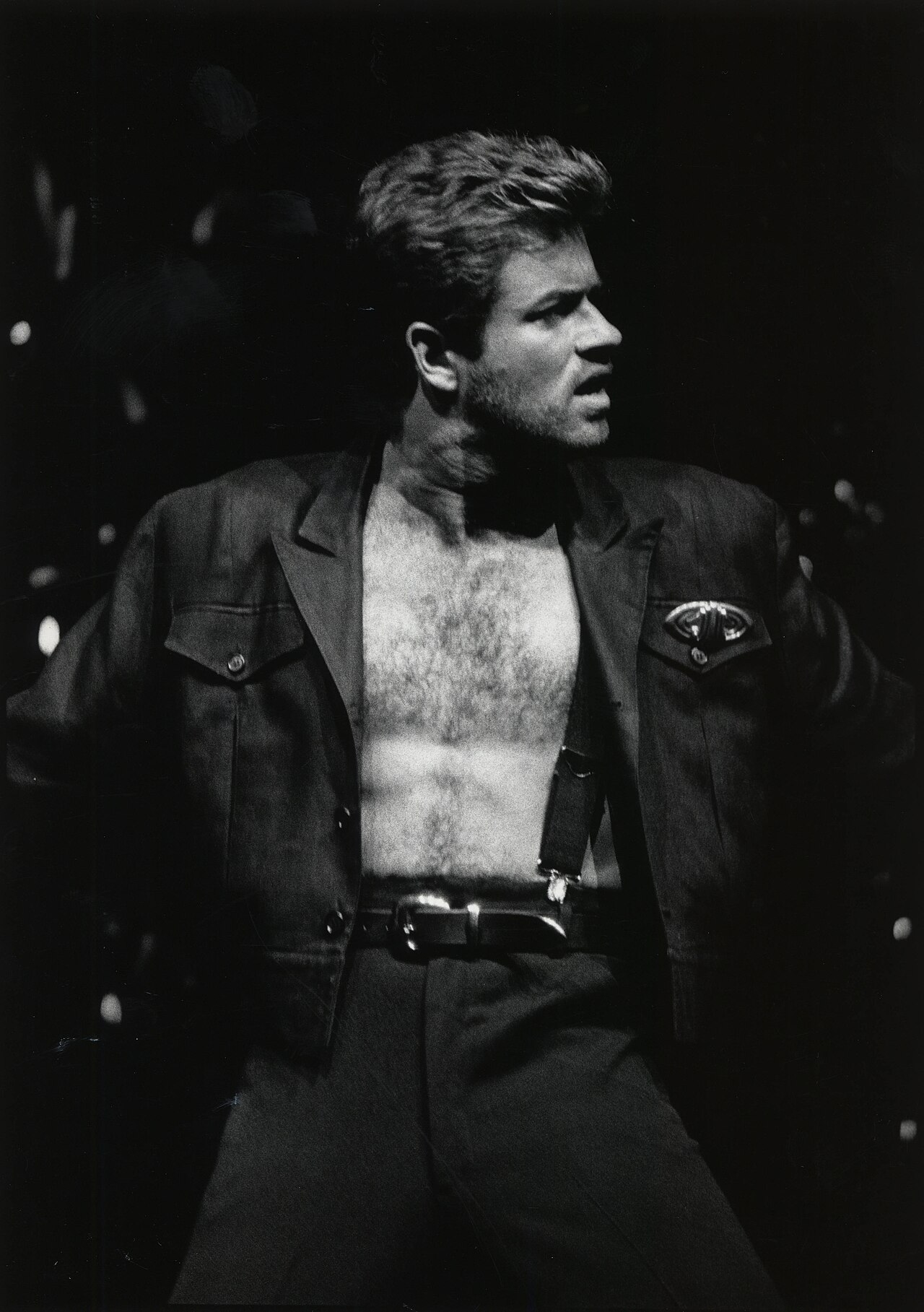
A leather jacket, a jukebox, a guitar. In October 1990, the pop singer George Michael released the single Freedom! '90, and its video showed those objects being blown up, burned and smashed. He did not appear in the clip at all. That absence was the point: he was done being the smiling pin-up from his days in the duo Wham!. The song was not a one-off experiment. It appeared on the album Listen Without Prejudice Vol. 1, where Michael was already trying to step away from the glossy image built during the Wham! years. The single came out on Epic and Columbia, and its sound mixed pop with house, gospel, Manchester influences and breakbeat.
Lyrics that mock Wham! fame
Why would a star refuse to be in his own video? The song itself is the answer. Michael wrote and produced it, and the lyrics make a mockery of the fame he had chased as half of Wham!. Instead of the bright soul-pop that made him famous, the track leans on house, gospel and breakbeat, built around a drum sample from James Brown's Funky Drummer.
The title needed the number 90 because Wham! already had a hit called Freedom. But this was not a throwback. Michael sounds more cynical about the music industry than ever, a man trying to separate himself from the image that made him rich and trapped him at the same time. The record exists in several lengths. The album and video version runs six minutes and thirty seconds, while a British radio edit was cut to four minutes and thirty-one seconds. A further radio version lasts five minutes and twenty-one seconds.
Five supermodels take his place
So he stepped out of the frame. Director David Fincher put five supermodels in his place: Naomi Campbell, Linda Evangelista, Tatjana Patitz, Christy Turlington and Cindy Crawford. They did not play the singer's lovers. They lip-synced the song themselves, each taking a verse.
The shoot took place in a large building in the Merton area of London. The models earned 15 thousand dollars a day. In the opening, Evangelista switches on a CD player and a laser reads the disc. Then the objects from the old Faith video appear, only to be destroyed: the leather jacket, the Wurlitzer jukebox, the guitar. The idea of putting supermodels in the frame came from a Peter Lindbergh photograph published in British Vogue in January 1990. Male models John Pearson, Peter Formby, Rafael Edholm and photographer Mario Sorrenti also appeared in the video. The casting turned the clip into a fashion-world moment as much as a music event.
MTV put the clip into heavy rotation. The song went to number 8 on the Billboard Hot 100 in the United States and hit number 1 in Canada. In Britain it stalled at number 28, a strange result for a record that now feels like a signature statement.
The gamble paid off. By refusing to sell his face, George Michael sold the idea of freedom itself, and the video became the proof that he could walk away from his past. The models became the stars, the old props became rubble, and the singer existed only as a voice on the soundtrack. The song kept finding new life long after its release. In the United States it sold more than five hundred thousand copies and earned a gold certification from the RIAA. By October 2017, it had sold eighty-three thousand copies in the United Kingdom. In 2017 it also reached a new audience through the film Pitch Perfect 3, performed by Anna Kendrick.
By refusing to sell his face, George Michael sold the idea of freedom itself, and the video became the proof that he could walk away from his past.