
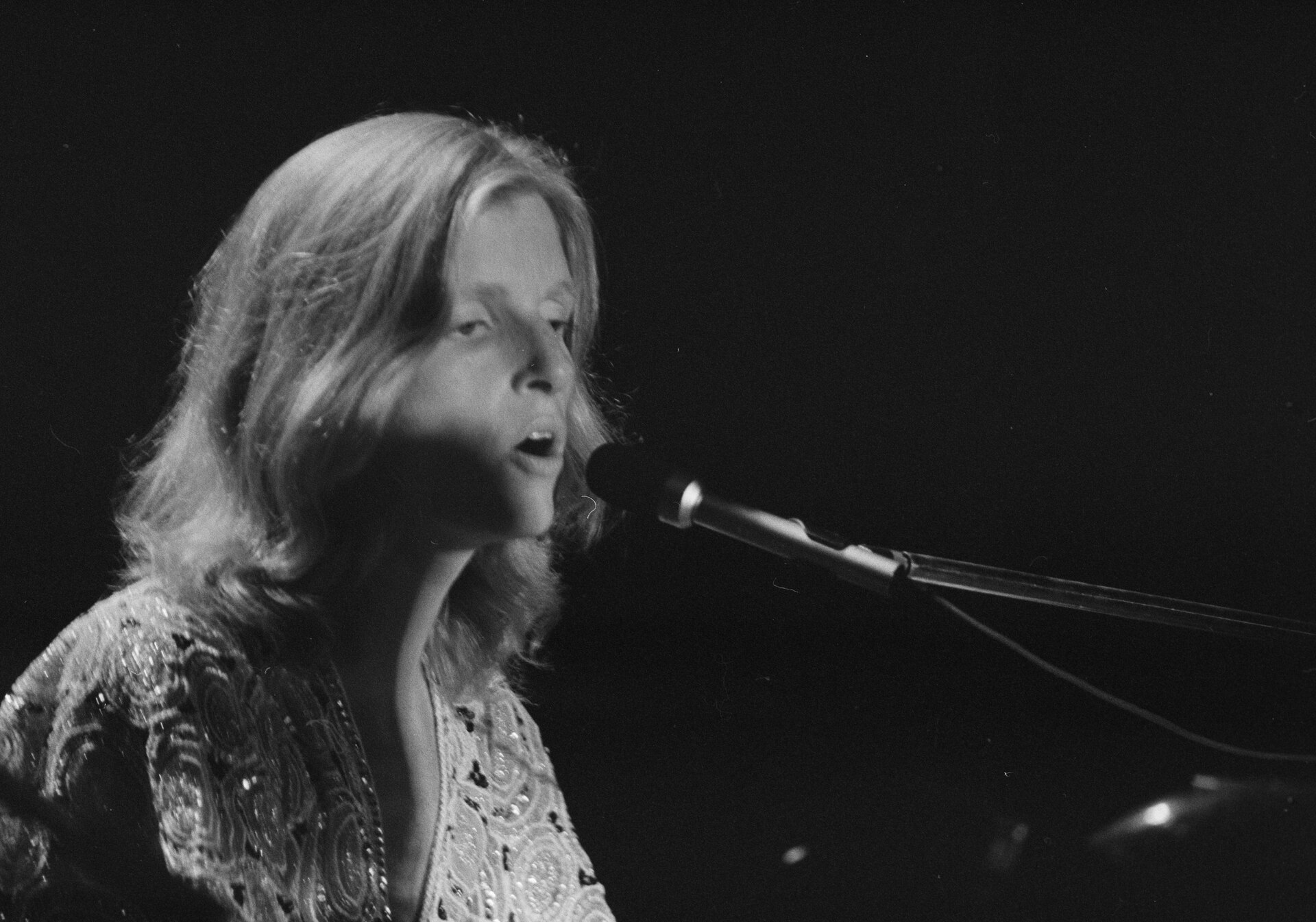
A photograph of a young woman behind a camera at the Fillmore East — no press pass, no official badge, just the trust of Bill Graham and a growing stack of contact sheets. That woman was Linda McCartney, born Linda Eastman on September 24, 1941, in New York State. She would have turned 85 in 2026, and the image most people hold of her — the quiet keyboardist standing behind Paul McCartney in Wings — barely scratches the surface of what she had already built before they ever shared a stage.
Scarsdale roots and family
Linda grew up in Scarsdale, Westchester County, the second child in a family of four siblings. Her father, Leopold Vail Epstein, had arrived from Russia and changed his surname after settling in the United States, eventually becoming a prominent entertainment lawyer. Her mother, Louise Sara Eastman, was the daughter of Max Lindner, who founded the Lindner Company department store in Cleveland. The family's Jewish heritage and comfortable suburban life gave Linda early access to a world where art and business intersected.
She graduated from Scarsdale High School in 1960, then enrolled at the University of Arizona to study fine arts. Photography was not yet a profession she claimed — it was a way of seeing. On June 18, 1962, she married Joseph Melville See Jr., a geologist she described as having a Hemingway-esque quality. The marriage ended, but the name Linda See stayed with her through her early work, a detail that confuses collectors flipping through vintage magazine credits.
The Fillmore East years
By the mid-1960s, Linda was shooting for Town & Country, learning how to make celebrities look human in a single frame. The real shift came in the late 1960s when she became a regular photographer at the Fillmore East in New York. She was the venue's unofficial house photographer — no contract, just presence. That access produced portraits of rock musicians at their most unguarded, and it led somewhere no woman had been before: her photo landed on the cover of Rolling Stone.
The Fillmore East connection also put Linda in the orbit of the Beatles. She married Paul McCartney in 1969 and stayed married to him until her death. When the Beatles split in 1970, Paul needed a collaborator who would not compete for the spotlight. He taught Linda to play keyboards. Their first project together, the album Ram, came out in 1970, credited to Paul and Linda McCartney. It was raw, domestic, and nothing like the polished Beatles catalog.
Wings and the stage
In 1971 they launched Wings, and Linda became the band's keyboardist and backing vocalist. Critics dismissed her as a passenger, but she logged years of touring and recording that would have broken most session musicians. Wings dissolved in 1981, yet Linda kept playing alongside Paul. She appeared on The New World Tour in 1993, still at the keys, still harmonizing. The woman who had once framed other musicians through a lens was now framed by arena lights.
Her photography never stopped mattering. Linda's work was exhibited at galleries and museums, including the Victoria and Albert Museum, and collected in several books. She was also a cookbook author and an activist, roles that ran parallel to the music without ever quite merging with it. The girl from Scarsdale who had once shot for Town & Country ended up documenting one of the most turbulent decades in popular music from inside the room.
The girl from Scarsdale who had once shot for Town & Country ended up documenting one of the most turbulent decades in popular music from inside the room.
Linda McCartney died on April 17, 1998, in Tucson, Arizona. She was 56 years old. In the years since, the shorthand for her life has been 'Paul's wife,' which is both true and wildly incomplete. She was an American singer, photographer, musician, and author — the first woman to shoot a Rolling Stone cover, a member of Wings, and a presence on some of the most recognizable pop rock records of the 1970s.
On what would have been her 85th birthday, the question is not whether Linda McCartney mattered — it is which Linda you mean. The one at the Fillmore East with a Nikon? The one playing a Mini Moog on "Jet"? The one writing vegetarian recipes in a London kitchen? All of them existed, and none of them waited for permission.