
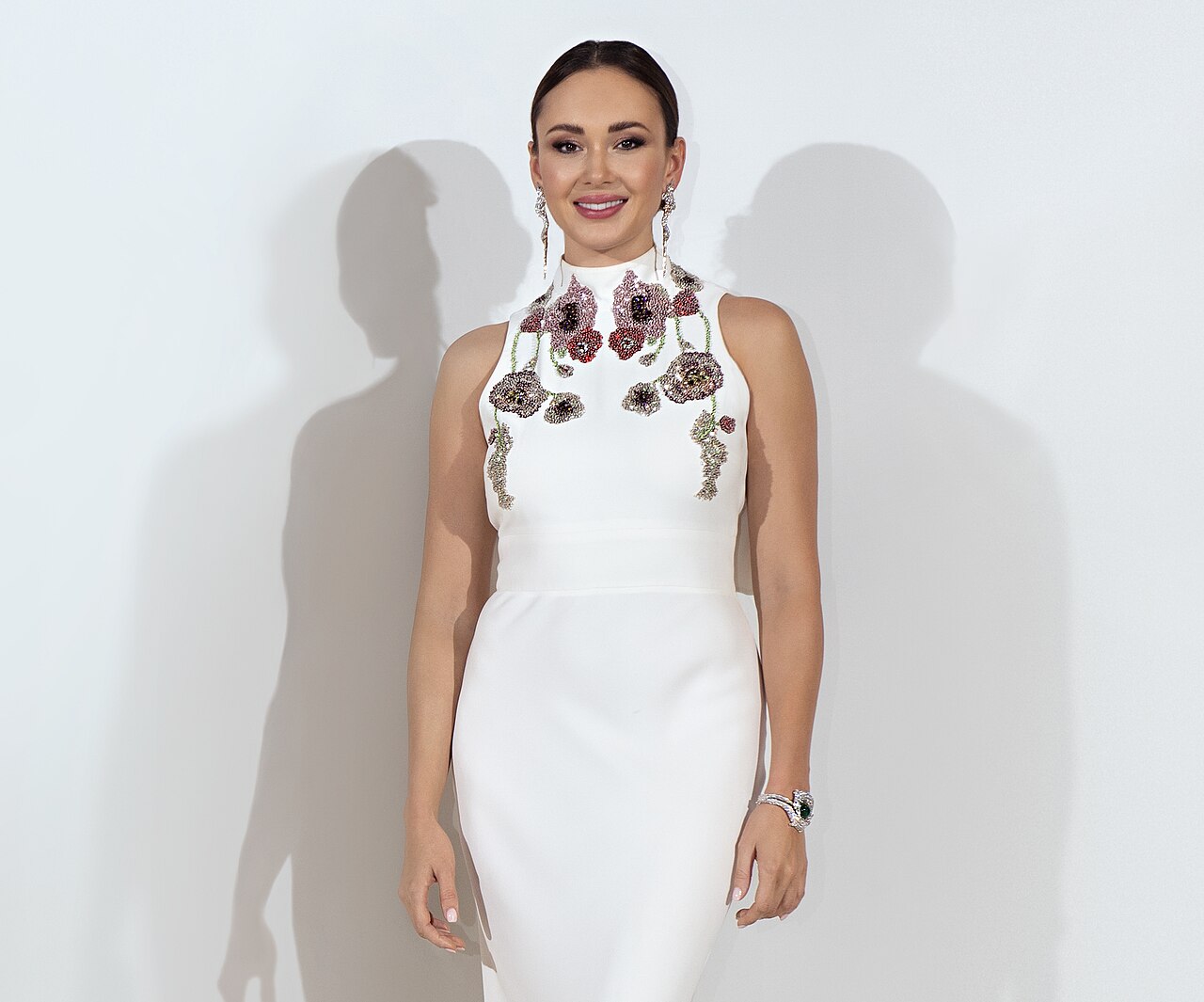
A thirteen-year-old girl walks onto the stage of the Tchaikovsky Concert Hall in Moscow, accompanied by the State Symphony Orchestra of the Republic of Tatarstan. The program is called 'Gifted Children of Tatarstan,' and the girl's name is Aida Garifullina. Born on September 30, 1987, in Kazan, she is making her first appearance before a major Moscow audience, and her lyric soprano is already unmistakable. The moment isn't simply a matter of raw talent; it's the product of a household where academic music was the everyday language.
Her mother, Lyaylya Ildarovna Garifullina, conducted choirs and directed the Sofia Gubaidulina Center for Contemporary Music. She held the title of Honored Artist of the Republic of Tatarstan and made sure her daughter absorbed the classical repertoire from an early age. Aida's father, Emil Damirovich Garifullin, worked as an entrepreneur and landscape designer. A younger brother named Rem completed the family. The structure was stable, but the ambition was singular.
Early recognition and a German scholarship
A year after that Moscow debut, Aida received a scholarship from the Chaliapin Foundation in the Academic Vocal category. The foundation's name carried weight in Tatarstan, and the recognition confirmed what the Tchaikovsky Concert Hall appearance had suggested: her voice was being noticed by institutions that mattered. At eighteen, she accepted a grant to study in Germany and moved to Nuremberg, enrolling at the Hochschule für Musik in 2005.
In Nuremberg, her teacher was Professor Siegfried Jerusalem, a tenor whose own career had been defined by Wagner and Strauss. The shift from Kazan to Bavaria was abrupt, but the training was rigorous. By 2007, she had moved again, this time to the University of Music and Performing Arts Vienna, where she studied under Claudia Visca. Vienna would become the city where her stage career first took formal shape.
Vienna debut in Mozart
In 2009, Aida made her operatic debut as Despina in a university production of Mozart's Così fan tutte. The role suited a young soprano: comic, quick, demanding precise phrasing. The production was small, but the composer was Mozart and the city was Vienna. That combination meant the performance was watched by people who understood what a debut could lead to.
The breakthrough came in 2013, when she won the Operalia competition. That victory opened doors to the Mariinsky Theatre in Saint Petersburg and the Vienna State Opera. The same year, she was named Honored Artist of Tatarstan. A recording contract with Decca Records followed, placing her among the label's roster of singers whose albums reach audiences far beyond any single opera house.
Two opera houses and a Decca contract
Her repertoire and stage presence have since been heard in productions at the Mariinsky and the Vienna State Opera. The two houses represent different traditions, and moving between them requires a voice that can adapt without losing its core. Garifullina's lyric soprano has been tested in both, and the Decca contract suggests that the recording industry saw her as a long-term investment.
In 2020, she received the title of Honored Artist of the Russian Federation. The award came six years after the Operalia win and confirmed her standing within the Russian cultural establishment. By that point, her career had already spanned two decades, from the Tchaikovsky Concert Hall in Moscow to the stages of Vienna and Saint Petersburg.
She turns 39 in 2026. The question that lingers is what the next decade holds for a singer whose career was built on early recognition and steady institutional support. The operatic world is changing, and the path from Kazan to Vienna is no longer the only route to a major career. Whether Aida Garifullina will remain a fixture of the world's great opera houses or shift toward new formats is not yet decided.
Her mother's influence, the Chaliapin scholarship, the Nuremberg years, the Operalia win, the Decca contract—each step was a decision made early. The lyric soprano voice that once filled the Tchaikovsky Concert Hall as a thirteen-year-old is now a mature instrument. What remains to be seen is whether the next decade will bring new roles, new recordings, or a different kind of stage altogether.