
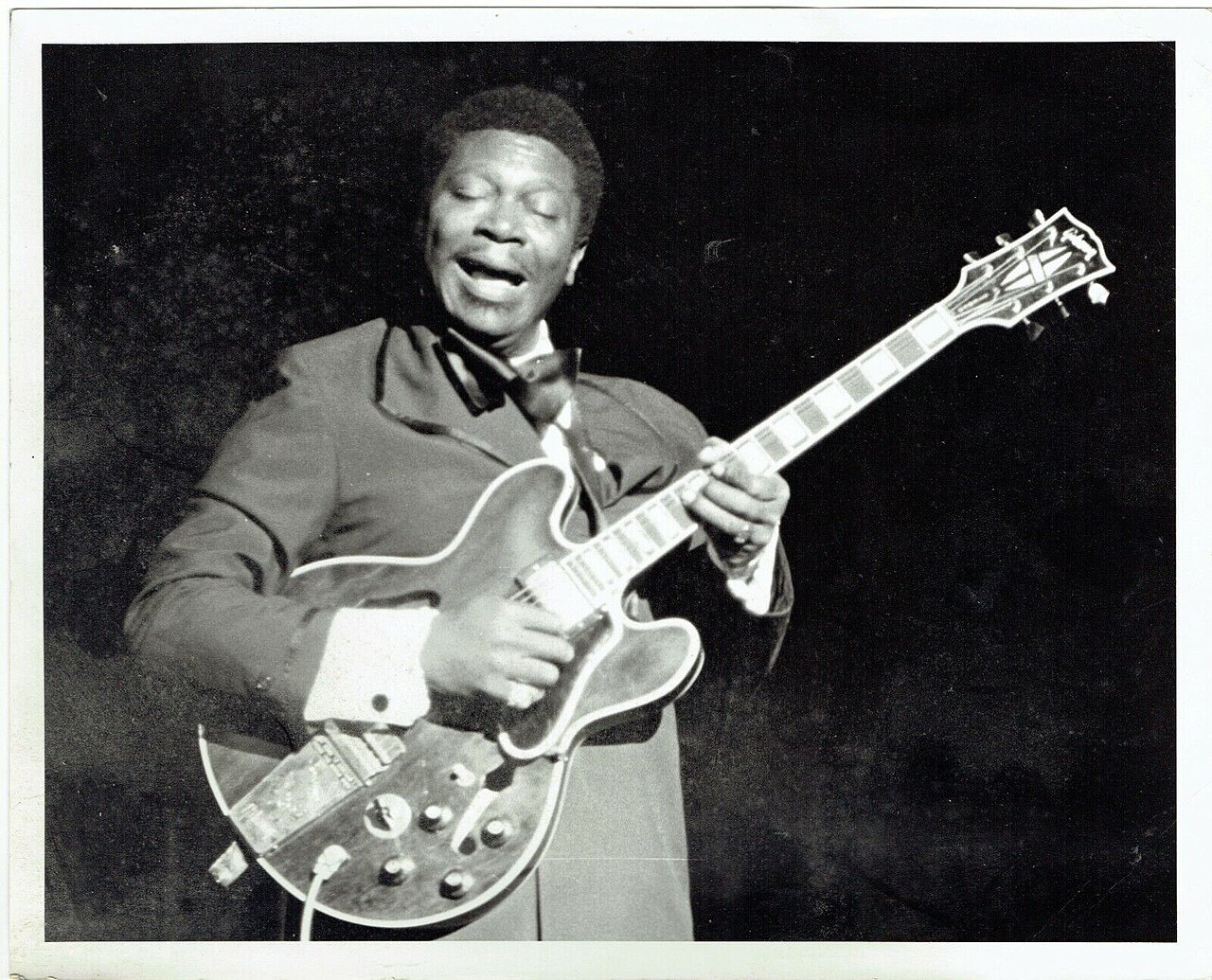
A man who admitted he couldn't play chords properly still reshaped the sound of the electric guitar. Riley B. King, born September 16, 1925, on the Berclair cotton plantation in Leflore County, Mississippi, spent his childhood surrounded by sharecroppers and gospel hymns, not amplifiers and stage lights. Yet by the time he died in Las Vegas in 2015 at age 89, AllMusic had already called him the most important electric guitarist of the second half of the twentieth century. The distance between those two points is measured in a single name: B.B. King.
The distance between those two points is measured in a single name: B.B. King.
Sharecropper roots and church chords
His parents were sharecroppers, and when his mother left his father, King was only four. His maternal grandmother raised him, and the Baptist church in Kilmichael provided his first musical language. He sang in the Elkhorn Baptist Church gospel choir, and a local reverend with a Silvertone guitar taught him his first three chords. That instrument was not a gift; it was a lesson. King would later say he leaned on improvisation because chord work never came naturally, a limitation that pushed his phrasing toward something closer to a human voice.
The radio did the rest. In 1941, King heard King Biscuit Time on KFFA and decided he wanted to be a radio musician. Two years later, he was driving a tractor and playing with the Famous St. John's Gospel Singers. The army drafted him during World War II, but the military released him as essential to the war economy. By 1946, he was in Memphis, staying with his cousin Bukka White, and soon performing on Sonny Boy Williamson's radio show on KWEM in West Memphis.
Those broadcasts led to steady work at the Sixteenth Avenue Grill and a ten-minute slot on WDIA. That station gave him the name Beale Street Blues Boy, trimmed to B.B. King. Around the same time, he met T-Bone Walker, whose electric guitar pushed King to plug in. He played with the Beale Streeters alongside Bobby Bland, Johnny Ace, and Earl Forest. Ike Turner introduced him to the Bihari brothers, founders of Modern Records, and in 1949 King cut his first single, 'Miss Martha King,' for Bullet Records before moving to RPM Records.
Sam Phillips produced some of those early sides, years before Sun Records became a rock and roll landmark. King assembled the B.B. King Review under bandleader Millard Lee and started touring hard. Then came the fire in Twist, Arkansas. A fight over a woman named Lucille sparked it, and King ran back inside to save his guitar. He named the instrument after her, a reminder never to do something that foolish again. The story became part of his mythology, but the guitar itself kept changing models over the decades.
R&B hits and the road warrior years
The hits arrived fast. '3 O'Clock Blues' hit number one on the Billboard R&B chart in February 1952. Through the 1950s, King became one of the defining names in R&B with records like 'You Know I Love You,' 'Sweet Little Angel,' and 'Every Day I Have the Blues.' His weekly earnings jumped from about 85 dollars to 2500. In 1956 alone he played 342 concerts and launched his own label, Blues Boys Kingdom, in Memphis. The schedule was brutal, but it built the road warrior reputation that followed him for sixty years.
The 1960s shifted the audience. King signed with ABC-Paramount Records in 1962, and in November 1964 he recorded Live at the Regal at Chicago's Regal Theater. King considered it one of his finest recordings, and the album became a bridge between blues purists and rock listeners. Manager Sid Seidenberg pushed him toward rock crowds in the late 1960s, and in 1969 King opened for the Rolling Stones on their American tour. A year later, his version of 'The Thrill Is Gone' won a Grammy and later landed at number 183 on Rolling Stone's list of the 500 greatest songs.
Recognition piled up: the Blues Hall of Fame in 1980, the Rock and Roll Hall of Fame in 1987, a duet with U2 on 'When Love Comes to Town' for Rattle and Hum in 1988, a Grammy-winning album with Eric Clapton called Riding With the King in 2000, and the Polar Music Prize in 2004. In December 1997, he performed at the Vatican's Christmas concert and gave Pope John Paul II a Lucille guitar. Rolling Stone ranked him sixth on its list of the 100 greatest guitarists in 2011, and in February 2012 he played the White House while President Obama sang part of 'Sweet Home Chicago.'
Even past age 70, King averaged more than 200 shows a year. His farewell world tour began in 2006, but he kept performing for years afterward. The final concert came on October 3, 2014, at the House of Blues in Chicago, after which dehydration and exhaustion forced him to cancel the remaining dates. The B.B. King Museum and Delta Interpretive Center had already opened in Indianola, Mississippi, in 2008. He died on May 14, 2015, in Las Vegas, leaving behind a catalog that starts with a 1949 Bullet single and ends with a man who turned three chords into a language.