
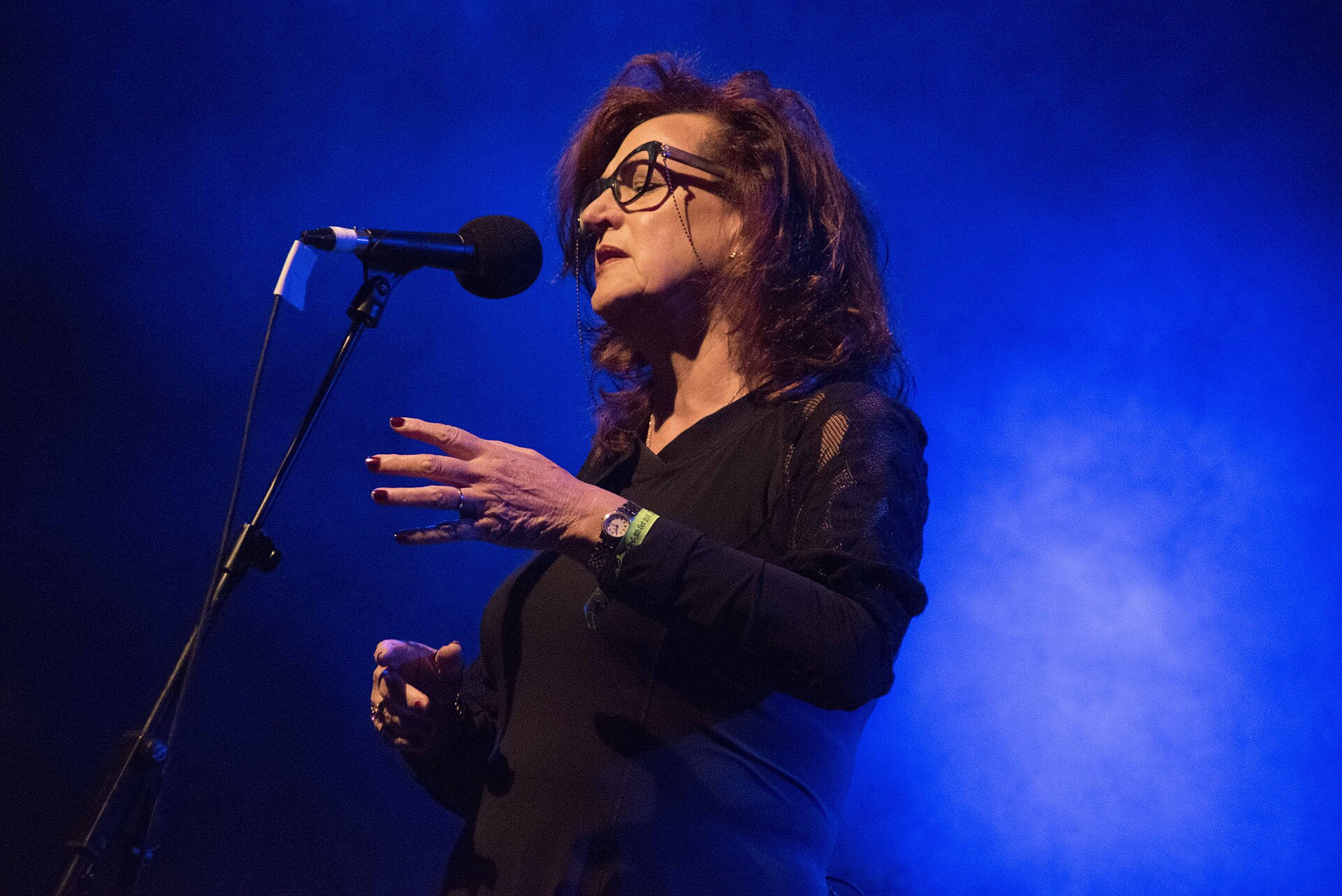
A singer who began in Scottish folk clubs ended up on the West End stage collecting an Olivier Award — that pivot sounds improbable, yet Barbara Dickson managed it within a single career. Born on 27 September 1947, the Scottish vocalist and actress built her reputation through the 1960s and 1970s, moving from acoustic rooms to chart success without shedding the clarity that made her early work distinctive. Her sound pulled together pop, folk, and soul in a way that felt natural rather than calculated. By the time 'Answer Me' arrived in 1976, she was already a familiar voice on BBC Radio across Britain and Europe.
Scottish folk beginnings
Dickson's early years were shaped by the Scottish folk circuit, where she worked alongside guitarist John Martyn and absorbed the phrasing that would later draw comparisons to Joni Mitchell. She sang some material in a Scottish dialect, a choice that rooted her delivery in place rather than smoothing it into generic British pop. Those club performances built a following that radio picked up quickly. The transition from folk rooms to national airplay happened without a major stylistic rupture — the voice remained clean, the emotional register direct.
The mid-1970s brought a run of recordings that collectors now chase. 'Answer Me' became a UK hit in 1976, and the album of the same name followed that same year. A year later she released 'Sweet Oasis' with producer Tony Visconti, a collaboration that gave the folk-rock material a broader sonic frame. Her version of 'Caravans' gained traction around the same period. These records sit at the intersection of folk-rock and mainstream pop, which is precisely why early pressings hold value.
Theatre and the Olivier Award
Theatre pulled Dickson in another direction. She recorded 'Another Suitcase in Another Hall' for the musical 'Evita', and that single became a hit in 1977. The song suited her voice — restrained, wounded, precise — and it introduced her to an audience that had never set foot in a folk club. The stage work deepened through the 1980s, culminating in a role in 'Blood Brothers' that earned her a Laurence Olivier Award. Recognition from the theatre establishment sat oddly alongside her pop catalogue, but Dickson moved between the two without strain.
The 1980s also produced 'The Barbara Dickson Album' in 1980 and the hit single 'January February' the same year. She collaborated with Elvis Costello and recorded a duet with Peter Gabriel, connections that placed her inside a broader art-pop conversation. A Brit Awards nomination followed. These were productive years, but they also created a split in how audiences perceived her — pop star to some, stage performer to others, folk singer to those who remembered the clubs.
A catalogue spanning decades
Her catalogue kept expanding through the 1990s and 2000s. 'Full Circle' appeared in 2004, followed by 'Time and Tide' in 2008. The discography now runs past twenty albums, a body of work that spans folk, pop, soul, and musical theatre without settling into a single identity. That range makes her catalog harder to summarize than most of her contemporaries, but it also explains why different corners of the collecting world know her for different records.
The vinyl story is uneven. Early albums on RSO are genuinely scarce, and reissues on CD and vinyl have kept later titles available. A collector looking for her 1970s output faces a different search than someone hunting the 1980s chart material. The RSO pressings from the 'Answer Me' and 'Sweet Oasis' era are the ones that require patience. Later albums surface more readily, but the early folk-rock records remain the difficult finds.
Dickson's voice is the thread that holds all of this together — clean, emotionally direct, and technically assured. She was one of the first British folk singers to achieve commercial success without abandoning the genre's core sensibility. The comparison to Joni Mitchell makes sense in tone, though Dickson's phrasing carried a distinctly Scottish weight. Her appearances at Glastonbury cemented her place in the festival lineage, and her music stayed in regular rotation on BBC Radio for decades.
She was one of the first British folk singers to achieve commercial success without abandoning the genre's core sensibility.
In 2026, she turns 79, still performing and recording. The MBE for services to music arrived years ago, but the catalog keeps moving through reissue cycles. What remains striking is the span: a folk-club singer who became a chart act, a West End lead, and a duet partner for Peter Gabriel. Few careers cover that much ground without losing coherence. The early RSO records are where the search begins.