
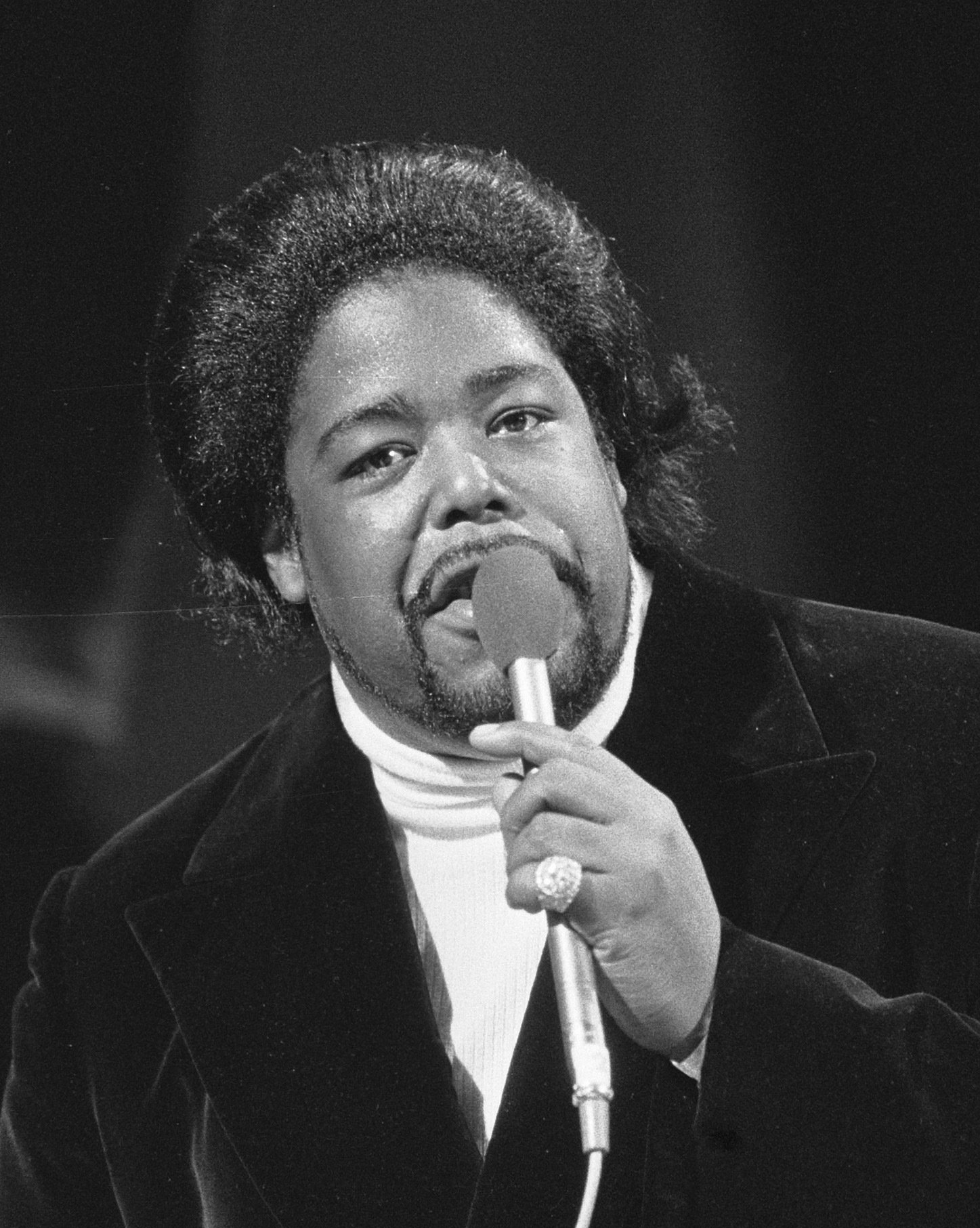
Thirty thousand dollars in stolen tires. That's what landed a sixteen-year-old from Watts behind bars for four months, and it may be the strangest origin story in orchestral soul. Barry White, born Barry Eugene Carter on September 12, 1944, in Galveston, Texas, was still a teenager when a jailhouse radio played Elvis Presley's 'It's Now or Never' and rearranged his future. The voice coming through that speaker steered him toward music instead of crime, and within a few years he was standing outside Capitol Records in Hollywood, skipping his first day of senior year just to look at the building.
Early contradictions and musical roots
White's childhood was built on contradictions. His father, Melvin White, put his surname on the birth certificate despite never marrying Barry's mother, and a younger brother named Darryl arrived thirteen months later. The family lived in Watts, where White absorbed his mother's classical records and taught himself piano by mimicking what came through the speakers. He later dismissed the story that he played on Jesse Belvin's 'Goodnight My Love' at age eleven, but the deeper truth held: music was already the only language he trusted.
The voice arrived early. Around thirteen or fourteen, White's register dropped without warning, turning a kid into a baritone that would one day make radio programmers nervous and listeners weak. By eighteen, fresh out of juvenile detention, he was chasing that sound into the industry. His first single, 'Too Far to Turn Around,' came in 1960 with a group called The Upfronts. It went nowhere, but it put him inside rooms where songs were being made, and White learned to watch.
Building a sound behind the scenes
Through the mid-1960s, White worked at Bronco Records, producing, writing, and arranging for whoever walked in. He discovered Felice Taylor and arranged her track 'I Feel Love Comin' On,' which became a hit in the UK. In 1968 he wrote 'Doin' the Banana Split' for a children's television show. None of this hinted at what came next, but it built the muscle memory: how to shape a melody, how to make strings breathe, how to turn a three-minute single into a small drama.
The breakthrough arrived through a female trio. White discovered Love Unlimited and produced their 1972 debut, 'From A Girl's Point of View We Give to You... Love Unlimited.' The single 'Walkin' in the Rain with the One I Love' became his first million-seller as a writer and producer. A year later he assembled the Love Unlimited Orchestra, forty musicians strong, and their instrumental 'Love's Theme' hit number one on the Billboard Hot 100. White was no longer a behind-the-scenes craftsman; he was the architect of a sound.
Solo breakthrough and Grammy nod
His solo career exploded in 1973 with 'I've Got So Much to Give,' an album that introduced 'I'm Gonna Love You Just a Little More Baby,' a number one R&B hit that reached third on the pop chart. The follow-up, 'Stone Gon',' carried 'Never, Never Gonna Give You Up' to the top of the R&B chart. Grammy voters noticed, nominating White for Best New Artist, though Bette Midler took the trophy. The momentum was undeniable, and the next record would define him.
On September 21, 1974, 'Can't Get Enough of Your Love, Babe' claimed the top spot on the American chart. The single came from the album 'Can't Get Enough,' which also contained 'You're the First, the Last, My Everything,' a number one in Britain. White performed the song on The Midnight Special in 1974 and again on Soul Train in May 1975, each appearance reinforcing what fans already knew: this was concert material, built to fill rooms and stretch past its radio length.
The Walrus of Love and later years
Britain gave him a nickname that stuck: the Walrus of Love, a nod to his frame, his beard, and that subterranean voice. By the late 1970s, White launched his own label, Unlimited Gold, but financial trouble forced him to close it in 1983. He signed with A&M Records and released 'The Right Night & Barry White' in 1987. Two years later, Quincy Jones pulled him into 'The Secret Garden (Sweet Seduction Suite),' a reminder that White's voice could still anchor a slow-burn classic.
The 1990s brought a second act. 'Put Me in Your Mix' reached eighth on the R&B chart in 1991, and 'The Icon Is Love' topped it in 1994. The single 'Practice What You Preach' became his first R&B number one in nearly two decades. He recorded with Tina Turner on 'In Your Wildest Dreams' in 1996 and joined Chris Rock for 'Basketball Jones' on the Space Jam soundtrack. His final album, 'Staying Power,' arrived in 1999 and earned two Grammys for its title track.
White died on July 4, 2003, in Los Angeles from kidney failure at fifty-eight, after a severe stroke and multiple health crises. He was posthumously inducted into the Dance Music Hall of Fame in 2004 and received a star on the Hollywood Walk of Fame in 2013. The kid who skipped school to stare at Capitol Records never stopped staring. 'Can't Get Enough of Your Love, Babe' still opens with those strings, and the voice underneath them sounds like it never left the room.