
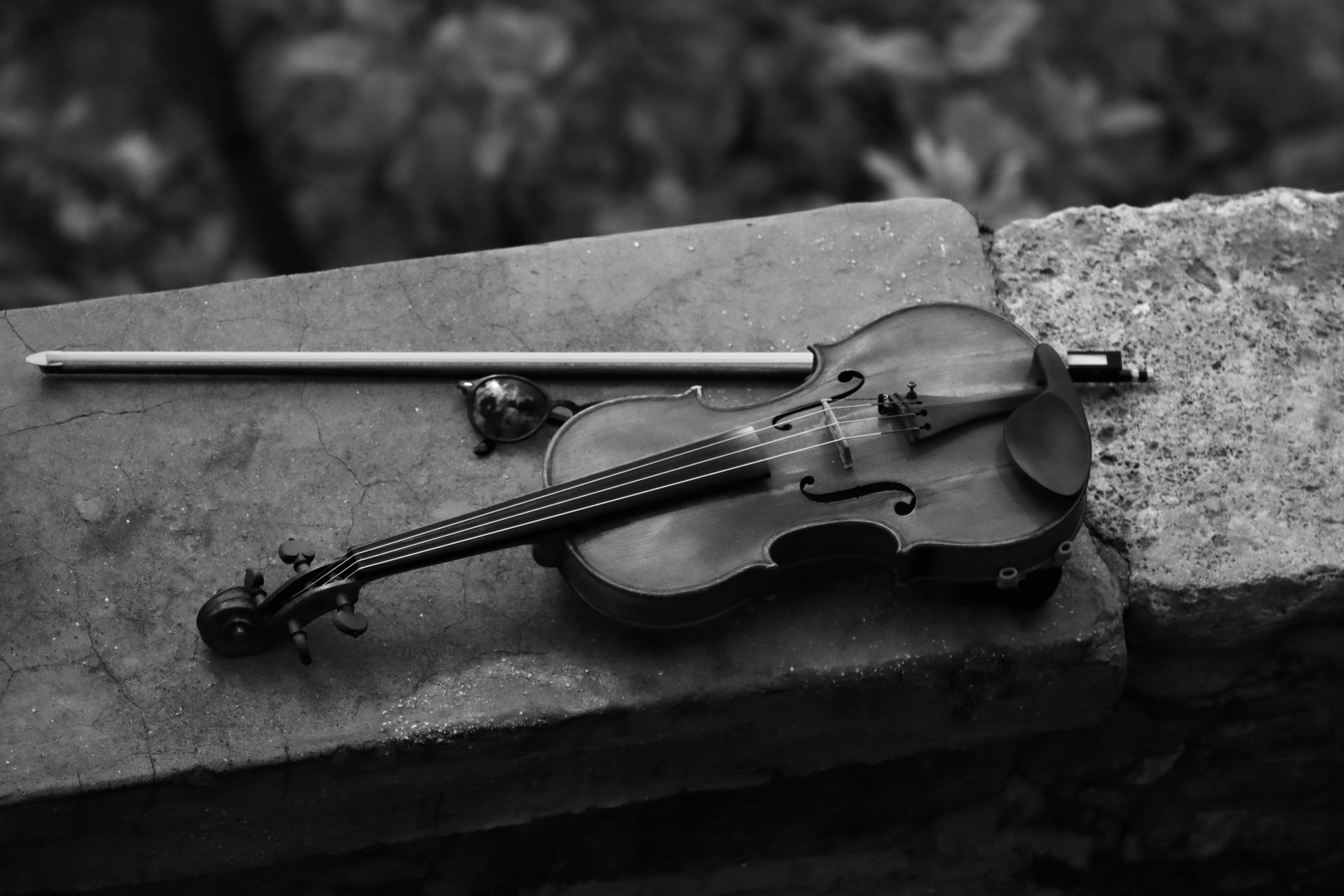
On October 24, 1974, the Soviet violinist David Oistrakh walked off a stage in Amsterdam and died of a heart attack a few hours later. He had just given a concert.
Early training and a first heart attack
In 1964 Oistrakh had already suffered a heart attack. The facts of his life suggest it barely slowed him down. He kept teaching, touring, recording, and conducting with an intensity that reads almost stubborn, as if the only acceptable way to be David Oistrakh was to be working. Even before that, his path had been shaped by early training in Odessa. From the age of five he studied violin and viola with Pyotr Stolyarsky, and he later entered the Odessa Conservatory, where he also learned harmony and polyphony from the composer Nikolai Vilinsky.
The workload had deep roots. Oistrakh became a professor at the Moscow Conservatory in 1939, and through his class passed a generation of major violinists, including his son Igor and Gidon Kremer. He also chaired the violin jury for the first five Tchaikovsky Competitions. The concert platform, the classroom, and the jury table all demanded the same thing: his presence. His public honours matched that workload. In 1953 he was named People's Artist of the USSR, and he also received the Lenin Prize and the Stalin Prize, first class. The titles were official, but they pointed to a simple reality: the state treated him as one of its most valuable musical voices.
The 1937 Brussels victory
That presence was heard far beyond the Soviet Union. In 1937 he won the Ysaÿe Competition in Brussels, and the victory turned a celebrated Soviet violinist into a world figure. He had already won the All-Union Competition of Performing Musicians and taken second prize at the Wieniawski Competition in Warsaw, so Brussels was not a lucky break but the confirmation of a long climb.
Composers trusted him with music that mattered. Dmitri Shostakovich dedicated both of his violin concertos to Oistrakh, and Oistrakh played the first of them in New York in 1955 during his first tour of the city. When Aram Khachaturian wrote his violin concerto, he dedicated it to the same violinist. These were not polite dedications; they were statements about whose sound could carry new Soviet music to the world. His reach extended beyond the concert hall. From 1961 he appeared regularly as a conductor, and he toured with orchestras led by Klemperer, Ormandy, and Karajan. During the war years he had played in hospitals, at mobilization points, and in besieged Leningrad.
Seven Stradivari violins
He also played instruments that carried their own history. Oistrakh performed on at least seven Stradivari violins owned by the Soviet Union. He began with the Conte di Fontana of 1702 and in 1966 switched to the Marsick of 1705. A violinist who changes Stradivari instruments after decades is adjusting to age, to repertoire, to the changing demands of his own hands.
The recording catalogue backs up the reputation. Oistrakh won a Grammy in 1971 for the Brahms Double Concerto and another in 1975 for Shostakovich's First Violin Concerto, the second award arriving after his death. In 2003 Gramophone magazine placed him in its Hall of Fame. The recordings remain the most direct way to hear what the Brussels jury heard in 1937. His records travelled through unusual channels. Oistrakh made recordings for the state label Melodiya, and in the West they appeared on EMI and Angel; he also recorded for Deutsche Grammophon and Columbia Records. In the twenty-first century many Melodiya recordings were reissued by Warner Classics, giving later listeners a fuller view of his art.
After his death in Amsterdam, Oistrakh was buried at Novodevichy Cemetery in Moscow. Since 2006 the Moscow International David Oistrakh Violin Competition has carried his name. A life that ended hours after a concert now survives, fittingly, in a competition that asks young violinists to do what he did until the very end: step onto a stage and play.