
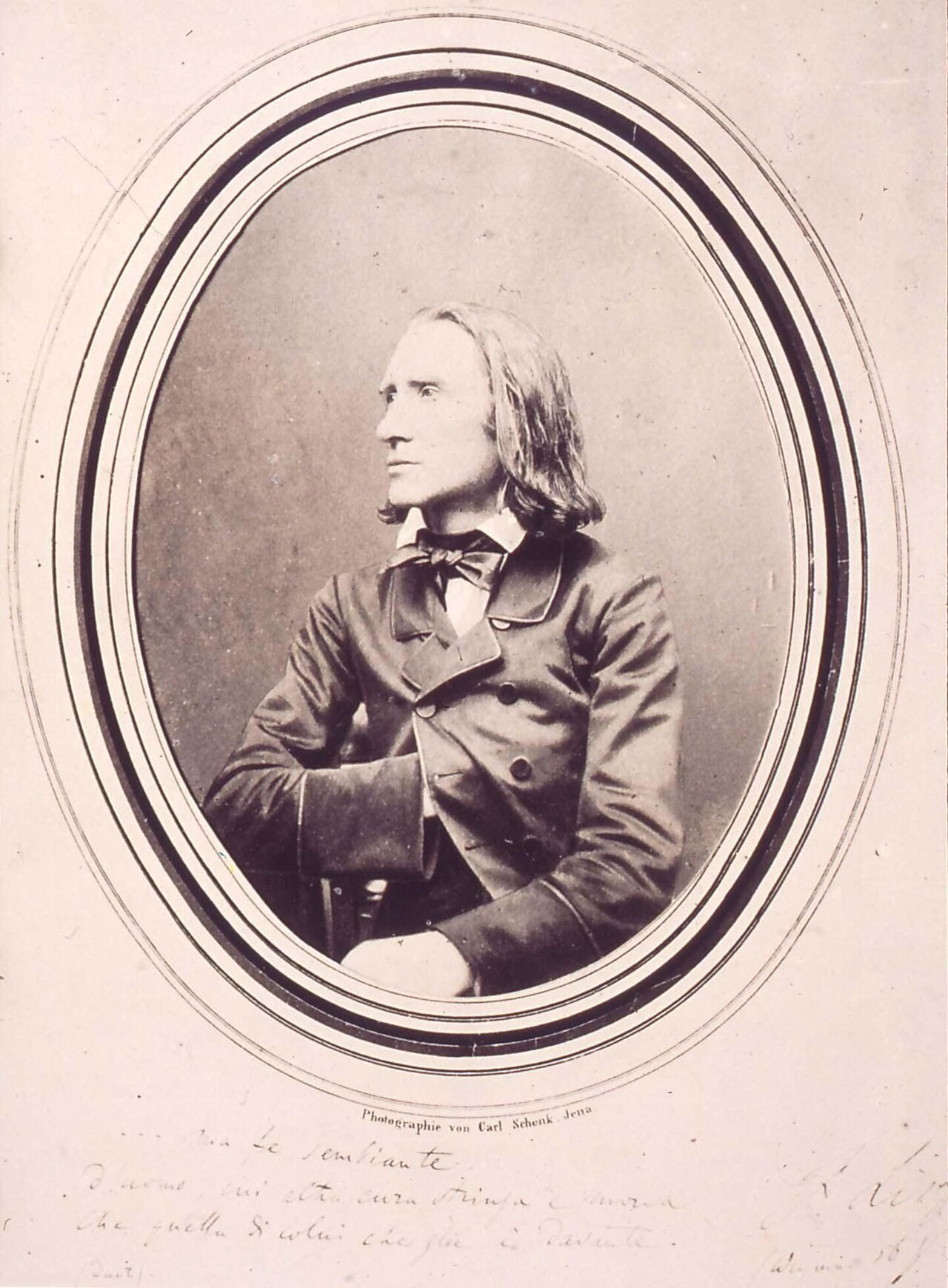
At his concerts in Berlin, women tore his silk handkerchiefs to pieces for souvenirs, fought over his cigar stubs and coffee dregs, and grabbed at his velvet gloves until nothing was left. The object of this frenzy was Franz Liszt, the Hungarian-born pianist who was born on October 22, 1811, in the village of Doborján, and who by his mid-thirties had become something no musician had ever been: a pop star.
A child prodigy in Vienna and Paris
The signs were there almost from the start. Liszt began improvising on the piano before he was five, and gave his first public concert in Sopron in 1820, at nine. The success was so immediate that patrons paid for his musical education in Vienna, where he studied piano with Carl Czerny, who taught him free of charge for a year and a half, and composition with Antonio Salieri, the director of court music. His Viennese debut came on December 1, 1822, and it was a triumph. The family moved to Paris in 1823, but the conservatory director Luigi Cherubini refused to admit him because he was a foreigner. Liszt studied privately instead, and his only opera, Don Sanche, was staged shortly before his fourteenth birthday and ran for just four performances. His father Adam Liszt worked as a steward on an estate and was an amateur musician. After his father died of typhus in the summer of 1827, Liszt spent eight years in Paris with his mother, giving piano and composition lessons from early morning until late at night to earn a living.
Then, in April 1832, Liszt heard the violinist Niccolò Paganini. That one evening reset his ambition: he decided to achieve the same mastery on the piano, and began practicing up to fourteen hours a day. Over eight years of touring he appeared in public more than a thousand times, and the frenzy around him was named 'Lisztomania' by the writer Heinrich Heine in 1844. Audiences did not just applaud; they rioted with affection. His concerts also served causes beyond his own fame. After a fire in Hamburg in May 1842, he gave benefit performances for the victims, and he donated large sums to the construction of Cologne Cathedral and St. Stephen's Basilica in Pest, as well as to hospitals and schools.
The last paid concert in 1847
And yet, at the very peak of this, Liszt stopped. His last paid concert took place in September 1847, when he was 35. The decision was deliberate: he left the stage to preserve the legend of his playing, rather than let decline write the final chapter. A year later he settled in Weimar, taking the post of court kapellmeister, and turned his energy from performing to building something else. During his travels through Switzerland and Italy in 1835–1839 he gathered impressions that later fed into his cycle Years of Pilgrimage. In 1847, while touring Ukraine, he met the Polish princess Carolyne zu Sayn-Wittgenstein in Kyiv.
The decision was deliberate: he left the stage to preserve the legend of his playing, rather than let decline write the final chapter.
In Weimar, Liszt became the engine of a new musical movement. He organized festivals of the music of Hector Berlioz and Richard Wagner, prepared the premiere of Wagner's Lohengrin, and gathered students around him. He coined the terms 'transcription' and 'paraphrase' in music, and is credited with creating the symphonic poem as a genre. He also invented the masterclass as a way of teaching performance.
The late works went further. Liszt's final compositions contain experiments with atonality that point toward the music of the twentieth century. Among his most famous pieces are the Hungarian Rhapsodies, the Years of Pilgrimage, the Transcendental Études, La Campanella, and the B minor Sonata. The boy who had begun improvising before he was five had become a composer whose reach extended a century ahead.
Franz Liszt died on July 31, 1886, in Bayreuth, of pneumonia. The man who had once been the most adored performer on earth left behind no recordings, only the legend of the silk handkerchiefs and the music that kept moving forward long after he had left the stage.