
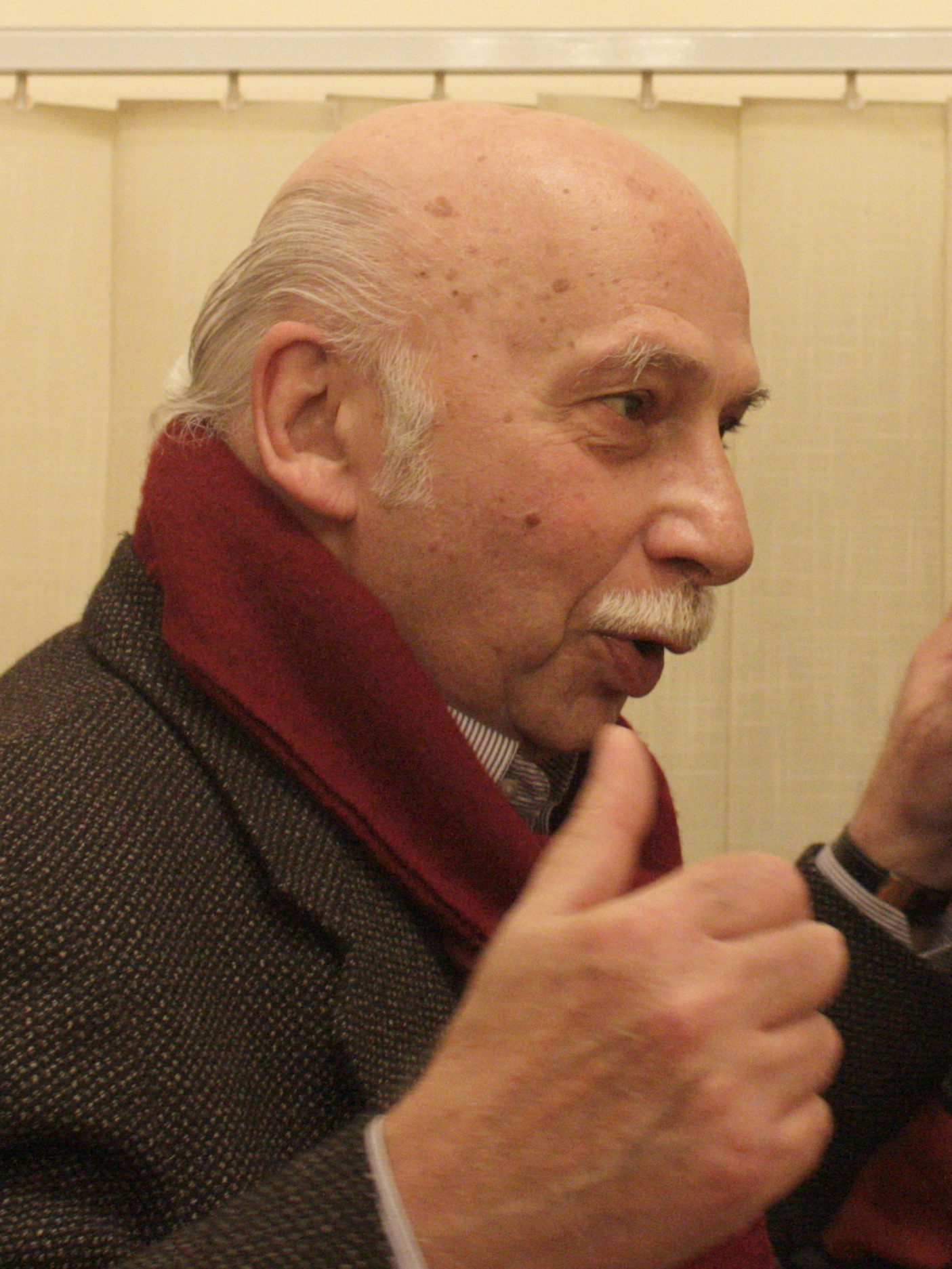
In the last months of his life, the Georgian composer Giya Kancheli lay in a Tbilisi hospital, a man whose music had once filled the great concert halls of Philadelphia, Berlin and New York. He died there of heart failure on 2 October 2019. The man in that bed had spent decades building a sound the world described as slow fragments of minor melody draped over long, humming string dissonances — music that felt less like performance and more like weather.
From geology to composition
Before any of that, Kancheli studied the earth. He finished the geology faculty of Tbilisi University, then, at nearly thirty, switched to the Tbilisi Conservatory and graduated in composition. That late start gave his work a strange patience: no rush to impress, just long arcs of sound that could hold a silence until it became unbearable. His friend Rodion Shchedrin called him a restrained Vesuvius, and the nickname stuck because it fit — a quiet surface over something enormous.
The turning point came far from Georgia. The Philadelphia Orchestra, led by Yuri Temirkanov, gave the American premiere of his Fourth Symphony. Until then Kancheli had been a Soviet composer of some note, but that performance turned him into a figure the wider world wanted to hear. What they heard was unusual: seven symphonies, each built from the same patient language, each slowly gathering pressure.
The Rustaveli Theatre years
He spent decades inside the Rustaveli Theatre in Tbilisi as its music director, writing for plays and films. His scores for the films Mimino and Kin-dza-dza! made him a household name far beyond concert halls — the latter a science-fiction comedy whose strange, tender music became its own character. He could write for a cartoon remake of the same film decades later and lose none of that voice.
Then came the grief. Kancheli wrote a work called Styx for solo viola, choir and orchestra. The choir sings the names of two dead friends — Avet Terterian and Alfred Schnittke. It is a farewell piece, but not a soft one: the title names the river the dead must cross, and the music refuses to make that crossing easy. It became one of his most performed late works, especially after he left Georgia for Berlin and then Antwerp, where a Flemish orchestra invited him to live and work.
It is a farewell piece, but not a soft one: the title names the river the dead must cross, and the music refuses to make that crossing easy.
Berlin, Antwerp and anger
The move west changed him. After the Soviet Union opened, Kancheli began receiving commissions and performances across Europe and North America. He lived in Berlin on a German arts academy stipend, then settled in Antwerp as a guest of the Royal Flanders Philharmonic. From that distance, he watched Russia with increasing anger — first over the war in Georgia, then over the treatment of Ukraine, and he refused to visit Russia for many years despite keeping close friends there.
That anger made its way into music. In Berlin he presented a piece called Angels of Sorrow, a title that sounds like a prayer but carried a political weight. He could not separate his art from his country's pain, and the later works grow sharper, less consoled. The slow dissonances he had always used now felt less like atmosphere and more like a wall.
What remains is not a legacy speech but a body of work with one of the strangest career paths in modern music: from geology to film comedies to symphonic mourning, all in the same unmistakable vocabulary. Seven symphonies, a theatre's worth of incidental music, and one river of a piece that keeps singing the names of the dead. When the choir in Styx repeats those names, the music does not fade; it persists.