
On an April evening in Los Angeles, the Canadian pianist Glenn Gould sat down at the piano as he always did, on the old wooden chair his father had made, and played a public concert for the last time. He was 31 years old and already one of the most famous classical musicians on the planet. Nobody in the hall that night knew they were witnessing the end of something, because Gould had told no one of his decision. He died on October 4, 1982.
The Goldberg Variations breakthrough
He had become an international star almost a decade earlier with a single recording: Bach's Goldberg Variations. The piece was considered obscure, a technical workout for harpsichord, but Gould's 1955 version turned it into a sensation. The record sold beyond anyone's expectations and made a young man from Toronto the most talked-about pianist of his generation.
Yet the stage never fit him. Gould hated the ritual of the concert hall, the coughing audiences, the travel, the pressure to repeat the same pieces night after night. He gave fewer than 200 concerts in his entire career, and only a small fraction of those outside his native Canada. For a star of his magnitude, that number was astonishingly low.
A romance with the microphone
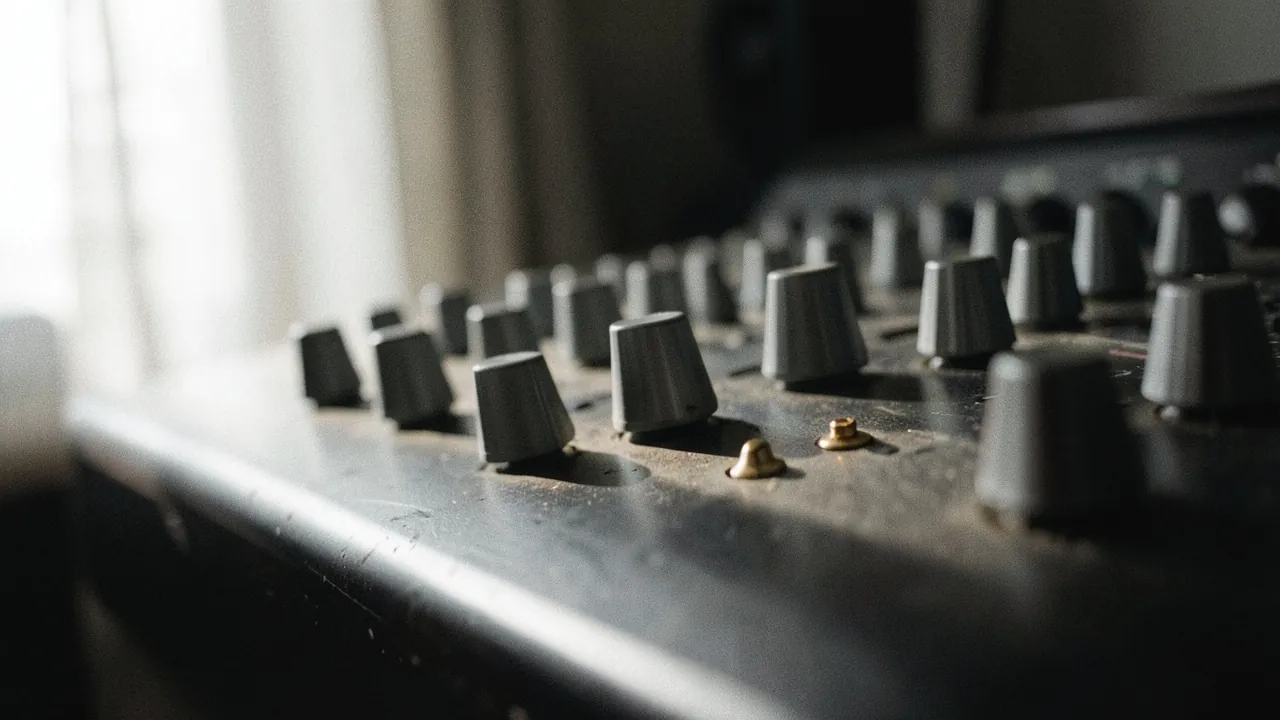
He described studio recording as a romance with the microphone. In the studio he could shape every note, splice takes, and build a performance that existed only in sound. He also did strange things that live audiences found distracting: humming and singing along while he played, refusing any chair except the one his father built, even as it wore down to the bare wood.
He described studio recording as a romance with the microphone.
So after that Los Angeles concert, he simply stopped. No farewell tour, no announcement. He retreated to Toronto, to the recording studio and the radio booth, and spent the next 18 years making records and creating experimental radio documentaries. He composed music, wrote his own liner notes, and even invented fictional musicians in them just to amuse himself.
Records instead of concert halls
The decision looked like career suicide to many. A classical pianist without concerts was supposed to be finished. Instead, Gould proved the opposite: his records kept selling, his influence kept growing, and he became perhaps the first major classical artist whose reputation rested almost entirely on recordings.
In 1981 he returned to the Goldberg Variations, re-recording the piece that had made him famous. The new version was slower, stranger, more introspective. A year later, two days after his 50th birthday, he suffered a stroke that paralyzed his left side. Doctors kept him on life support until they confirmed his brain had stopped, and then he was allowed to go.
He was buried in Mount Pleasant Cemetery in Toronto, with the opening notes of the Goldberg Variations carved into his gravestone. Years earlier he had refused the Order of Canada, one of his country's highest honours, without public explanation. He won the Molson Prize for his contribution to Canadian culture, and a foundation in his name now gives out one of the most prestigious awards in music.
One of his Bach recordings travels beyond Earth on the Voyager golden record, a calling card for whatever might find it. Back on the planet he left, the old chair that supported him through every session sits under glass in the National Library of Canada. The man who gave up the stage never really left it; he just changed what the stage could be.