
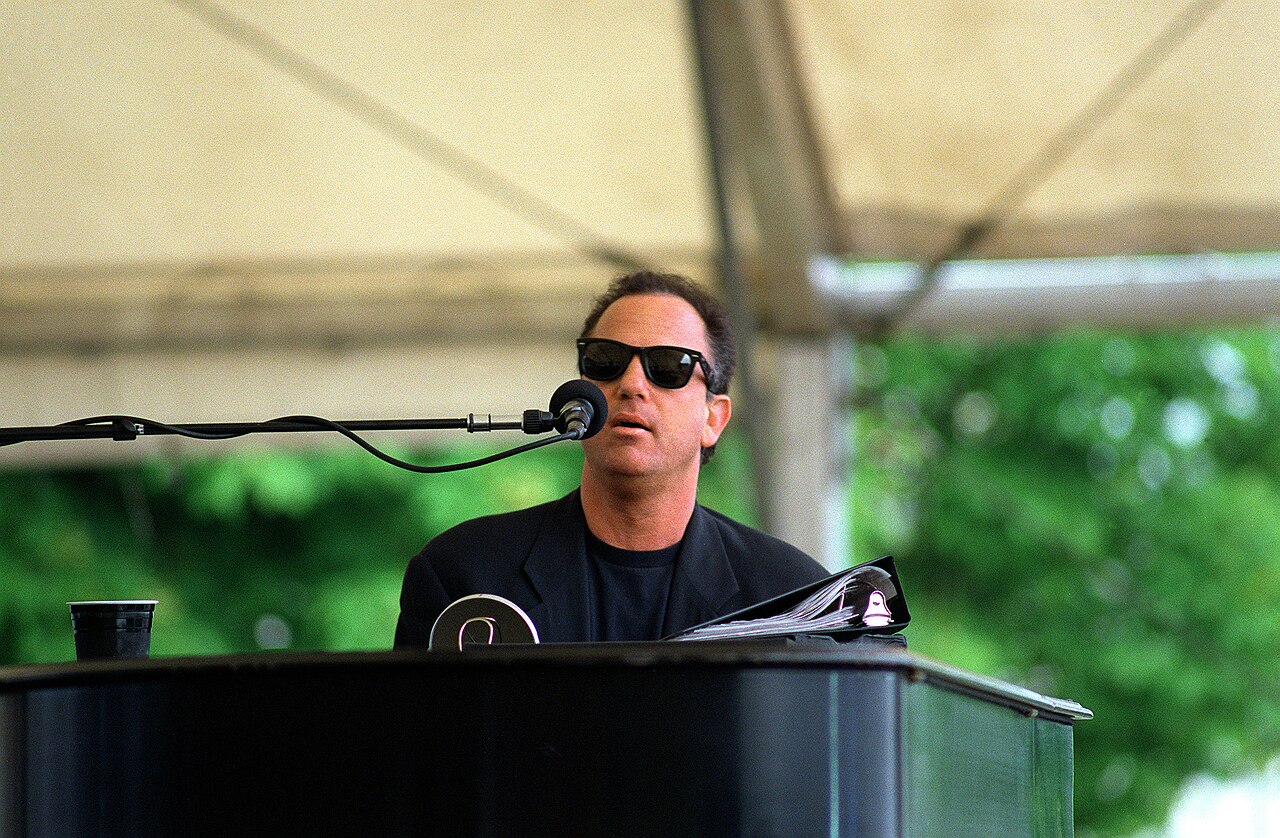
A rock star smashes a microphone stand in Moscow, then jumps into a crowd in Leningrad. That man is Billy Joel, the American singer-songwriter, and those moments from six Soviet concerts became a live album released on October 26, 1987. The Soviet shows were not Joel's first live recording. Kontsert was his second concert album, after Above the Clouds, which had come out in 1979. By the time he reached Moscow and Leningrad, he already knew how to shape a stage show into a record.
A historic tour and its predecessors
The album, called Kontsert, captured the Soviet leg of Joel's The Bridge tour. Columbia Records released it and called it a historic event, which was not just marketing talk: Joel was one of the first Western rock musicians to play in the USSR. Only a few acts had come before him. Joel was not the first Western rock musician to perform in the Soviet Union. John Denver, Elton John, James Taylor, and Santana had already played there before him. Still, his six shows placed him among a very small group of American artists who had crossed that border.
The shows took place in two cities. Three concerts were held at the Olympic Stadium in Moscow and three at the SKK hall in Leningrad. Joel brought his wife Christie Brinkley and their daughter Alexa Ray Joel on the trip, and he made it clear that he wanted Americans to see he had met not enemies in Russia.
Chaos and the band on stage
The stage had its share of chaos. In Moscow, Joel knocked over an electric piano and broke a microphone stand during the song Sometimes a Fantasy. He was upset about the lighting aimed at the audience and shouted for the crew to stop shining lights on the crowd. The band on stage included Dave Lebolt on keyboards, Mark Rivera on saxophone, Kevin Dukes and Russell Javors on guitars, Doug Stegmeyer on bass, and Liberty DeVitto on drums. Backing vocals came from Peter Hewlett and George Simms. A Georgian ensemble, Rustavi, also took part in the recording, appearing on the song "Odoya."
There were gentler moments too. Joel dedicated the song Honesty to Vladimir Vysotsky, calling him a man who told the truth. In Leningrad he met a clown named Viktor, who later inspired the song Leningrad on Joel's 1989 album Storm Front.
Joel dedicated the song Honesty to Vladimir Vysotsky, calling him a man who told the truth.
The album also had an unusual cover: the Beatles' Back in the U.S.S.R. It became Joel's first single that he did not write himself. The band joked about the whole project, calling the album Kaput, and Joel himself was unhappy with his vocals because he had a cold during the recordings. The single "Back in the U.S.S.R." had a live version of Bob Dylan's "The Times They Are A-Changin'" on its B-side. That pairing gave the release a second layer of meaning, joining a Beatles cover with a Dylan song from the same era of protest and change.
Still, the release found its audience. Kontsert reached number 38 on the Billboard 200 and went platinum in the United States. Joel later said the Soviet trip was the main event of his career, even if the album itself never became his favorite document of it. The album also performed well outside the United States. It reached number 92 in the United Kingdom and number 10 in Australia, and it earned a gold certification in New Zealand. In 2014, a reissue called The Bridge to Russia brought the music back with extra tracks and received strong reviews, including a 9 out of 10 from PopMatters and a 4 out of 5 from TimeOut.