
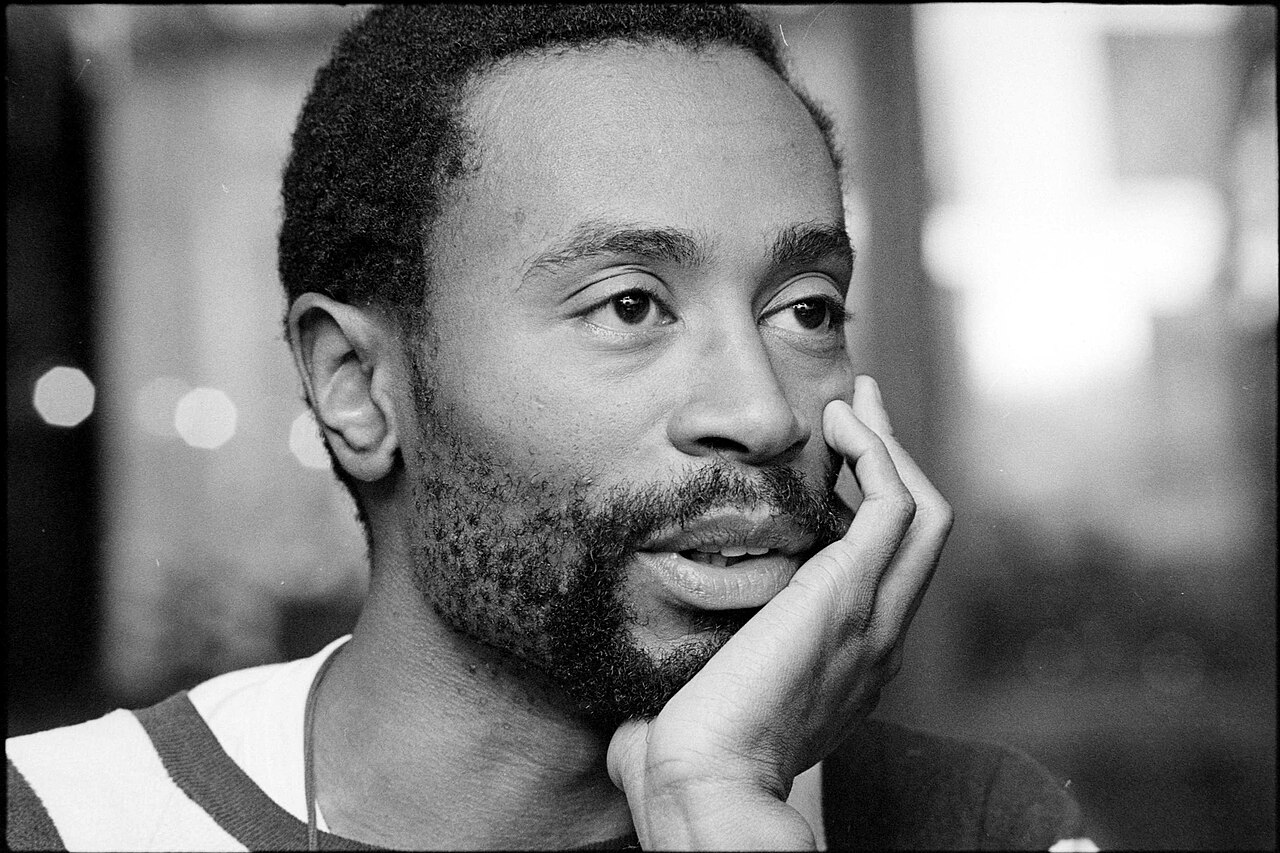
In 1978, producer Frank Farian confirmed what many Boney M fans had already begun to suspect: the man dancing at the front of the group, Bobby Farrell, did not sing on the studio records. Roberto Alfonso Farrell had become the visual engine of a disco-pop act whose recorded voices were those of other people. That arrangement made him a star of the stage without making him the voice on the records. The split between the body the audience saw and the voice the audience heard would shape his whole career. Bobby Farrell was born on October 6, 1949.
From Aruba to the Boney M stage
Farrell was born on the Caribbean island of Aruba in 1949. Frank Farian noticed him in West Germany and invited him into Boney M, where he became the only man among the women onstage. From the beginning, the job was presence: movement, posture, face. The studio could carry the sound, but a live pop group needed a body that audiences could recognise. Farrell fitted that frame before anyone asked whether he could sing. Farrell did not need a voice to do that.
The records told a different story. When Farian confirmed the arrangement, he also revealed that he himself had sung the male vocal parts on the group's songs. Singer Liz Mitchell later confirmed that the studio voices were only hers, singer Marcia Barrett's and Farian's. On stage, Farrell was left to growl instead of sing. Farrell was the frontman, but the microphone in the recording booth had never really been his. Audiences heard one voice on vinyl and saw another man on stage.
Audiences heard one voice on vinyl and saw another man on stage.
Rasputin and the visual signature
The strange gap became theatre with 'Rasputin', a track from the album Nightflight to Venus. Farrell performed the song as Grigori Rasputin, acting the part while the recorded voice carried the story. The routine gave Boney M a striking visual signature. It also tied Farrell to a Russian historical figure in a way that would echo long after the disco years cooled. What looked like a costume piece was really the clearest statement of how the group worked.
The arrangement cracked in 1981, when Farrell left Boney M after conflicts with Frank Farian. The split was less about singing than about control of the image. The group carried on without him, but a live act built on movement does not simply replace its frontman. Audiences had learned to read the stage for the body, not just the voice. For a group whose records already separated voice from body, losing the body onstage was riskier than losing a singer in the studio. The conflict was not new; it had been built into the act.
Return, final breakup and solo touring
Farrell eventually returned to Boney M and stayed until the group's final breakup. The time away had not changed the basic template: on a poster or a stage, Farrell was the man people recognised; on a record, the voice was a separate matter. The group rode that contradiction as long as the lights stayed on. When the end came, it was not the end of Farrell's touring life. The act simply moved to a smaller stage, with the split between face and voice now part of its identity.
After the final breakup, Farrell went on the road with his own project, Bobby Farrell's Boney M. The name was a strange fix: the frontman had finally put his own name first, even though the classic records still carried someone else's voice. For audiences who came for the show, the voice mattered less than the silhouette. Dance and presence were the product, and Farrell still knew how to deliver them. Farrell was no longer hiding the arrangement; he was packaging it under his own name.
Farrell died in St Petersburg on 30 December 2010. The cause was cardiac arrest. It was the same date, in the same city, as the death of Grigori Rasputin, and close to a place connected with the Russian figure he had acted out on stage years earlier. That detail is not a punchline; it is simply where the story ended. After all the noise, the costumes and the borrowed voice, the dancer who played Rasputin died on the same date, in the same city, as the character he once performed.