
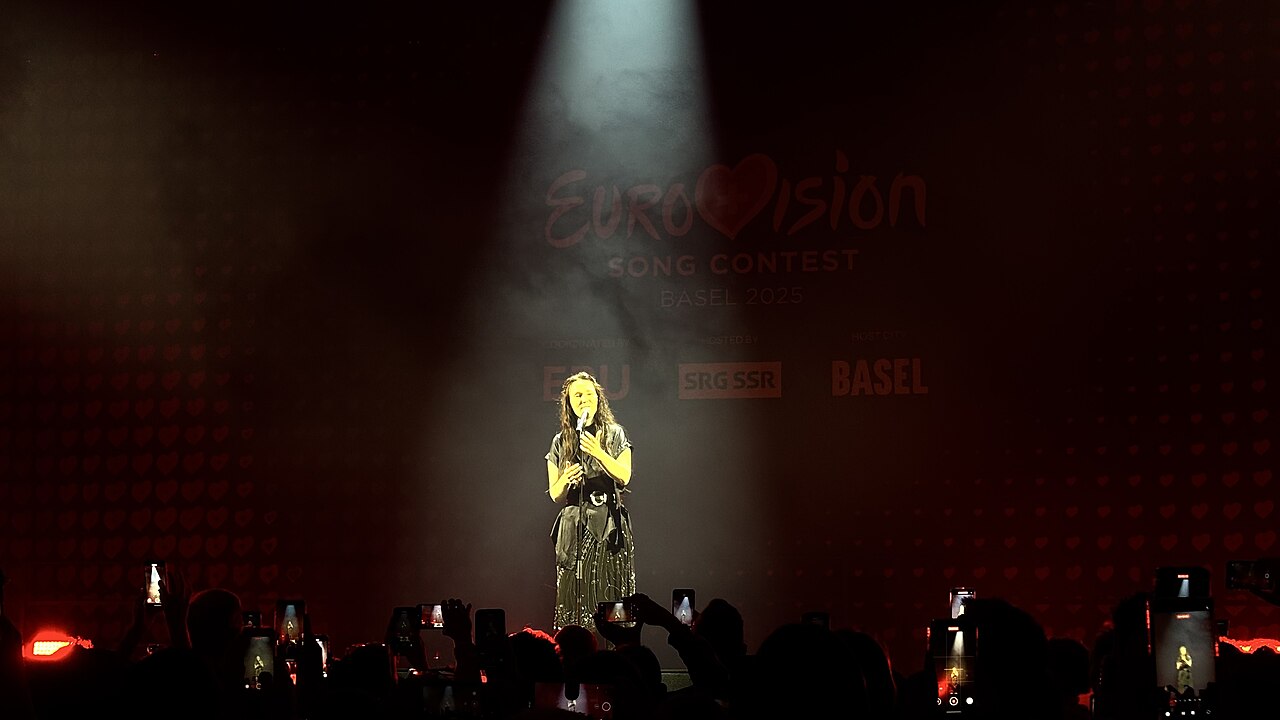
A scoreboard can be a cruel mirror. When the televote tally appeared for Switzerland at the Eurovision Song Contest in Basel, the number beside Zoë Më's name was a stark zero. The same juries that had just ranked her second among all finalists were overruled by millions of viewers who gave her nothing. For a singer who had spent years building a reputation as a delicate, bilingual poet of pop, that single digit exposed the gap between what professionals admire and what a Saturday-night audience reaches for. Zoë Më was born on October 6, 2000.
A bilingual poet of pop
Zoë Më is the stage name of Zoë Anina Kressler, born in Basel on the sixth of October two thousand. Her music is often described as poetic pop-chanson, a style that leans on atmosphere and language rather than hooks. She writes and sings across German and French, switching between the two in a way that feels less like translation and more like two halves of one thought. That duality has been her signature since she began releasing music in 2018, starting with the single Bärenbrüder.
The road to Eurovision was built on quiet accumulation. Her debut album Momoko arrived in the autumn of 2020 on the small label Black Paper Boat, a collection that cemented her reputation among Swiss tastemakers. She played the Montreux Jazz Festival and Luzern Live, opened for touring acts like Remo Forrer and Joya Marleen, and picked up the RTS Artiste Radar and SRF 3 Best Talent awards. Those honours had previously gone to Nemo and Marius Bear, both of whom went on to represent Switzerland at Eurovision. The pattern was clear: this was a talent being groomed for a bigger stage.
Switzerland's host-nation choice
In March 2025, the Swiss Broadcasting Corporation confirmed what many had suspected. Zoë Më would carry the host nation's hopes in Basel, performing a song called Voyage. The choice felt logical. She was local, she was distinctive, and her music had a European art-song quality that juries tend to reward. But a home crowd and a jury panel are very different animals from the televoters who decide half the result.
On the night of the final, she performed nineteenth in the running order. The professional juries responded exactly as expected, handing her two hundred and fourteen points and second place in their ranking. Then came the public vote. Across Europe, not a single televoter gave Switzerland a point. The final scoreboard placed her tenth overall, but the real story was the chasm between the two verdicts. The twenty-four-position gap between her jury placing and her televote placing set a new record for the contest, a statistic that will follow the song as closely as its melody.
Why juries and televoters split
What explains such a split? Voyage is not a typical Eurovision song. It does not chase a chorus, does not build to a key change, does not beg for a light show. It is a mood piece, sung in a blend of languages, built for headphones more than arenas. Juries, made up of music professionals, often reward craft and originality. Televoters, voting with their thumbs in thirty seconds, tend to reward instant emotional payoff. Zoë Më's music has always asked for patience, and patience is a scarce resource on Eurovision night.
Juries, made up of music professionals, often reward craft and originality.
The aftermath did not slow her down. Voyage reached the top ten of the Swiss chart and charted in Austria and the Netherlands. She opened the Baloise Session alongside Amy Macdonald, released a string of new singles, and by 2026 had won the Swiss Music Award for Best Breaking Act. The zero televotes became a footnote in a career that kept moving, a reminder that the loudest room in Europe is not the only room that matters.
The scoreboard in Basel told two stories at once. One was about a jury that heard something refined and voted for it. The other was about an audience that heard the same song and felt nothing. Zoë Më walked away with a record no one wants, but also with the knowledge that her kind of music has always been a slow burn. The zero was not the end of the voyage; it was just the part where the sea got rough.