
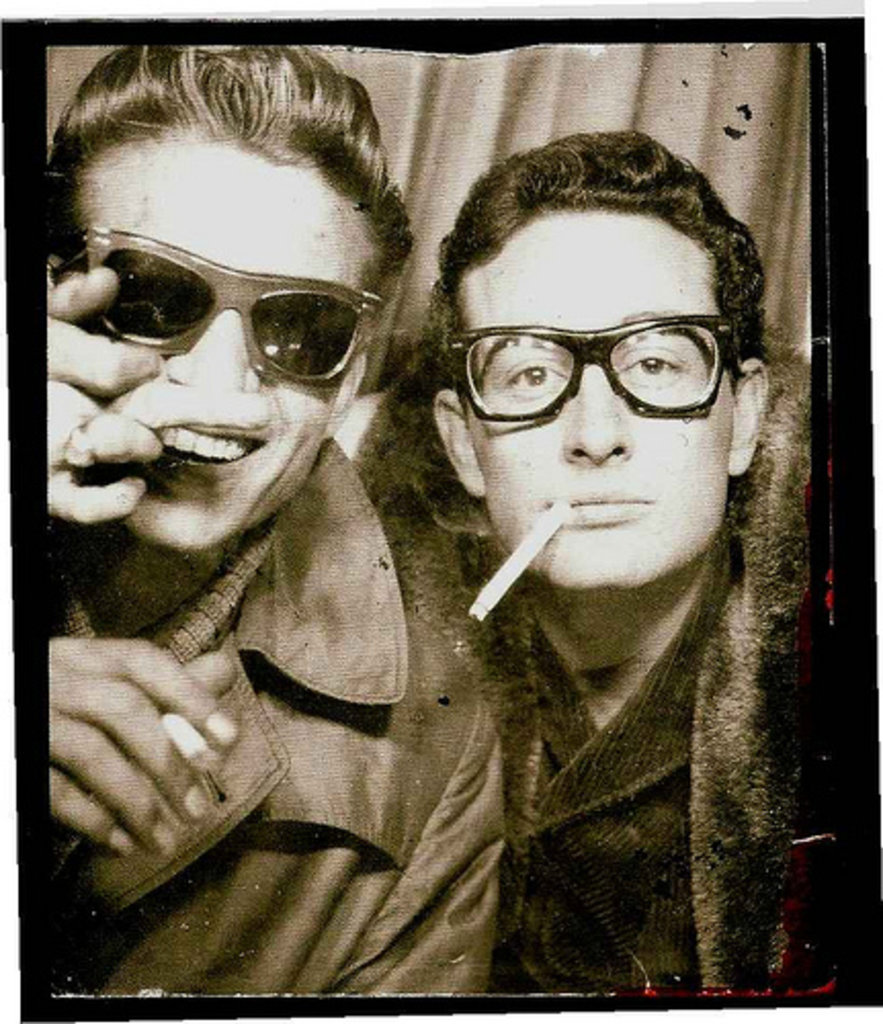
A red rose with a ring hidden inside it sat on a New York desk in the summer of 1958, the first move in a courtship that would end in marriage within weeks. The man behind the gesture was Buddy Holly, the Texas rock and roller whose real name was Charles Hardin Holley, born in Lubbock, Texas. On October 21, 1958, he walked into the Pythian Temple studio on West 70th Street for what turned out to be his last recording session. Nobody in the room knew it then, but the songs cut that day would become the final statement of a career that had already changed American pop.
Strings replace the guitar-bass-drums setup
The session was unusual for Holly. Instead of his usual guitar-bass-drums setup, he recorded with an orchestra conducted by Dick Jacobs, a sound later nicknamed 'The String Sessions'. The two songs that survived from that day were 'Raining in My Heart' and 'It Doesn't Matter Anymore'. It was a deliberate move away from the rock-and-roll hits that had made his name, toward something softer and more melancholy, as if he were already writing for a future he did not get to see. The choice of strings was not a rejection of rock and roll so much as a widening of it. Holly had already shown he could move between styles, and this session gave him room to try something more intimate.
The road to that New York studio had begun with a spelling mistake. When Holly signed with Decca Records, the label wrote his surname without the 'e', and he performed as Buddy Holly from then on. His breakthrough came the following year with 'That'll Be the Day', a single that topped the American chart in September and spent three weeks at number one in Britain two months later. Another hit, 'Peggy Sue', reached the third spot on the American pop chart, cementing him as one of the most distinctive voices of early rock and roll.
Marriage and a new emotional register
By the time of the Pythian Temple session, Holly's life had changed sharply. He had married Maria Elena Santiago in Lubbock on August 15, 1958, just two months before the recording. His manager Norman Petty had tried to talk him out of the marriage, worried it would hurt his career. The songs from the final session reflected a different emotional register from the youthful singles, with 'Raining in My Heart' written by Felice and Boudleaux Bryant, a husband-and-wife songwriting team known for crafting polished, adult pop.
The record was released on Coral Records on January 5, 1959, with 'Raining in My Heart' as the B-side to 'It Doesn't Matter Anymore'. The single only reached number 88 on the Billboard chart, a modest showing for a man who had topped it less than two years earlier. But the song refused to disappear. It was included on the first Buddy Holly compilation, The Buddy Holly Story, released in March, just weeks after the plane crash that killed Holly, Ritchie Valens, the Big Bopper and pilot Roger Peterson on February 3, 1959.
Covers and a long afterlife
What Holly left behind that October afternoon turned out to have a long afterlife. Leo Sayer took 'Raining in My Heart' to number 21 in Britain and number 47 in America. Dean Martin, Connie Francis, Status Quo, Don McLean and Robert Wyatt all recorded their own versions. The Beatles borrowed the song's opening line for 'Dear Prudence', a small tribute from the band that had grown up listening to Holly's records.
The final session also pointed to where Holly was heading next. In early 1959 he had put together a new group with Waylon Jennings, Tommy Allsup and Carl Bunch, ready to tour and keep pushing his sound forward. The orchestral arrangements on 'Raining in My Heart' and 'It Doesn't Matter Anymore' suggested a musician moving beyond the guitar-driven formulas that had made him famous. He was twenty-two years old and already reinventing himself. His influence outlasted the brief career that produced it. In 1986 he was among the first inducted into the Rock and Roll Hall of Fame, and in 2010 Rolling Stone placed him thirteenth on its list of the hundred greatest artists.
He was twenty-two years old and already reinventing himself.
The Pythian Temple recordings were the last time Buddy Holly sang into a studio microphone. The songs were quieter, sadder and more ambitious than anything he had tried before, and they arrived in record shops only after he was gone. What began that October day as an experiment with strings became the closing chapter of one of the shortest, most influential runs in rock and roll history.