
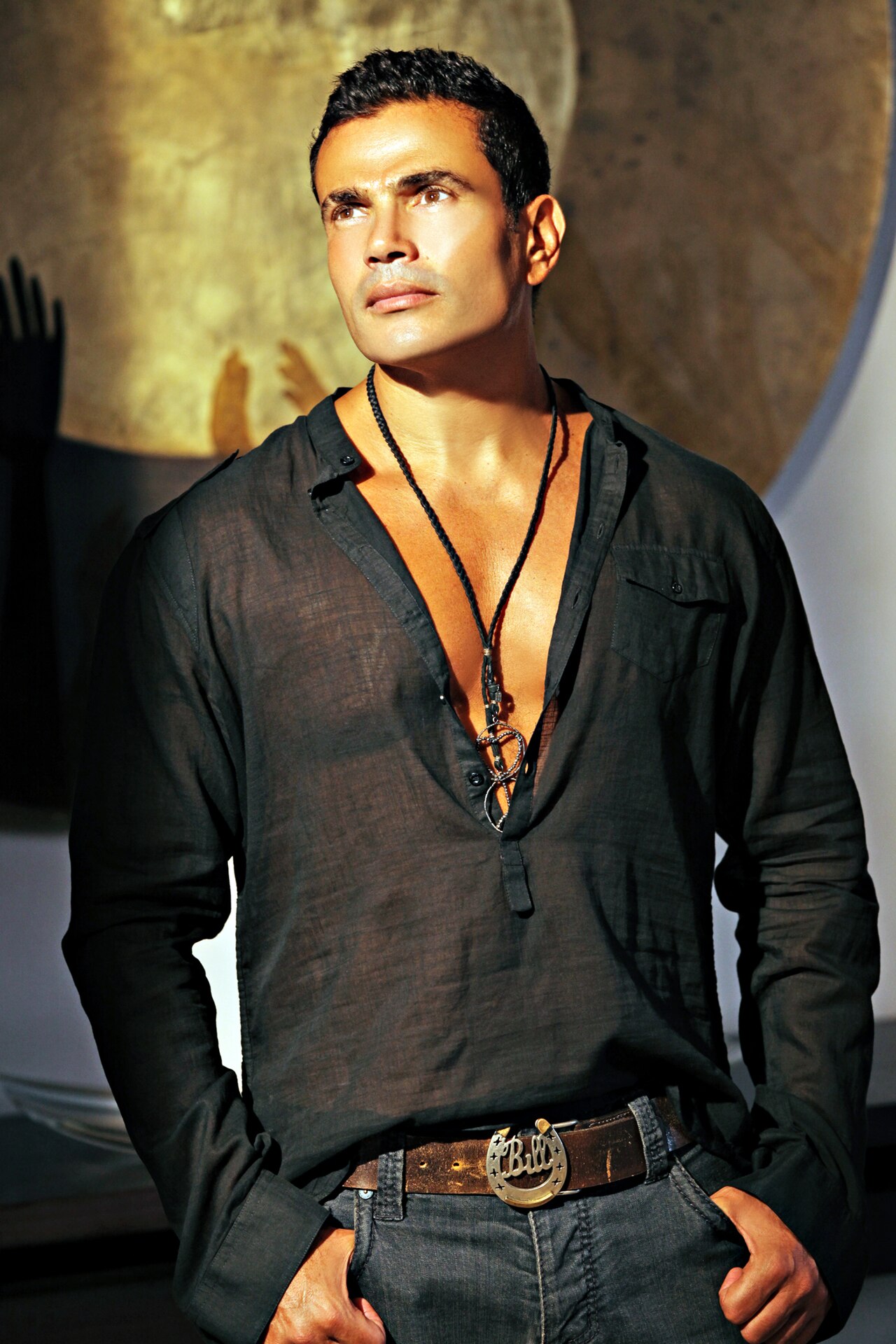
A seven-year-old boy steps up to a microphone at a local radio station in Port Said and sings the Egyptian national anthem live on air. That boy was Amr Diab, born on 11 October 1961, and the moment in 1968 said something about his nerve: he was already comfortable in front of an audience before he could tie his own shoes. The son of a marine construction director and a French teacher, Diab grew up in a middle-class family from the Nile Delta. Music was not a side interest; it was what he did best, and he kept at it through the Cairo Academy of Arts, where he earned a bachelor's degree in Arabic music in 1986.
From Ya Tareeq to Nour El Ain
His first studio album, Ya Tareeq, arrived in 1983, but the real shift came more than a decade later. By 1992 Diab had become the first Egyptian and Middle Eastern artist to shoot high-tech music videos, a move that made him a visual presence across the region. Then, in 1996, he released Nour El Ain with the label Alam El Phan. The title track blended Western and Middle Eastern rhythms so smoothly that researcher Michael Frishkopf called the style 'Mediterranean music'. The song did something no Arabic pop record had done before: it travelled far beyond the Arabic-speaking world.
That one album earned Diab his first World Music Award and brought him international fame. He was no longer just Egypt's biggest pop star; he was the face of a new sound. Critics David Cooper and Kevin Doey described his music as 'a new breed of Mediterranean music', and the nickname stuck: Diab became known as the father of Mediterranean music. He wrote more than 97 of his own songs, which gave him control over the material that carried his name across borders. The videos he had pioneered in the early 1990s now worked as a delivery system for that sound, putting his face in front of audiences who had never heard Arabic pop before.
Awards and a Guinness record
The awards piled up in a way no Middle Eastern artist had seen. Diab won World Music Awards as the best-selling Middle Eastern artist four times: in 1996, 2001, 2007 and 2013. He remains the only Middle Eastern artist with seven World Music Awards, a total that earned him a Guinness World Record in 2016 for the most World Music Awards for a best-selling Middle Eastern artist. His catalogue also includes six African Music Awards and two All Africa Music Awards. In 2022 Anghami, the streaming platform, announced that his catalogue had passed one billion streams.
The chart success told the same story. In October 2014, his album Shoft El Ayam reached the top of the Billboard World Albums Chart, making Diab the first Egyptian and Middle Eastern performer to hit number one there. That was not a fluke: five of his albums have landed in the top ten of that chart. His 2016 album Ahla w Ahla climbed to number 14 on the Billboard Heatseekers Chart, a rare feat for an Arabic-language record. The numbers mattered because they proved that a singer working in Egyptian Arabic could compete in a global marketplace built around English and Spanish.
Diab did not just record songs; he built an infrastructure around them. He was one of the first artists to popularise music videos across the MENA region and the first Egyptian singer to appear in music clips. His online radio station Diab FM runs discussions about what the team can offer society and carries out humanitarian projects across Egypt. He also launched the charity campaign Masry Begad, which translates as 'A Real Egyptian'. These moves kept him connected to fans who had grown up with his music, even as his sound reached new listeners in Europe and Latin America.
The story of Nour El Ain is the story of a border crossing. Before 1996, Arabic pop rarely travelled far beyond its own linguistic territory. After it, the Mediterranean became a musical idea as much as a geographical one. Diab turned 65 in 2026, and his most recent album, Ebtadena, arrived in 2025. The boy who sang the national anthem on Port Said radio is now the standard against which Arabic pop is measured, and the song that made his name still sounds like the moment the door opened.