
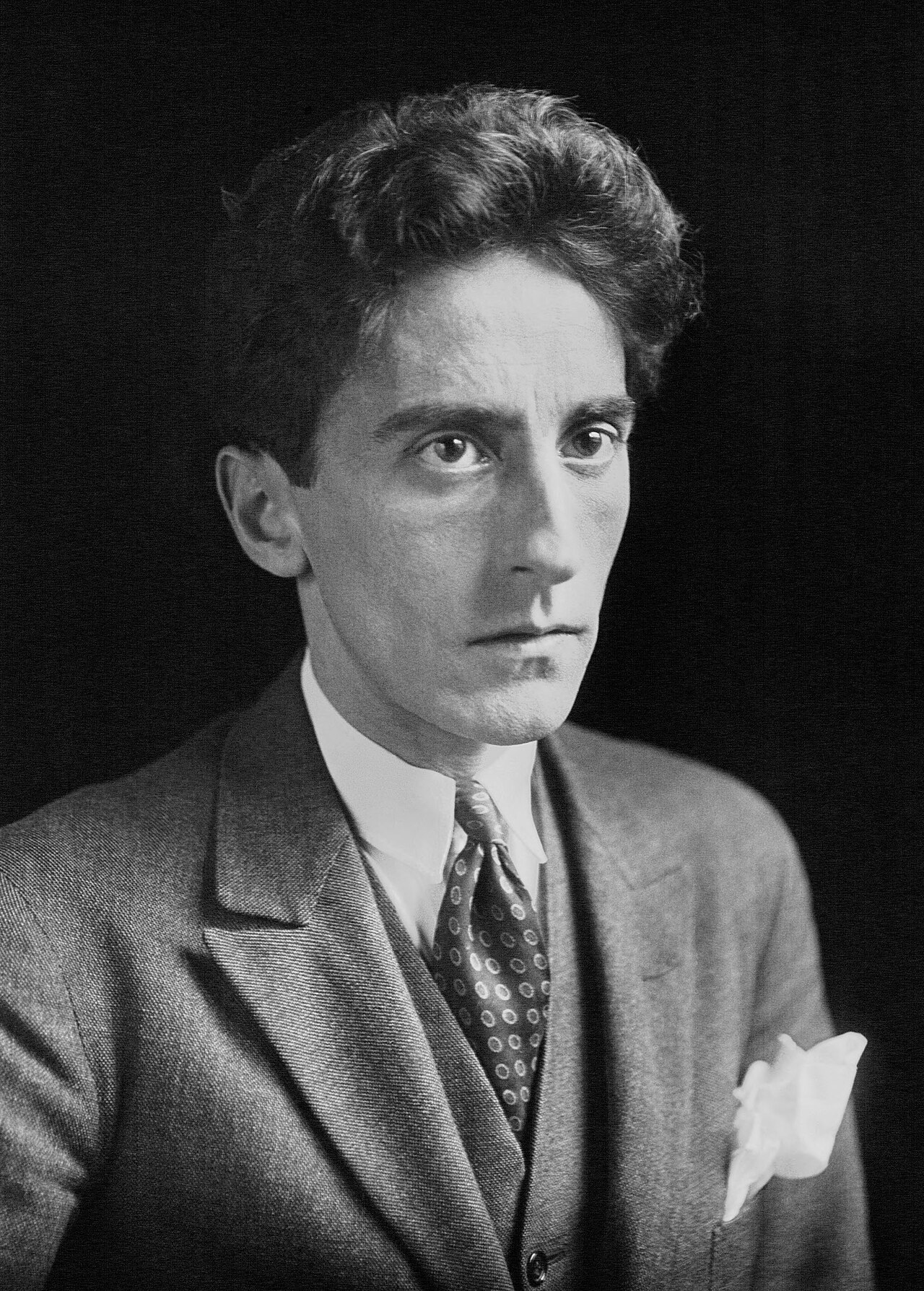
On 10 October 1963, the French singer Édith Piaf died. The next day, at his château in Milly-la-Forêt, the poet, playwright, filmmaker and designer Jean Cocteau suffered a heart attack and died at the age of 74. Almost immediately a story began to circulate: that Cocteau's heart stopped when he learned of Piaf's death. It is almost certainly apocryphal, but it stuck because it sounds like something from one of his own plays. Jean Cocteau died on October 11, 1963.
A frail artist still at work
Cocteau had been unwell for months. A severe heart attack on 22 April 1963 had left him frail. Yet in that same period he was still working on his final monumental commission, the decoration of the Chapelle Notre-Dame-de-Jérusalem in Fréjus, begun in 1963. He was not a man who treated death as a distant abstraction; for decades he had made it the subject of his art.
He was one of the most restless figures in twentieth-century French culture, a leading avant-garde artist who influenced both surrealism and Dada. In 1917 the ballet Parade, with a scenario by Cocteau, sets by Pablo Picasso and music by Erik Satie, was staged in Paris and is now called the first surrealist spectacle. That same appetite for myth and transformation ran through everything he did.
Orpheus and the underworld
His greatest theatrical work, the 1934 play The Infernal Machine, retold the Oedipus story with a modern, ironic edge. Before that, in 1926, his play Orphée had already shown where his imagination kept returning: to Orpheus, the poet who descends into the underworld. The image of the artist crossing between life and death became the leitmotif of his entire output.
So when Cocteau decorated the Chapelle Saint-Blaise-des-Simples in Milly-la-Forêt in 1959, he was not simply adding another chapel to his list of painted projects. He was preparing the room where he would be buried. He painted the walls of a small, simple chapel, and four years later his body was placed under its floor.
Walls treated as pages
His grave carries an inscription of his own choosing: 'Je reste avec vous' — I remain with you. It is a line that could close one of his plays. Cocteau spent his last years covering walls, chapels and civic buildings with his economical line, from the chapel of Saint-Pierre in Villefranche-sur-Mer between 1956 and 1957 to the marriage hall of Menton's town hall. He treated walls as pages.
The myth about Piaf's death has never quite let go, because it turns his end into a dramatic coincidence. But the facts point to a quieter, stranger ending: a man whose health had been failing since spring, still at work on a chapel he knew he might not finish, in a village where he had already decorated the very floor that would cover him.
In 1955 Cocteau was elected to the Académie française and the Royal Academy of Belgium, and he served as honorary president of the Cannes Film Festival. Yet the honours matter less than the image he left behind: a poet who wrote ballets, films and novels, and who painted the chapel that became his tomb. The story of his heart stopping with Piaf's is a good myth. The chapel is the real ending.