
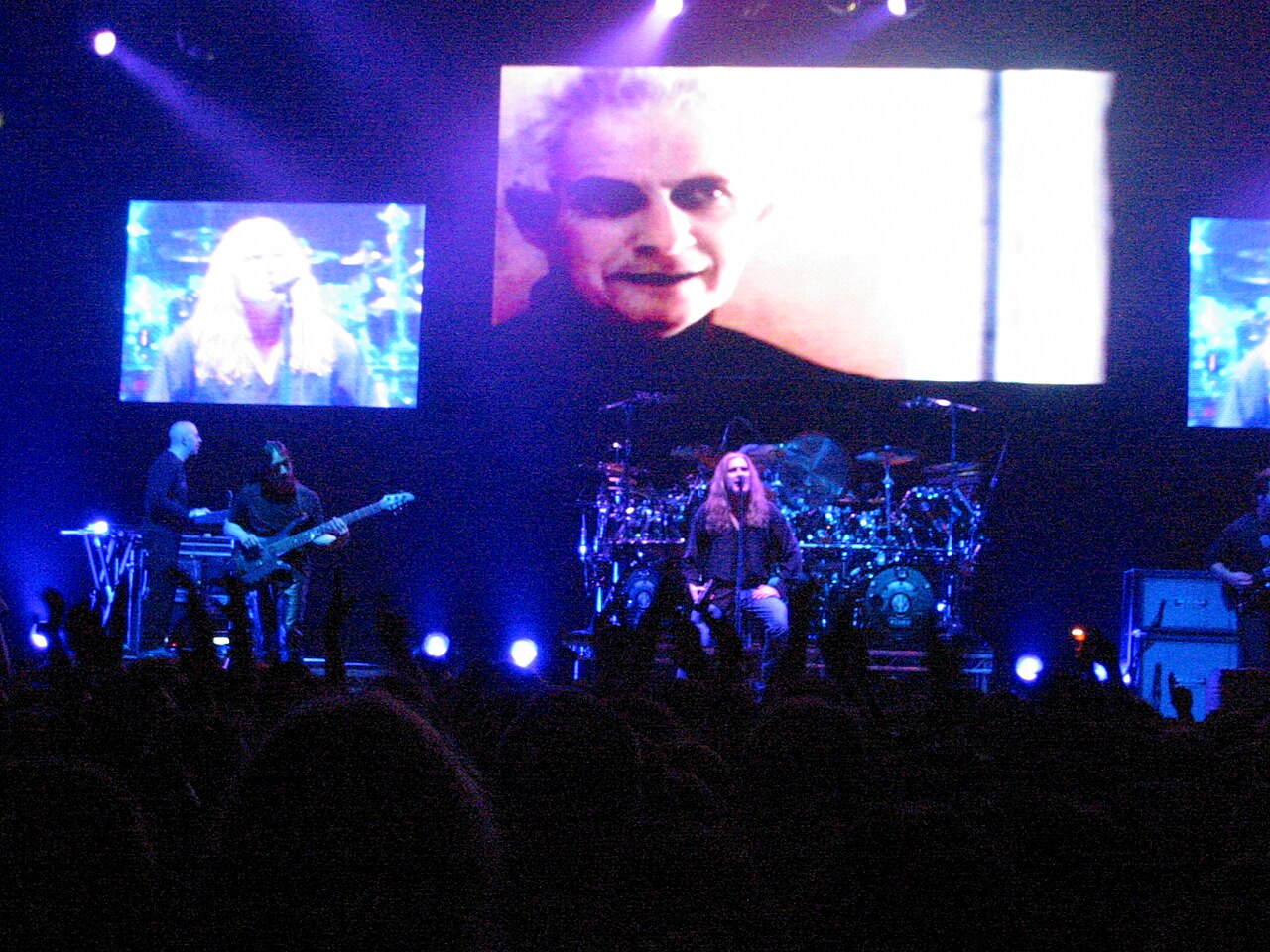
Two musicians sit in a studio control room, surrounded by concept albums propped on a table like holy relics. Mike Portnoy calls it the Inspiration Corner: Tommy, The Wall, OK Computer, Sgt. Pepper's Lonely Hearts Club Band. Dream Theater is about to attempt something they have never done before. On October 26, 1999, they release Metropolis Pt. 2: Scenes from a Memory, the first concept album the band had ever made, and the sequel nobody was supposed to get.
A joke that became a sequel
The whole thing started as a joke. When guitarist John Petrucci wrote the song "Metropolis—Part I: 'The Miracle and the Sleeper'" for the 1992 album Images and Words, he added "Part I" to the title just for fun. There was no Part II planned. Fans, of course, spent years asking for the continuation, but Dream Theater had no intention of writing one.
Then came the sessions for Falling into Infinity in 1997. The band recorded a sprawling 21-minute instrumental demo of Metropolis Pt. 2, packed with musical callbacks to the original song. Much of that demo would later surface on the final album, especially in "Overture 1928" and "Strange Deja Vu," but most of it ended up very different. The demo was a sketch; the real story had not been written yet.
A lineup change and a conference call
What forced the story into focus was a change in the band's lineup. Dream Theater had cycled through keyboardists since Kevin Moore left during the mixing of Awake. Derek Sherinian joined in 1995, played on Falling into Infinity, and even took part in that early Metropolis Pt. 2 demo. But Portnoy and Petrucci had another idea. They had been playing in a side project called Liquid Tension Experiment with bassist Tony Levin and a session keyboardist named Jordan Rudess. The chemistry was undeniable.
So they made a brutal call. Portnoy and Petrucci convinced bassist John Myung and vocalist James LaBrie to bring Rudess into Dream Theater. Sherinian was fired by conference call. Portnoy later admitted the situation was uncomfortable and unpleasant, but they did not want to fly him from Los Angeles to New York just to sack him. With Rudess on board, the band returned to BearTracks Studios in Suffern, New York, to make the album that would become Scenes from a Memory.
Dead Again and the Nicholas plot
The commercial failure of Falling into Infinity turned out to be a gift. The label backed off and gave the band freedom to choose their own direction. That freedom let them finish a story inspired less by the original "Metropolis" song and more by the 1991 film Dead Again. The plot follows a man named Nicholas who, through past-life regression, discovers he was once a woman named Victoria Page, murdered in the past. There is a love triangle, a brother named Edward, and a hypnotherapist whose true identity closes the cycle in the final moments.
The album is a dense, theatrical ride that ends with the crackle of gramophone static. That sound was not an afterthought: it continues directly into the opening of "The Glass Prison" from the band's next album, Six Degrees of Inner Turbulence, released in 2002. Dream Theater had built a bridge between records, turning a one-off joke into an ongoing narrative thread.
Commercially, Metropolis Pt. 2: Scenes from a Memory reached only number 73 on the Billboard 200. But the audience understood what the charts missed. In 2012, readers of Rolling Stone voted it their favorite progressive rock album of all time. The album Dream Theater never planned to make had become the one they could not escape.
The Inspiration Corner did its work. A fan request, a 21-minute demo, a fired keyboardist and a conference call all fed into the same story: a murder mystery told in shifting time signatures and ghostly reincarnations. Twenty-seven years later, the static at the end of the record still sounds like a door left open.
Twenty-seven years later, the static at the end of the record still sounds like a door left open.