
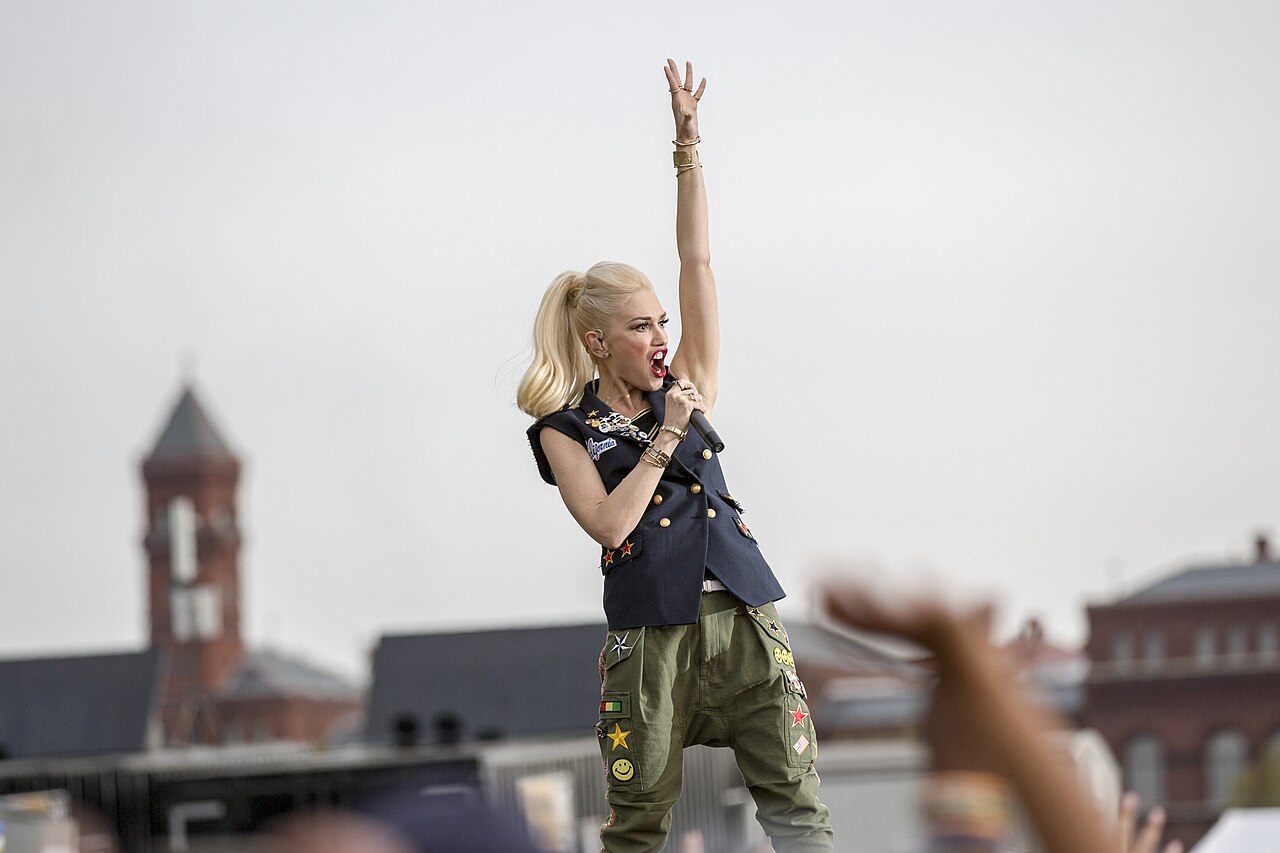
In a garage in Fullerton, California, a teenage girl steps up to a microphone as her older brother counts in the band. Gwen Stefani, born in that city on 3 October 1969, is not leading the group — she is sharing the vocals, one voice among several in a ska outfit called No Doubt. Her brother Eric, the keyboard player, brought her in a few years earlier, and nothing about the moment suggests she will one day outsell almost everyone on the American charts.
From garage band to major label
Her name itself arrived with a touch of glamour: Gwen comes from a stewardess in Arthur Hailey's 1968 novel 'Airport', while her middle name Renée echoes The Left Banke's 1966 song 'Walk Away Renée'. Yet the early years were closer to a slow grind than a fairy tale. After the band's original frontman died in late 1987, Stefani became the sole singer — and then watched the group sign with Interscope Records only to see their first album sink without trace as grunge swallowed the airwaves.
The response was a record that took more than three years to finish: 'Tragic Kingdom'. The album, released in 1995, turned romantic collapse and rage into bright, stinging pop-ska, and its slow-burning single 'Don't Speak' climbed to the top of the year-end Hot 100 Airplay chart two years later. By the early 2000s, the record had sold over 16 million copies worldwide — a figure that made the earlier failure look like a bad dream.
Stefani could have stayed in that lane. Instead, she stepped out alone. Her debut solo album, 'Love. Angel. Music. Baby.', arrived in November 2004 with a guest list that read like a who's who of producers: Linda Perry, The Neptunes, André 3000. It sold 309,000 copies in its first week in the United States, and the single 'Hollaback Girl' became the first song to sell over a million downloads on iTunes.
The record's blend of cheerleader chants, Japanese street style and glossy pop felt like a deliberate break from the band that made her famous. It worked because Stefani treated the studio as a playground, pulling in collaborators who each reshaped her voice. The result was not just a hit album but a new identity — one that Rolling Stone would soon label the queen of confessional pop.
Private wounds, public hooks
Behind that title lay a simple trick: Stefani sang about private wounds in public settings, wrapping heartbreak in hooks bright enough for the radio. The folk records her parents played — Bob Dylan, Emmylou Harris — may have taught her that a song can carry a story, but she learned to sell that story with a wink and a shout.
The arc from Fullerton garage to global pop dominance took nearly two decades, and it was never smooth. The band that signed to a major label in 1991 nearly vanished before 'Tragic Kingdom' saved them. Stefani then walked away from that safety net at the height of its success, betting that the world would follow her into a solo career built on glitter, heartache and a very loud chorus.
It did. 'Hollaback Girl' rang out of car stereos and shopping malls, a song that turned a playground taunt into a million-selling digital milestone. The woman who once shared a microphone in her brother's ska band had become one of the most recognisable voices in pop — without ever quite stopping being the girl from Orange County.