
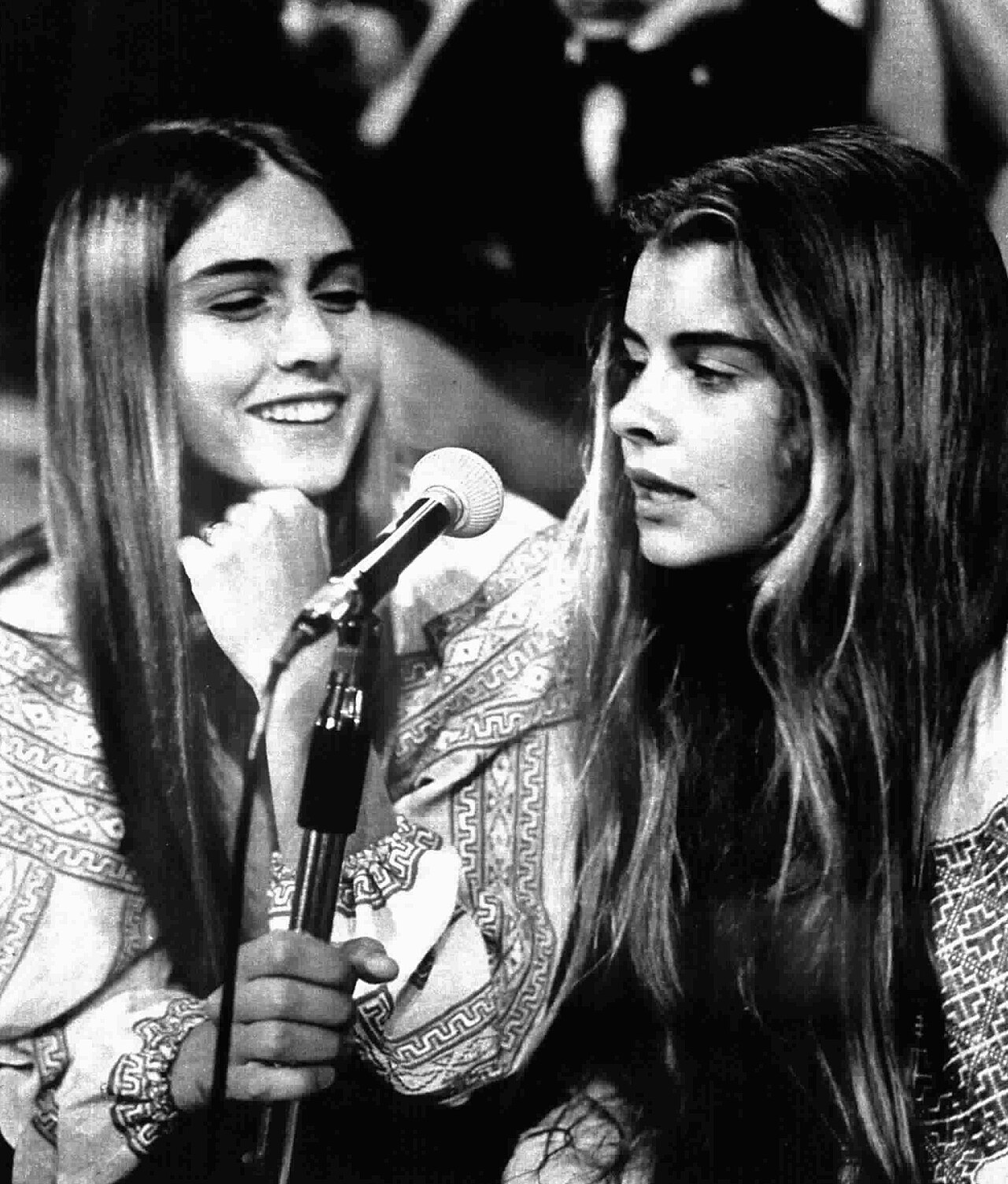
Her first name was a love letter to a city. Romina Francesca Power was born in Los Angeles on the second day of October in 1951, but her parents named her for Rome, where they had fallen for each other. She was the daughter of Tyrone Power, the American actor, and Linda Christian, the Mexican actress. From the start, Romina Power carried two identities: the California girl and the Roman dream. By the age of 12 she was already auditioning for film roles, and by 14 she had made her screen debut in the Italian movie Menage all'italiana. The girl with the romantic name was being pushed toward a very adult kind of attention.
The Lolita label and the scandal
The roles came fast, and they leaned hard on her looks. Italian directors cast Romina Power as the tempting young woman, the figure of sexual allure, long before she was old enough to understand what that meant. The publicity machine fed on it. She was called a Lolita type, a label she rejected in interviews at the time. But the worst was yet to come. In December of 1966, her part in How I Learned to Love Women set off a public storm. Politicians claimed she had been made to rehearse indecent scenes over and over. Church officials and senators from the ruling Christian Democrats demanded to know how a minor had ended up in such a film.
The Vatican's own newspaper weighed in, calling the film's moral content questionable and insisting that no one underage should ever have been allowed into the theatre. The scandal made Romina Power famous for all the wrong reasons. She kept working, and the roles kept coming with the same uncomfortable shape. A few years later she was the lead in Marquis de Sade: Justine, a film so controversial that Italian authorities banned it and pulled every copy from circulation. By then, Romina Power had spent nearly a decade being sold as an image she did not choose.
Al Bano and a new direction
The turning point came when she met Al Bano, the singer Albano Carrisi. They announced their engagement in 1969, and he did something her mother had never done: he told her to stop taking the risky film roles. He also kept her mother away from the film sets. In an interview a year later, Romina Power admitted she regretted letting her mother pick those sexualized parts for her. She married Carrizi that summer, on the twenty-sixth of July. The teenage movie scandal was over. In its place came something no one had predicted: a musical partnership that would make her a household name across an entire continent.
In its place came something no one had predicted: a musical partnership that would make her a household name across an entire continent.
The duo Al Bano and Romina Power emerged in 1975, and it changed everything. They sang in Italian and other languages, recording albums for France, Germany, Spain and Latin America. They became one of the most popular acts in continental Europe, a soft-pop institution with bright melodies and matching white outfits. Twice they represented Italy at the Eurovision Song Contest, finishing seventh both times. The same year they released their hit album Felicità, it sold more than six million copies in Germany alone. By the mid-eighties they were playing arenas and appearing on television from Rome to Moscow.
Loss, divorce and public scrutiny
But while the duo's fame soared, Romina Power's personal life was quietly shattering. She and Carrizi had four children, and their eldest daughter disappeared in New Orleans at the start of 1994. The case was never solved, and many years later the daughter was declared legally dead in absentia. The loss never left Romina Power. The Italian press hounded her over the disappearance and over every detail of her marriage. The couple separated before the end of the nineties, and their divorce was finalised in 2012. The woman who had once been sold as a cinematic fantasy was now being treated as public property in a much crueller way.
When the marriage and the duo ended, Romina Power walked away again. She moved to the United States, bought a house in Sedona, Arizona, and returned to the things she had done before the cameras: painting and writing. She organised exhibitions of her canvases, mostly in Milan, and released a solo album of songs she had written years earlier. Then, one summer, she and Carrizi shared a stage once more in Moscow, not as husband and wife but as two people bound by a strange and complicated history. The girl named for Rome had finally written her own ending.
Today Romina Power is in her mid-seventies, still an Italian and American singer, actress and painter. She has lived long enough to see her birthday marked not by a film premiere or a gossip headline, but by people putting on an old Al Bano and Romina Power record and remembering what the music meant. The scandal films are footnote trivia. The duo's songs are the thing that lasted. And somewhere in that story is a lesson about a young woman who was sold an image, then refused to keep paying for it.