
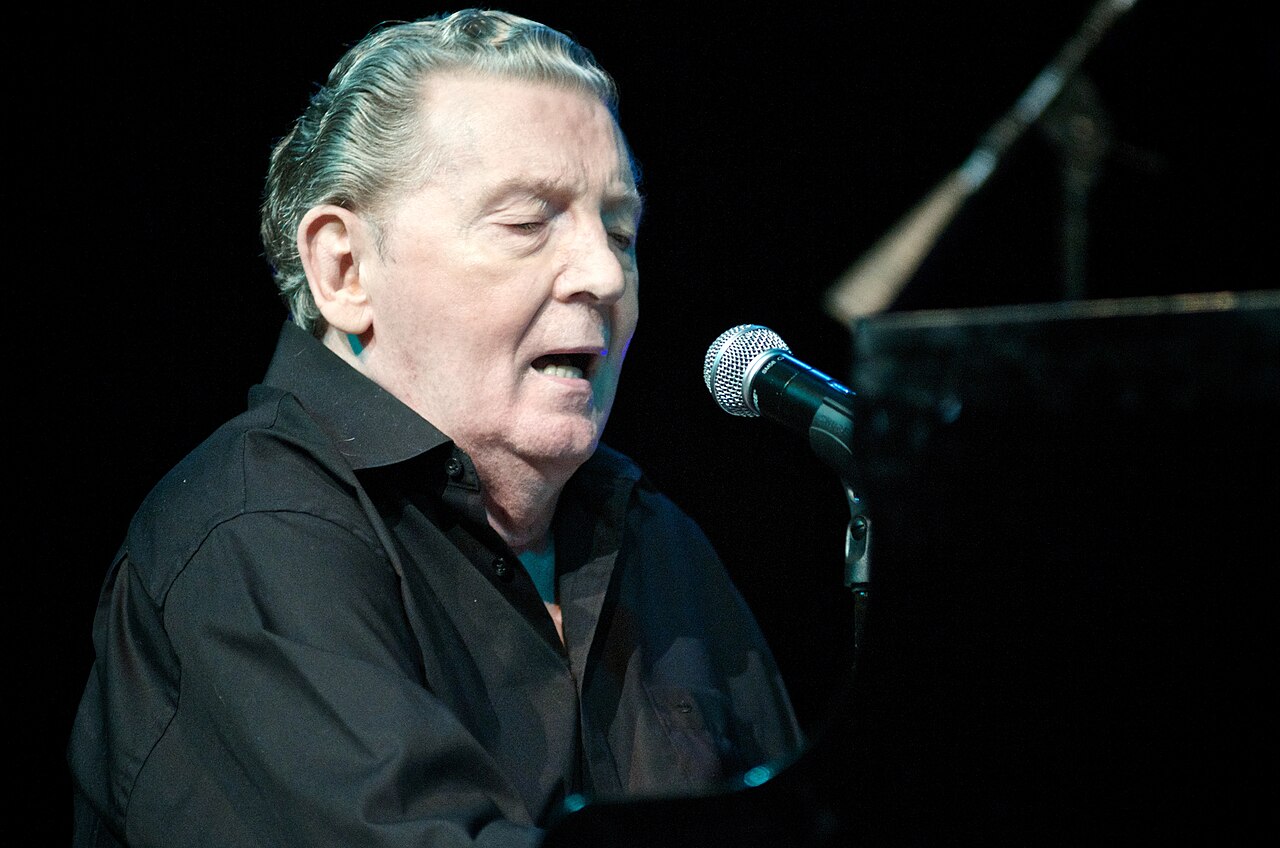
A piano stool kicked across the stage, a boot heel hammering the keys, a voice that sounded like it was trying to escape a burning building. That was Jerry Lee Lewis, born September 29, 1935, in Ferriday, Louisiana. Ninety-one years on, the nickname still fits: the Killer. Not because of violence, but because of what he did to every song he touched and every stage he stood on.
A family of three soundtracks
They called him the first great wild man of rock 'n' roll, and the label stuck for a reason. Lewis grew up poor, the son of Elmo and Mamie Lewis, and started playing piano early alongside his cousins. One of them, Mickey Gilley, became a country star. Another, Jimmy Swaggart, became a famous television preacher. Three boys from the same family tree, three completely different American soundtracks.
His first recordings happened in 1952 at J&M Studio in New Orleans, but the real ignition came four years later at Sun Records in Memphis. Sam Phillips, the label's owner, had a specific hope: that Jerry Lee Lewis would become the next Elvis Presley. Phillips heard something in the young pianist's attack that matched his own belief in music as a raw, unpolished force.
The Sun Records ignition
The first hit arrived in 1956 with a single called Crazy Arms, which sold 300,000 copies across the American South. It was enough to prove Lewis could move records. But it was the follow-up that changed everything. Whole Lotta Shakin' Goin' On came out in 1957 and became his signature song, the one that announced to the world that rock 'n' roll had a new, dangerous energy.
Then came the run that defined his early career: Great Balls of Fire in 1957, followed by Breathless and High School Confidential in 1958. Each one pushed the same formula further, faster, louder. Lewis was a pianist who could not leave his instrument alone. He played it with his feet, with his head, with anything that could make the keys scream. The piano was not a piece of furniture; it was a sparring partner.
Scandal and collapse
And then the scaffolding collapsed. Lewis married Myra Gale Brown, his 13-year-old cousin, and the scandal hit like a wrecking ball. The popularity he had built over two explosive years evaporated almost overnight. By the early 1960s, he had few hits to his name, one exception being his cover of Ray Charles's What'd I Say. The wild stage act kept growing, but the audience had shrunk.
A live album from 1964 captures the strange middle period: Live at the Star Club, Hamburg. It is one of the most ferocious rock 'n' roll documents ever pressed, a man playing like his life depended on every chord. Lewis sounds unhinged, brilliant, and completely indifferent to the fact that the world had moved on. The Killer was still killing, even if fewer people were listening.
The Killer was still killing, even if fewer people were listening.
A second act in country
Then came the pivot that confounded everyone. In the 1960s and 1970s, Jerry Lee Lewis reinvented himself as a country artist, and the records started topping charts again. The same hands that had pounded out Great Balls of Fire now found a different kind of fire in honky-tonk and gospel-tinged ballads. He was one of the few artists who could claim a legitimate second act in an entirely different genre.
Mercury Records became part of that later chapter, releasing country material that kept his name alive through decades when rock 'n' roll's founding generation was fading or dying. Lewis outlived almost all of his contemporaries, passing away on October 28, 2022, in Nesbit, Mississippi. Four years later, the records still sound like warnings from another era.
Here is the question that lingers, ninety-one years after a boy was born in Ferriday: what would have happened if the scandal had never broken? Would Jerry Lee Lewis have become the new Elvis Presley, the way Sam Phillips imagined? Or was the chaos that nearly destroyed him also the exact thing that made the music unforgettable? The answer is somewhere in that Hamburg recording, still ringing.