
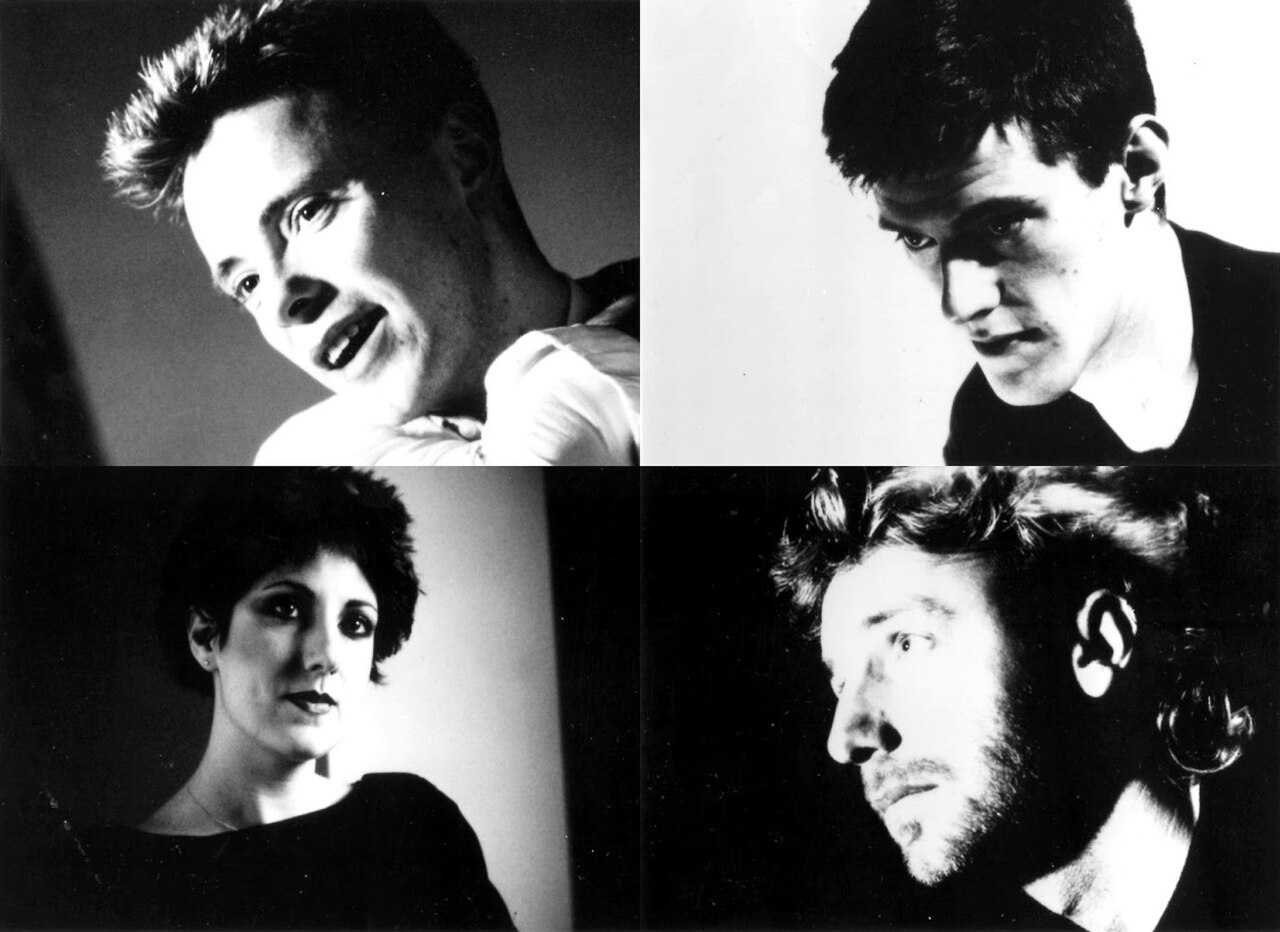
In a London studio in 1986, four men from Manchester sat at a mixing desk and decided a record should have two personalities. One side belonged to drum machines, sequencers, and synthesizer lines. The other belonged to guitar amps, bass string buzz, and live-room crackle. That deliberate fracture became Brotherhood, the fourth studio album by New Order, released on Factory Records on September 29, 1986.
Three cities, one split record
The band produced the record themselves across three cities: Jam in London, Windmill Lane in Dublin, and Amazon in Liverpool. Barney Sumner's voice, which critic Robert Christgau would later call more human than before, floated over arrangements that David Quantick of Uncut described as carrying a rising tension between musical beauty and what he called the group's northern reserve. The album ran 37 minutes and 7 seconds — compact, restless, and cleanly split down the middle.
The concept: a synth side and a guitar side. Peter Savill's cover image — a photograph of a zinc-titanium alloy sheet — mirrored that cold, industrial elegance. Some early copies went further, wrapping the package in actual metal sleeves. Stephen Morris later called the concept schizophrenic and said it didn't work. Yet that admitted failure produced something stranger than a unified statement: a band caught between two impulses, refusing to choose.
Yet that admitted failure produced something stranger than a unified statement: a band caught between two impulses, refusing to choose.
The synth side's breakthrough single
The synth side produced 'Bizarre Love Triangle,' released as a single on November 3, 1986. It became New Order's breakthrough single in the United States and Australia, the only track from Brotherhood issued as a single and a video. Its phrase-based melodic shape and gliding bass figure made it a club staple while radio still treated the group as an art-rock anomaly. The pressure had been building; the band simply recalibrated it.
Two weeks before the album arrived, 'State of the Nation' appeared as a standalone single on September 15, 1986. It wasn't part of the original LP sequencing, but most CD editions of Brotherhood appended it, softening the strict side-split. Another oddity surfaced at the album's close: 'Every Little Counts' ends in a locked-groove effect, like a turntable needle stuck in vinyl. Stephen Morris heard echoes of The Beatles' 'A Day in the Life.'
Chart positions and critical warmth
Morris pushed the joke further when the CD format arrived. He suggested the digital version should include the sound of chewed-up cassette tape mangling the finale. The final decision kept the vinyl-stutter effect intact, a nod to the format that built Factory's identity. Brotherhood itself reached number 9 on the UK Albums chart and topped the UK Independent Albums chart, but stalled at 117 on the Billboard 200 — a gap between home-turf reverence and American ambivalence.
Australia placed the album at 15, New Zealand at 22, Sweden at 33, Canada at 69, and the European chart compiled by Music & Media at 50. The critical record was warmer. Steve Hochman in the Los Angeles Times praised New Order's atmospheric grooves as more agile than those of any contemporary computer rocker. Robert Christgau made it a pick hit in The Village Voice. Josh Modell of The A.V. Club went furthest, calling the album an unsung masterpiece of the catalogue.
A Wagnerian echo in the catalogue
Stuart Maconie in Q noted in 1993 that Brotherhood was often overlooked, while John Bush at AllMusic observed that New Order had nothing left to prove. Richard Wagner's Prelude to Das Rheingold haunts 'All Day Long'; the band later used that same prelude as concert entrance music. The gesture connected a Manchester post-punk group to a German romantic tradition, another split identity layered over the record's own.
The Definitive edition arrived on November 22, 2024, with a remastered LP and CD, a bonus disc of demos and remixes, two DVDs including a Stephen Morris documentary, and a book on the album's making. Twelve-inch singles of 'Bizarre Love Triangle,' 'State of the Nation,' and 'Touched by the Hand of God' were reissued alongside the box. A Blu-ray audio version followed with Steven Wilson's Dolby Atmos and 5.1 mixes.
On December 5, 2025, the CD with the bonus disc from that Definitive run reappeared; within a year, Brotherhood charted again — 14 in Croatia and 27 on Hungary's physical albums list. Forty years after its release, the album still sounds like two records fighting for the same sleeve. The cover remains a photograph of an alloy sheet, a metal skin over a split personality the band never bothered to reconcile.