
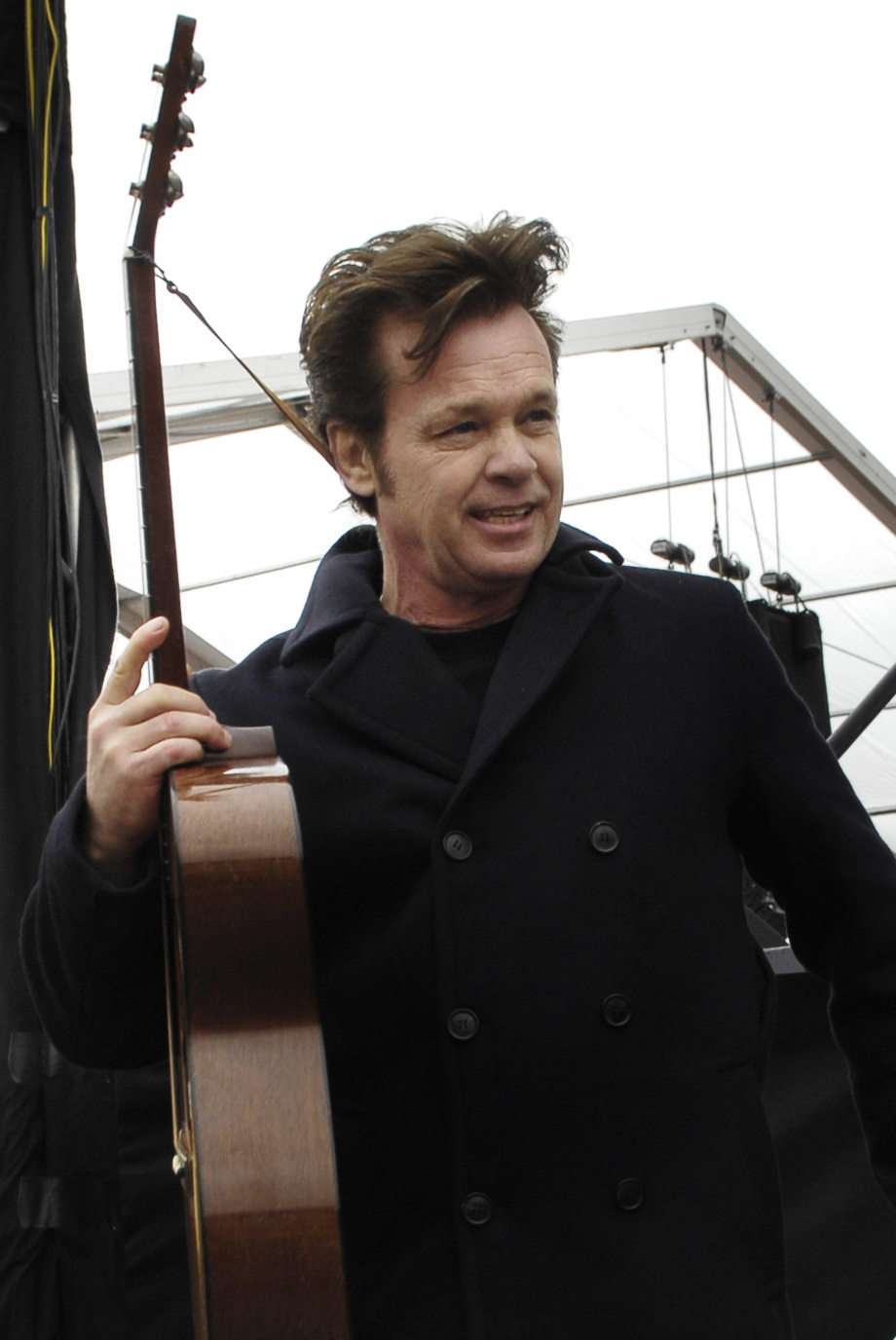
The name on the album cover wasn't his. When John Mellencamp, a singer from Seymour, Indiana, released his first record, the sleeve read Johnny Cougar. A manager had decided that Mellencamp sounded too difficult for radio, too foreign for the American heartland the young musician actually came from. The record sold twelve thousand copies, a number so small it barely registered, and the man behind the fake name was dropped by his label. He could have disappeared then, another small-town kid chewed up by the music business. John Mellencamp was born on October 7, 1951.
A factory job and a fake name
Before the New York meetings and the manufactured surname, Mellencamp had worked a factory job installing telephones in Seymour. He had played in local bands, driven back and forth between Indiana and New York for a year and a half, hunting for a contract that never quite worked. When he finally got one, the price was his own name. The debut album Chestnut Street Incident came out under the alias Johnny Cougar and flopped. It was a lesson in how the industry could take a person apart and sell back the pieces.
What changed everything was a pair of songs about ordinary American life. The album American Fool arrived with two singles that refused to leave the radio: Hurts So Good and Jack & Diane. The second of those sat at number one for four weeks, a small-town story that millions of listeners recognized as their own. Suddenly the man who had been told his real name was unmarketable had leverage. He used it to push his surname back onto the covers, becoming John Cougar Mellencamp, a compromise that still carried the old scar.
Building a band with real muscle
With the next record, Uh-Huh, the music got sharper and the identity fight continued. The album reached the top ten and produced Pink Houses and Crumblin' Down, songs that sounded like they were written on a porch, not in a studio. Mellencamp was building a band that could play this material with real muscle, and he was writing about places like the one he came from. The small-town kid who had once installed telephones was now explaining small towns to the rest of the country.
Then came Scarecrow, the album he recorded at Belmont Mall, a studio he built himself in Belmont, Indiana. It reached number two and sent five singles into the top forty, including Small Town and R.O.C.K. in the U.S.A. The record was a deliberate turn toward the sounds and stories of rural America, with fiddles and mandolins and lyrics about farms under pressure. Mellencamp was no longer chasing the industry; the industry was following him back to Indiana.
Farm Aid and a voice for rural America
That same period made him something more than a hitmaker. He helped organize the first Farm Aid concert in Champaign, Illinois, with Willie Nelson and Neil Young, an event meant to raise money for family farmers. The cause suited a man whose songs kept returning to the land and the people working it. By then Mellencamp had become a voice for a part of America that pop music usually ignored, and he did it without softening the edges.
The name kept evolving until the alias finally died. In the early nineties, the album Whenever We Wanted appeared with just John Mellencamp on the cover, no Cougar anywhere. It was a small typographical change that meant everything: the manufactured persona was gone. The music kept finding audiences, too. A duet with Me'Shell Ndegeocello on Wild Night became his biggest hit in years, climbing to number three on the Billboard Hot 100. The man who had once been told his real name was too complicated was now selling millions under it.
It was a small typographical change that meant everything: the manufactured persona was gone.
The later career had its own turns. The single Key West Intermezzo (I Saw You First) reached number fourteen and became his last top-forty hit, a reminder that radio tastes move on. But Mellencamp had already secured something more durable than chart positions. He had sold more than sixty million albums worldwide, thirty million of them in the United States. Not bad for a guy whose first record sold twelve thousand copies under a name that wasn't his.
The story comes full circle in the details: a factory job in Seymour, a fake name chosen in New York, a studio built in Belmont, a charity concert in Illinois. John Mellencamp spent decades turning the music industry's rejection into a career on his own terms. The name on the cover now is the one he was born with, and the songs still sound like the place he never really left.