
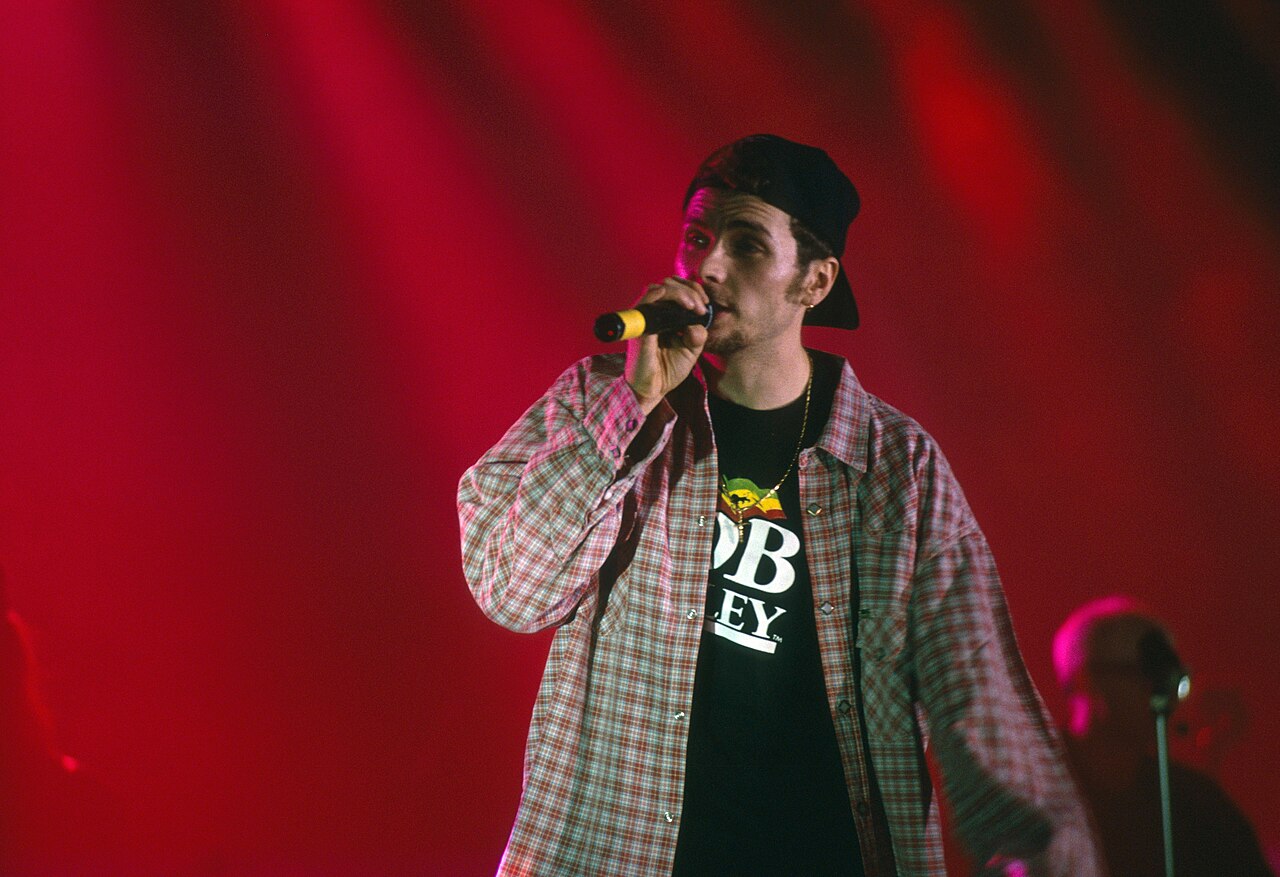
A man born Lorenzo Cherubini in Rome on September 27, 1966, has spent sixty years answering to a name that never existed on paper until a nightclub marquee mangled it. Jovanotti — the Italian singer, rapper, and producer — built an entire identity from a clerical error, and the anglicized J has remained alien to his native language ever since. Turning sixty in 2026 means reckoning with a career that started in Roman nightclubs and somehow arrived at philosophy.
The pseudonym began as a simple Italian word: giovanotto, meaning young man. Cherubini first tried "Joe Vanotti," a clumsy English-Italian hybrid that suited a DJ spinning records in Rome's club circuit after secondary school. Then a venue printed the name wrong, and Jovanotti stuck. Fans eventually shortened it further to Jova, a nickname the artist now uses in promotional materials as casually as a birth certificate.
From Rome to Milan
Cortona, in the province of Arezzo, shaped the childhood that Rome only began. After finishing secondary school, Cherubini worked as a DJ in Rome's clubs and radio stations, learning how crowds moved before he ever wrote a lyric. In 1985 he relocated to Milan, and two years later, in the summer of 1987, producer Claudio Cecchetto entered the picture with an offer that changed the trajectory.
Cecchetto had founded Radio DeeJay five years before Jovanotti walked in, and the station became the rapper's training ground. The same year they met, 1987, Jovanotti released his first single "Walking," a track that fused early hip-hop energy with disco's pulse. The collaboration with Cecchetto's label would produce the debut album Jovanotti for President in 1988, and the reviews arrived like a verdict.
Critical dismissal and early sound
Critics savaged Jovanotti for President. The negativity was nearly unanimous, treating the record as a novelty act rather than a serious debut. Yet the sound itself showed a performer already juggling rap, hip-hop, and disco without apology. Some early work leaned closer to keyboard-driven music, a detail that hints at how far the artist would travel from these first recordings.
The shift came through accumulation rather than a single pivot. Funk entered the mix, then world music, then classical arrangements, while ska left its mark on certain tracks. The lyrics grew teeth as well, moving toward philosophical, religious, and political themes that aligned more closely with the tradition of Italian cantautori. A DJ from the clubs had become a songwriter with questions.
Expanding style and activism
Social and political activism increased over the years, paralleling the expanding stylistic range that now includes rap, hip-hop, rap rock, pop, rock, and ethnic music. Universal Music Group became the label home for this chameleon phase, releasing records that defied the early dismissal of Jovanotti for President as a lightweight entertainer.
On October 2, 2014, Jovanotti launched Jova.TV, a web channel that extended the name into digital territory. The platform arrived twelve years before this sixtieth birthday, a reminder that the man who once spun records on Radio DeeJay never stopped seeking new formats. The anglicized spelling has become a brand, but the rare letter J still marks it as foreign.
Sixty years after Rome, the question lingers: what would have happened if that nightclub marquee had spelled Joe Vanotti correctly? Would Lorenzo Cherubini have found the freedom to move from disco to funk to world music without the accidental distance of a misspelled pseudonym? The typo created a space where reinvention became possible.
Jovanotti for President remains the document of a beginning most critics wanted to forget, yet the name on the cover was already a kind of manifesto. A young man, misspelled into permanence, kept rewriting what the word could mean. The question that hangs in the air is whether the persona outgrew the man or simply gave him room to keep becoming someone else.