
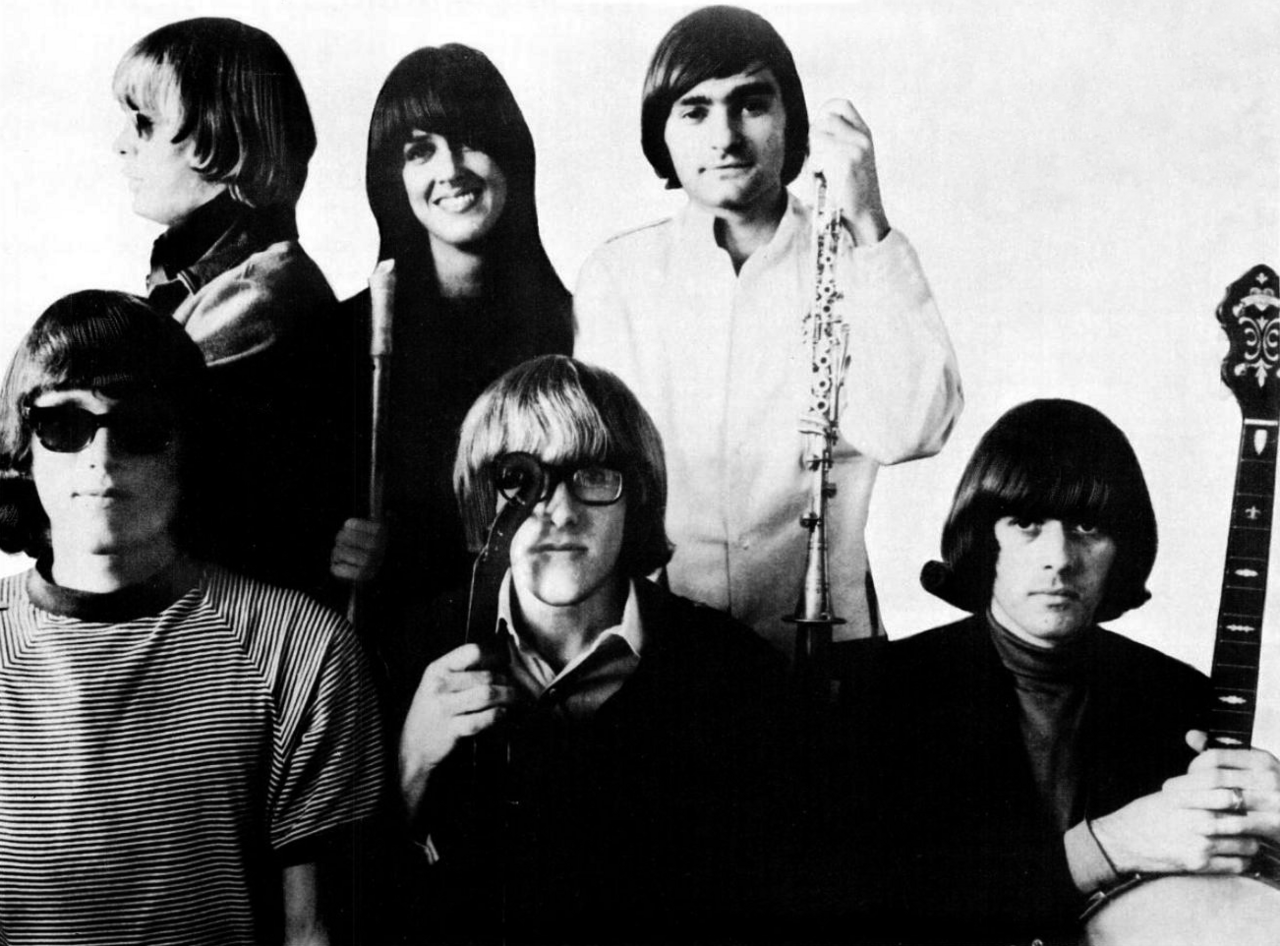
The Matrix club on Fillmore Street had a problem: its house band needed a frontman who could turn folk harmonies into something electric. Marty Balin, born Martyn Jerel Buchwald in Cincinnati on January 30, 1942, became that voice when he co-founded Jefferson Airplane in San Francisco in 1965. The club was partly his, and so was the gamble that a local folk-rock outfit could outgrow a basement venue.
The debut that introduced his voice
Jefferson Airplane Takes Off arrived in August 1966 on RCA Victor, a debut that introduced Balin's knack for romantic urgency. 'It's No Secret' showed how he could wrap a love song in the band's jangling momentum. The album didn't invent the San Francisco sound, but it gave the scene a commercial foothold. Balin was already writing material that balanced tenderness against the group's growing volume.
Surrealistic Pillow followed in February 1967 and changed the stakes. Balin wrote and sang several tracks on the record, including 'Today' and 'Comin' Back to Me', two of the most delicate moments in psychedelic rock. The album also carried 'Somebody to Love' and 'White Rabbit', songs that pushed Jefferson Airplane onto national radio. 'White Rabbit' reached 18 in the US that year.
Festivals that defined an era
The festival circuit turned the band into witnesses to an era's unraveling. Balin performed at Monterey Pop Festival in 1967, then at Woodstock in 1969, where Jefferson Airplane played an early-morning set that became part of the documentary. Later that same year, Altamont ended the dream in violence. Balin was onstage for all of it, his voice threading through the decade's highest hopes and worst turns.
By 1971, Balin had left Jefferson Airplane. The group's transformation into Jefferson Starship pulled him back in the mid-1970s, and the reunion produced his biggest commercial moment. 'Miracles' appeared on Red Octopus in 1975, a slow-building ballad that Balin co-wrote and sang. It climbed to 3 on the Billboard Hot 100, giving the band a new identity built around his softer register.
Solo career and later chapters
Jefferson Starship kept mining that vein with 'With Your Love' and 'Count on Me', both featuring Balin's unmistakable phrasing. But the partnership frayed again, and he walked away in 1978. His solo career began properly with the album Balin in 1981, which reached 35 on the Billboard 200. The single 'Hearts' broke into the Top 10, proving his voice could carry a record without the Airplane machinery behind it.
The decades that followed were quieter but never silent. Balin kept recording, and his final studio album of new material, The Greatest Love, appeared in 2016. By then his catalog spanned three distinct chapters: the pioneering psych of Jefferson Airplane, the arena-sized soft rock of Jefferson Starship, and a solo run that outlasted both bands. Each era left its own trail of vinyl and CD pressings.
Marty Balin died on September 27, 2018, in Tampa, Florida, at 76. The news landed eight years ago, but the records still circulate in used bins and reissue racks. Surrealistic Pillow remains the entry point for most collectors, while Red Octopus turns up constantly for a few dollars. His voice is the common thread across all of them, instantly recognizable whether singing about love or the end of the world.
His voice is the common thread across all of them, instantly recognizable whether singing about love or the end of the world.
What survives is a catalog that refuses to stay in one genre. Jefferson Airplane's psychedelic urgency, Jefferson Starship's polished ballads, and Balin's solo work all share the same instrument: a tenor that could sound wounded and defiant in the same phrase. The Matrix club is long gone, but the music he helped launch there still moves through turntables and CD players, one side at a time.