
A kid from suburban Ohio singing folk harmonies in a San Francisco club hardly screams acid rock architect. Yet Marty Balin — born Martin Jerel Buchwald on January 30, 1942, in Cincinnati — became a founding voice of Jefferson Airplane, the band that turned psychedelic rock into a national emergency. Eight years have passed since he died on September 27, 2018, and the gap between his gentle tenor and the noise around him remains the strangest part of the story.
A mixed-faith childhood in San Francisco
The family background reads like a map of mid-century American contradictions. His father was Jewish; his mother belonged to the Episcopal church. His paternal grandparents had arrived as Jewish immigrants from Eastern Europe. Balin grew up with a mild autism diagnosis on his record, and by the time he hit Washington High School in San Francisco, music had become his way of ordering a loud world.
In 1962, the name disappeared. Martin Buchwald became Marty Balin, and the freshly minted alias walked into Challenge Records in Los Angeles to cut singles like 'Nobody But You' and 'I Specialize in Love.' It was a clean pop start, the kind of move that suggests a kid aiming for radio play. Nothing on those early sides hints at the amplifier meltdown waiting a few years down the road.
From folk to The Matrix
Folk was the bridge. By 1964, Balin led The Town Criers, a quartet with Larry Vargo, Jan Ellickson, and Bill Collins, working the coffeehouse circuit and sharpening his ear for harmony. Folk rock suited his voice — warm, pleading, a little wounded. But the leadership itch pushed him further. He wanted a club, a scene, a stage where the music he heard in his head could actually happen.
So he built The Matrix. The Fillmore District club became the launchpad for Jefferson Airplane, with Balin as the primary founder, co-lead vocalist alongside Grace Slick, and one of the band's main songwriters from 1965 through 1971. The sound moved through acid rock into heavier psychedelia, and Balin's voice stayed the ballast — the melodic anchor when the guitars started climbing out of key.
Balin's voice stayed the ballast — the melodic anchor when the guitars started climbing out of key.
Walking away in 1971
By 1971, after six years of touring, recording, and surviving the pressure-cooker fame of the San Francisco scene, Balin walked away from Jefferson Airplane. The departure came at the height of the band's influence, but the machinery had stopped fitting the man. He had been there since the beginning, through the folk rock foundations and the acid rock detonations, and the road had changed into something unrecognizable.
Jefferson Starship came later, pulling him back into orbit with old bandmates and a softened, radio-ready sound. Balin found room there for the soft rock instincts that had always lurked beneath the noise. Across folk rock, acid rock, psychedelic rock, and soft rock, his voice kept insisting on melody even when the era demanded volume. The range was real — not a phase, but a spectrum.
A scattered discography
The discography is scattered across small labels and big ones, from Challenge singles to the towering Airplane LPs. Early pressings of the Jefferson Airplane albums carry every breath of that 1965–1971 run, Balin's harmonies layered against Slick's howl. The Matrix club closed long ago, but the band it launched never quite stopped sounding like its founder's two obsessions: harmony and chaos.
The contrast that opened the story never resolves. A Cincinnati kid with a gentle voice, a mixed-faith household, and a childhood diagnosis helped create some of the most confrontational rock music America ever produced. He was twenty-three when Jefferson Airplane started, barely an adult, and he carried its melodic core through the years when San Francisco burned brightest and loudest.
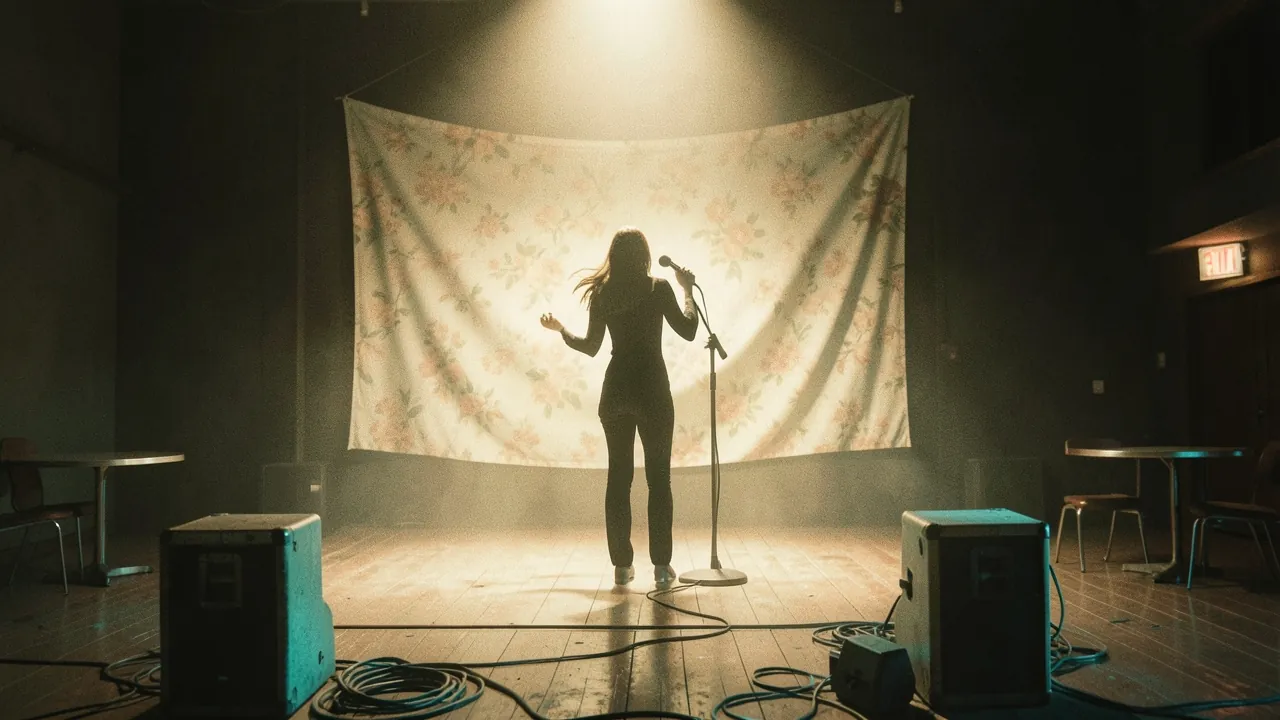
When he died in 2018, the tributes leaned on the soft voice and the hard band, on 'Somebody to Love' and 'White Rabbit' and the wall of feedback behind them. But the single best image might be earlier, smaller: a young Marty Balin at The Matrix in 1965, testing a microphone, a room full of empty chairs, and a song he hadn't quite finished yet.