
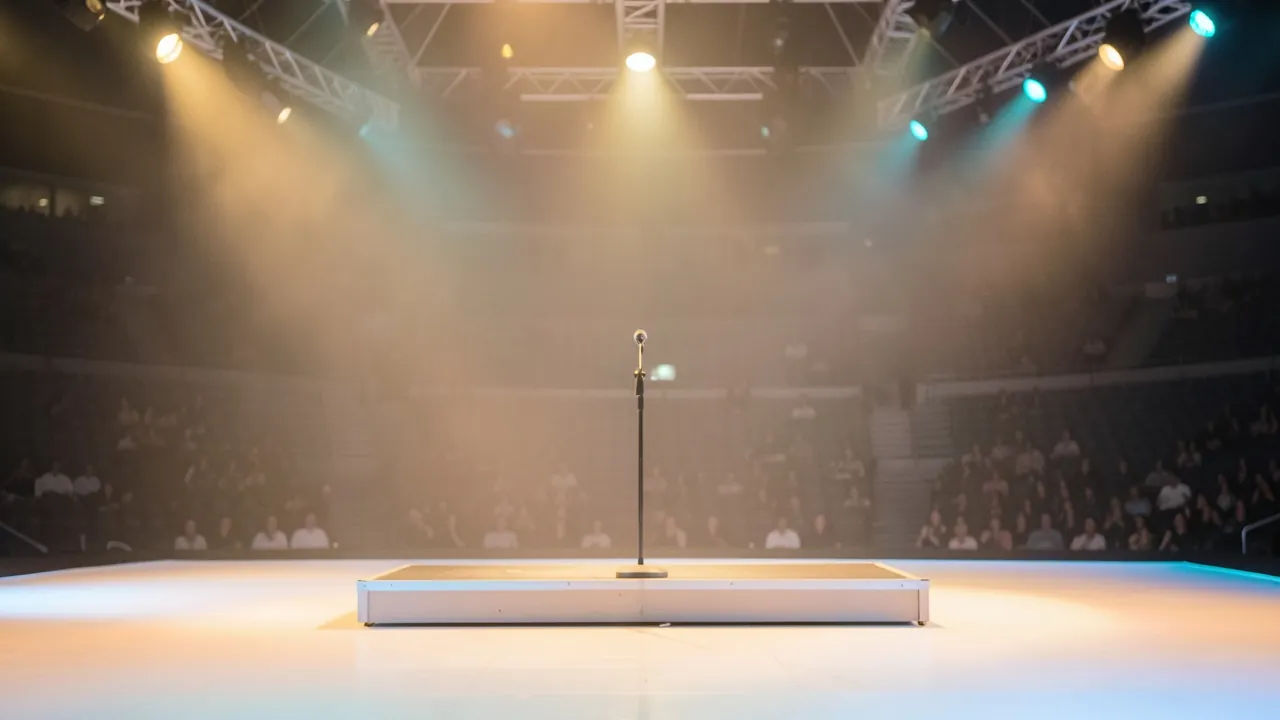
The stage lights at a small Okinawa venue caught a fourteen-year-old girl mid-spin, her sneakers squeaking against the floor as five other dancers moved in sync behind her. Namie Amuro, born in Naha on September 20, 1977, had already spent months rehearsing routines most teenagers would never attempt. She was the lead singer of Super Monkey's, an idol group assembled to ride the early-1990s wave of manufactured pop acts. The choreography was precise, the outfits coordinated, the smiles practiced. Yet something in her delivery felt different — less rehearsed, more instinctive. That tension between discipline and raw presence would define the next quarter century of Japanese entertainment.
Early years with Super Monkey's
The early years offered little evidence of what was coming. Super Monkey's debuted in 1992, and the sales figures were disappointing enough to make any label reconsider the investment. Amuro supplemented the group's faltering momentum with modeling jobs and acting roles, building a profile outside the music that wasn't supposed to be her main lane. She was learning how to hold a camera's attention, how to move through a scene, how to exist in public without the safety net of a group formation. Those skills accumulated quietly while the industry wrote off another disposable idol unit from a distant prefecture.
The turning point arrived in 1995 when Avex Trax signed her for a solo career. The label was building its reputation on high-energy dance music, and Amuro fit the template perfectly — young, photogenic, and disciplined enough to execute complex choreography while singing live. Her first major statement came with 'Try Me (Watashi o Shinjite)', a eurobeat track that finally matched her energy with production that could keep up. The song became a significant hit, reversing the narrative that had followed her since the Super Monkey's days. Suddenly the girl from Naha wasn't a struggling idol anymore.
The Avex solo breakthrough
What followed was a run that reshaped the mechanics of Japanese pop stardom. Working closely with producer Tetsuya Komuro, Amuro built a sound that fused Western dance-pop structures with Japanese melodic sensibilities. Singles like 'Chase the Chance' and 'Don't Wanna Cry' reached number one, each release tightening the formula while expanding its reach. The first four albums — including 'Sweet 19 Blues' from 1996 and 'Concentration 20' from 1997 — moved millions of copies. Komuro's production gave her a sonic identity that felt contemporary without abandoning the hooks that made J-Pop accessible.
Amuro broke the idol stereotype by refusing to stay in the lane it prescribed. Where conventional idols performed innocence and dependency, she projected control — over her body, her image, her creative direction. She experimented with musical styles across pop, hip-hop, rhythm and blues, and dance-pop, shifting her visual presentation with each phase. Music videos became laboratories for reinvention, each one testing how far a female artist could push against expectations while maintaining commercial viability. The answer, it turned out, was very far indeed.
Breaking the idol stereotype
Her influence on Japanese fashion and women's lifestyles became a cultural phenomenon. Young women across the country copied her hair, her makeup, her clothing choices, her attitude. The term 'Amura' entered the lexicon to describe girls who adopted her look — bleached hair, tanned skin, miniskirts, platform boots. Department stores dedicated sections to the aesthetic. Magazine editors tracked her every style change as front-page news. She wasn't just selling records; she was selling a way of being that felt liberated from the constraints of traditional femininity in Japan.
The comparisons to Western icons came naturally. Critics and fans drew parallels between Amuro and Janet Jackson or Madonna — artists who understood that pop music was a visual medium as much as a sonic one. Like them, she treated each album cycle as a complete aesthetic statement, not just a collection of songs. Her professionalism behind the scenes became legendary in an industry that rewards preparation. She studied her own performances, adjusted choreography, reviewed footage, pushed for better staging. The effort was invisible onstage, which was precisely the point.
By the time she announced her retirement in 2018, Amuro had spent over 25 years at the center of Japanese pop culture. She earned the titles 'Diva of the Heisei Era', 'Queen of Japanese Pop', and 'Queen of Japanese Entertainment' — labels that reflected both her commercial dominance and her cultural reach. Her career spanned from 1992 to 2018, a period during which the entire infrastructure of Japanese music transformed around her. Streaming replaced physical sales, social media replaced television promotion, and yet her status remained intact.
The anniversary arrives on September 20, 2026 — 49 years since her birth in Naha. Eight years have passed since she walked away from the stage, and the silence has only amplified her impact. No comeback tours, no reunion specials, no nostalgic cash-ins. She simply stopped, leaving behind a catalog that still sounds ahead of its time. The girl who once spun across that Okinawa stage in sneakers became the woman who redefined what Japanese pop could be. And then she left, on her own terms, before anyone could ask her to stay.