
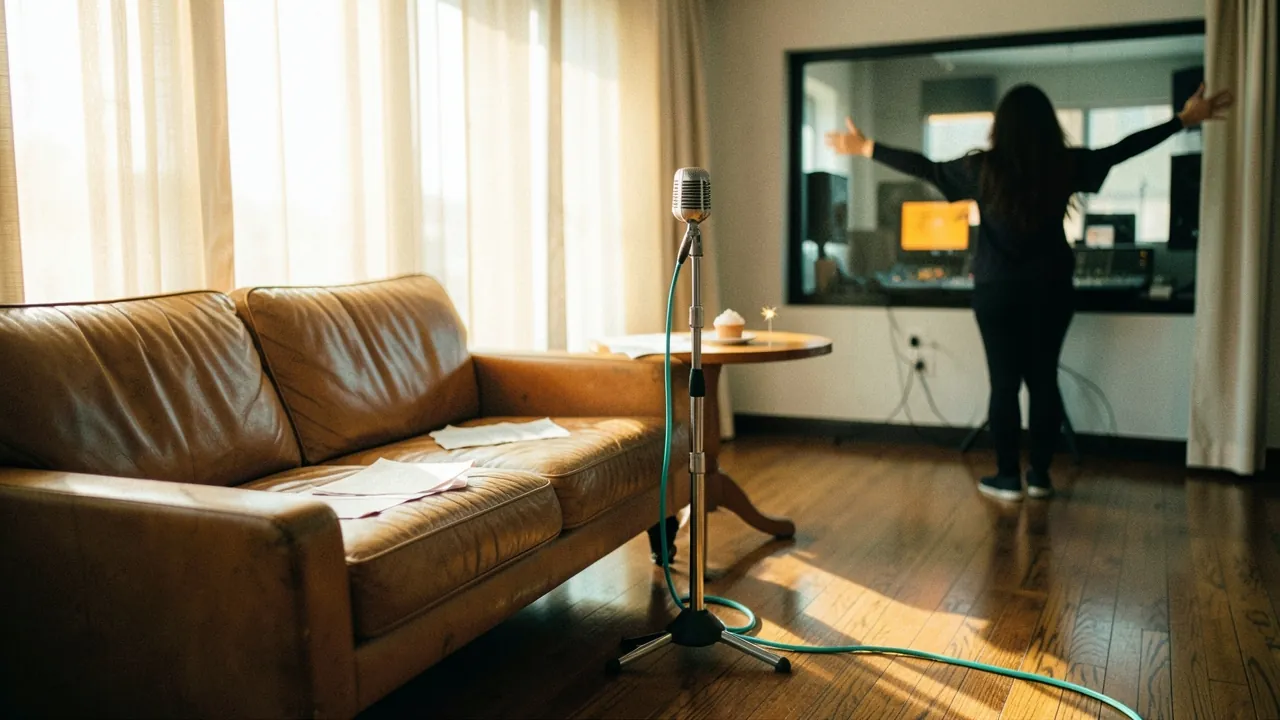
Before she became one of Italy's most unpredictable voices, Loredana Bertè was paid to dance while records played. The same woman who would later build a career on blue-eyed soul, rock, and reggae spent the early 1970s as a go-go dancer on Italian television and radio. She appeared on shows like Bandiera gialla and Stasera Rita!, moving to whatever the DJ put on. It was a strange beginning for a recording artist who would eventually work with Ennio Morricone and Pino Daniele.
A southern Italian childhood
Bertè was born on September 20, 1950, in Bagnara Calabra, a small town in southern Italy. Her father taught Latin and Greek at a liceo; her mother worked as a middle school teacher. She was the third of four daughters. The family moved through Porto Recanati and Ancona before her parents divorced. In 1965, when Bertè was fifteen, she and her mother relocated to Rome. That move placed her inside a music scene that was about to explode.
Rome in the mid-1960s had a specific gravitational center: the Piper Club. Bertè enrolled in a local art institute, but the club pulled harder. By 1966 she was dancing with a troupe called Collettoni e Collettini, which toured as support for Rita Pavone. The Piper Club also introduced her to Renato Zero, and the two began performing in theatrical productions together. Those early stage experiments mattered more than any classroom.
First studio work and film roles
Her first studio work was unglamorous. Bertè sang backing vocals, often alongside her older sister, Mia Martini, who was already building a serious reputation as a singer. The two appear together on Chico Buarque de Hollanda's album Per un pugno di Samba, arranged by Ennio Morricone. In 1970 Bertè took a small role in the film Quelli belli... siamo noi. A year later she appeared in Basta guardarla. Neither part suggested what was coming.
The turning point arrived through musical theater. In 1969, Bertè, Renato Zero, and Teo Teocoli were cast in the Italian version of Hair. The production gave her a stage identity that television dance routines never could. She followed it by joining the experimental rock opera Orfeo 9. Then in 1971, she sang backing vocals on her sister Mia Martini's first album. By now Bertè had spent six years moving between clubs, studios, and stages without releasing a record under her own name.
A solo career without borders
When she finally stepped forward as a solo artist, the sound refused to sit still. Bertè worked with some of Italy's sharpest songwriters: Ivano Fossati, Mario Lavezzi, Mango, Enrico Ruggeri, and Pino Daniele. She moved from rock to reggae, funk to pop, and signed with CBS. The label marketed her as a pop artist, but the records kept slipping into rhythm and blues and blue-eyed soul. Her guitar playing added another layer that separated her from the typical Italian female vocalist of the era.
The stage costumes became a language of their own. Bertè wore outfits that made television producers nervous and photographers very happy. Eccentric clothing was not decoration; it was part of the performance, a visual argument that she would not be slotted into the elegant, well-behaved singer category. Audiences who saw her on Stasera Rita! as a dancer years earlier could barely recognize the figure now commanding the microphone.
Seventy-six years after her birth, the arc looks almost impossible to reverse-engineer. A teenager from a family of schoolteachers ends up in the Piper Club, tours with Rita Pavone, records with Morricone, performs in Hair, and then spends a decade bending Italian pop into shapes it did not expect. The fact that she started as a go-go dancer is not a footnote. It is the first clue that Bertè never intended to stand still long enough to be categorized.
The fact that she started as a go-go dancer is not a footnote.
The dancer from Bandiera gialla became the woman CBS had to market around, not define. She is a guitarist, a songwriter, an actress, and a singer who treated genre as a suggestion rather than a contract. The girl who moved to Rome in 1965 because her parents divorced did not just enter the music industry. She kept moving through it, from the Piper Club to Hair to records that still refuse to sound like anything but Loredana Bertè.