
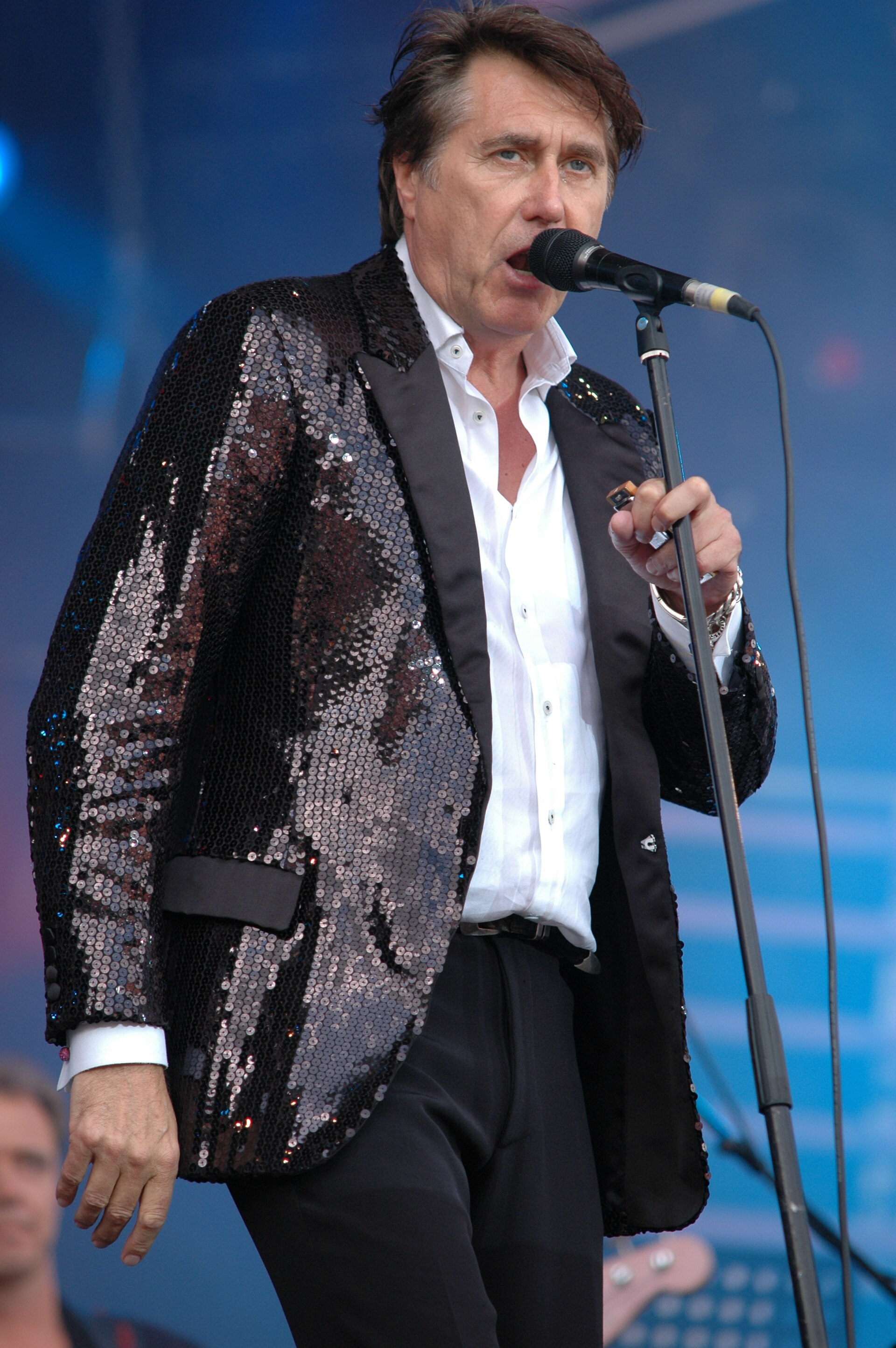
A farmer's son from a mining village wins tickets to see Bill Haley at age 11, then spends his twenties teaching art to schoolkids. That is not the origin story anyone expects for the man who would front one of the most visually striking bands of the 1970s. Bryan Ferry, born on 26 September 1945 in Washington near Sunderland, took a route into music that looks almost accidental from the outside. He was a painter first, a teacher second, and only then a singer. By the time Roxy Music's debut landed in 1972, he had already spent years training his eye for composition, texture, and the deliberate strangeness that would define his stage persona.
From mining village to art school
The household itself was working-class. His father farmed and took shifts at the local mine, while his aunt Ethel supplied the boy with pop and jazz records. That early radio contest victory gave him a live encounter with Bill Haley, but music did not immediately swallow him. In his final year at Washington Grammar-Technical School, Ferry considered becoming an artist. He enrolled at Durham University in 1963, lasted about a year, then transferred to the painting faculty at Newcastle University. Fine art absorbed him completely, and before any microphone entered the picture, he was standing in front of secondary school classrooms, teaching.
London changed the arithmetic. In 1970, Ferry began assembling Roxy Music with friends and acquaintances in the city, taking the role of lead vocalist and principal songwriter. The group's self-titled debut appeared in 1972 and brought immediate international attention. What made it land so hard was the range of sounds packed into one record: Ferry's curiosity about different musical genres showed up everywhere. He was not chasing a single style. He was layering glam, art-school irony, and a kind of lounge sophistication that no one else on the British scene was attempting with such conviction.
Chart-topping albums with Roxy Music
The second album sharpened everything. For Your Pleasure, released in 1973, deepened the band's sound and visual identity, and within a decade Ferry had become a major cultural figure in Britain. That same year Roxy Music put out Stranded, which climbed to the top of the UK charts. More chart-toppers followed with Flesh and Blood and Avalon. Across eight studio albums and 24 singles with the group, including the number one hit Jealous Guy, Ferry built a catalogue that moved from jagged art-rock to something smoother, more cinematic, and unmistakably his own.
Then there was the solo career, which started in the strangest possible way. In 1973, the same year as For Your Pleasure and Stranded, Ferry released These Foolish Things. It was an album of cover versions of standard songs, a sharp departure from the original material he was writing for Roxy Music. The move popularized the idea of a contemporary musician releasing an entire record of covers, something that felt almost provocative at the time. Another Time, Another Place followed in 1974, and the parallel path was set. His solo discography eventually stretched to 12 albums and 39 singles.
Two careers running in parallel
The tension between those two identities is what makes Ferry's career unusual. He was not a frontman who occasionally dabbled outside the band; he was genuinely running two careers at once. With Roxy Music, he was the architect of a group sound. On his own, he could strip things back, reinterpret old songs, and lean into the crooner instincts that the band's louder moments obscured. Both projects fed the same underlying obsession with style, surface, and the way a song could be rearranged until it felt new.
That obsession started long before the records. The boy who studied fine art in Newcastle and taught in a secondary school was already thinking about presentation, about how an image carries meaning before a note is even played. Roxy Music's visual identity, from album covers to stage clothes, did not come from nowhere. It came from someone who had trained as a painter and understood that a band could be composed like a canvas. Ferry's move from the classroom to the stage was not a rejection of art. It was art finding a louder room.
The numbers tell a story of endurance. Born in 1945, Ferry turns 81 in 2026. The gap from his Durham enrollment in 1963 to the formation of Roxy Music in 1970 is seven years of painting, teaching, and figuring out how to translate an aesthetic education into popular music. The debut that changed everything is now 54 years old. For Your Pleasure, Stranded, and These Foolish Things all arrived 53 years ago, three records in a single year that mapped out the two directions his life would take.
The solo work never stopped. Ferry's discography outside Roxy Music kept growing long after the band's final chart-topping run, and the covers he recorded in 1973 still feel like a template for how a singer can treat someone else's song as raw material. There is a particular pleasure in hearing him take a familiar melody and slow it down until the shape changes. That instinct, the reshaping of known things into something stranger, is the same one that took a farm boy from Washington to an art school in Newcastle, and then onto stages where the paint never quite dried.