
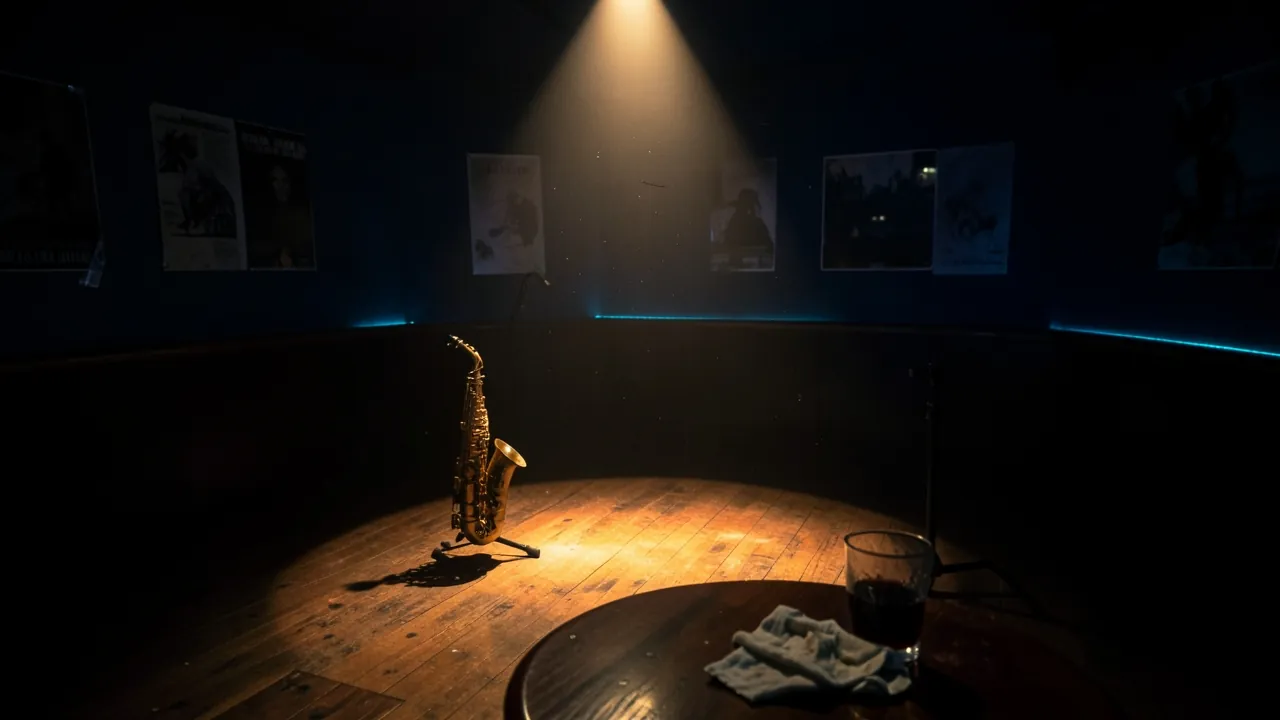
A saxophonist who could split a single note into a choir of overtones, yet spent his final decades playing music so gentle it felt like a prayer. Pharoah Sanders, born Ferrell Lee Sanders in Little Rock, Arkansas, on October 13, 1940, died on September 24, 2022, in Los Angeles at the age of 81. Four years on, the tension between his ferocious early free jazz and his later meditative spiritual jazz still shapes how collectors and listeners approach his catalog.
Ornette Coleman once called him possibly the best tenor saxophonist in the world. Coming from a man who reshaped jazz harmony itself, that assessment carries real weight. Sanders earned the reputation through sheer physicality: his sound could fill a room with harmonics, multiphonics, and overblown textures that made the saxophone speak in tongues. He was one of the most energetic voices in early free jazz, a player who turned breath into a percussive force.
From Little Rock to Oakland
The path to that sound began in a household where his mother worked and his grandfather taught him piano. Sanders also picked up drums, clarinet, and tuba before settling on the saxophone at 16. He played in rhythm and blues bands as a teenager, then moved to Oakland, California, in 1959 to study. There he crossed paths with Dewey Redman and Philly Joe Jones, two musicians who pulled him deeper into jazz's outer edges.
New York called in 1962, and Sanders answered. The city's avant-garde scene was boiling over, and he quickly fell in with Sun Ra, Don Cherry, and Rashied Ali. Those collaborations taught him that music could be a cosmology, not just a set of chord changes. By 1965, John Coltrane had heard enough to invite Sanders into his ensemble, a move that would define the younger saxophonist's career for decades.
The Coltrane years and spiritual jazz
Albert Ayler put the hierarchy bluntly: 'Coltrane was the Father, Pharoah was the Son, and I was the Holy Ghost.' Sanders's work with Coltrane in the mid-1960s pushed the band toward sheets of sound, overblowing, and harmonic density that many listeners found overwhelming. Yet Sanders always insisted the music was a sermon of peace and love, not chaos. His spiritual jazz drew on concepts like karma and tawhid, giving the noise a devotional core.
Sanders always insisted the music was a sermon of peace and love, not chaos.
After Coltrane's death, Sanders built his own catalog of more than thirty albums as a leader. He collaborated often with vocalist Leon Thomas, whose yodeling and chanting meshed with Sanders's long, prayerful lines. Pianist Alice Coltrane became another key partner, and together they deepened the meditative side of his playing. The style was seen as a continuation of Coltrane's 'A Love Supreme,' but Sanders made it his own through richer, slower, more overtly religious textures.
A technique of extremes
His technique was never just about volume. Sanders used multiphonics to produce chords from a single horn, overblew notes to reach altissimo registers, and layered sound in sheets that could feel like a wall of brass. Yet the same man who could rattle a club's windows also played flute with a tenderness that bordered on lullaby. That range—from violent exorcism to quiet benediction—is what keeps his records in constant rotation.
Sanders won a Grammy, led his own bands for decades, and remained a towering figure in jazz until his death in 2022. He was 81, still performing and recording, still searching for the perfect long tone. His 1960s work with Coltrane and his own Impulse! and Capitol Records albums are the anchors of any serious collection, but his later collaborations with electronic musicians brought him to audiences who never set foot in a jazz club.
Four years after his passing, the question isn't whether Pharoah Sanders mattered—it's which Pharoah you reach for first. The shrieking free jazz of his early records? The hushed spirituals of his later years? Or the impossible middle ground where both exist at once, as on the long tones that open his most famous pieces? The answer depends on the room you're in and the hour you're listening.
He once said music was a sermon of peace and love. For a man whose saxophone could sound like a storm tearing through a cathedral, that belief held everything together. The last note he played in public may be lost, but the first note of any Sanders record still does what it always did: it makes you stop, breathe, and listen.