
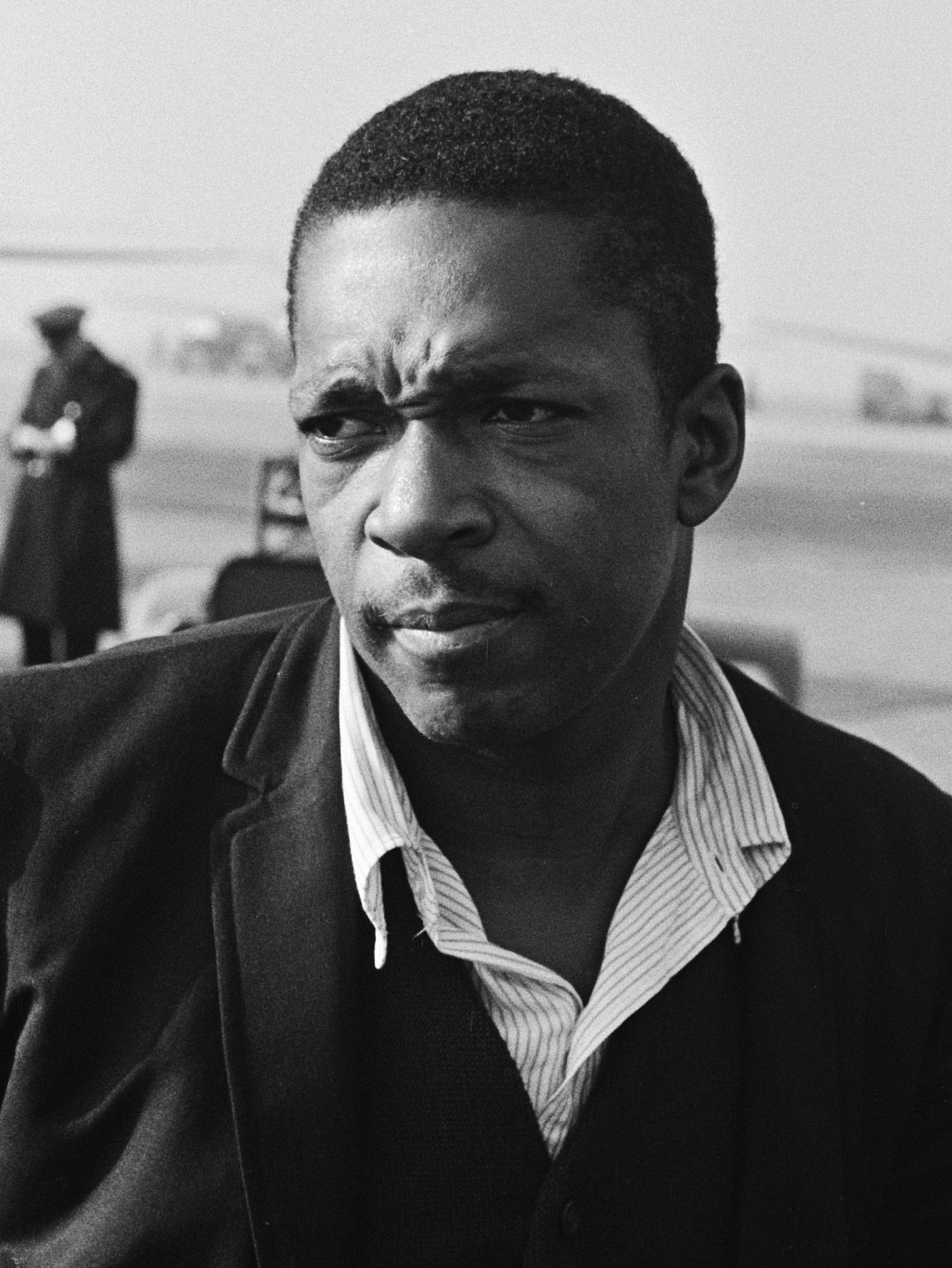
A sailor asleep with a saxophone still in his mouth is the image that sticks. John William Coltrane, born in Hamlet, North Carolina, on September 23, 1926, turned practice into a physical obsession that would reshape jazz. The centenary of his birth lands in 2026, and the distance between a sugar refinery job in Philadelphia and a Pulitzer Prize spans exactly that lifetime. His horn became a vehicle for velocity, prayer, and harmonic systems that still terrify musicians.
A sailor asleep with a saxophone still in his mouth is the image that sticks.
North Carolina roots and loss
The childhood map was North Carolina: Hamlet first, then High Point, where he attended William Penn High School and played clarinet and alto horn in the community band. December 1938 compressed grief into a few months when his father, aunt, and grandmother died. The family relocated to Philadelphia in June 1943, and Coltrane took a job at a sugar refinery. That September, his mother gave him an alto saxophone, and the instrument began replacing the silence.
Formal study followed quickly. He took lessons at the Ornstein School of Music with Mike Guerra during 1944 and 1945, then heard Charlie Parker live in June 1945, an encounter that redirected his ambition. Two months later, on August 6, 1945, he enlisted in the Navy to avoid the Army draft. Stationed at Pearl Harbor in the Manana Barracks, the largest housing for African American servicemen, he played as a guest with the base swing band Melody Masters to avoid officer scrutiny.
From clarinet to tenor saxophone
His first recordings happened on July 13, 1946, in Hawaii, before his discharge as a seaman first class on August 8, 1946. Back in Philadelphia, the G.I. Bill funded studies at the Granoff School, where he learned theory from guitarist Dennis Sandole and took saxophone lessons from Matthew Rastelli. By 1947 he had switched from alto to tenor while touring with Eddie Vinson's big band. The switch was permanent, and the tenor became his primary voice.
Miles Davis called in 1955, and Coltrane joined the First Great Quintet, recording Cookin', Relaxin', Workin', and Steamin'. The partnership collapsed under the weight of Coltrane's heroin addiction. Recovery came through work: from July to December 1957 he played with Thelonious Monk at the Five Spot Café in New York. One official studio album survives from that pairing, though live recordings emerged later. Monk's angular harmonies forced Coltrane to rethink his approach entirely.
Blue Train and sheets of sound
Blue Train, his only Blue Note session as a leader, featured Lee Morgan and Paul Chambers. In 1958, critic Ira Gitler coined "sheets of sound" to describe the dense cascades Coltrane produced. He rejoined Davis in December 1957, and together they recorded Milestones and Kind of Blue before Coltrane left in April 1960. That same year, Giant Steps appeared, an album composed entirely by Coltrane and built around chord progressions that remain among the most demanding in jazz.
The first quartet formed in 1960 with McCoy Tyner, Steve Davis, and Elvin Jones. My Favorite Things, released in 1961, introduced the soprano saxophone to his arsenal. Impulse! bought out his Atlantic contract in May 1961, reuniting him with engineer Rudy Van Gelder in New Jersey. Eric Dolphy joined the group that year, and Reggie Workman took over bass. The Village Vanguard sessions produced "Chasin' the Trane," a fifteen-minute solo that split audiences.
The Classic Quartet era
DownBeat called the Coltrane-Dolphy sound "anti-jazz" in 1961, and a French audience booed him during his final tour with Davis. Coltrane admired Sun Ra saxophonist John Gilmore, saying of him, "He's got the concept!" By 1962, Dolphy had departed and Jimmy Garrison replaced Workman, forming the Classic Quartet with Tyner and Jones. The studio output grew more conservative: Ballads, collaborations with Duke Ellington and Johnny Hartman, while live performances pushed further outward.
A Love Supreme arrived in 1965 as his most celebrated statement, a four-part suite of devotional intensity. The quartet expanded through 1964 and 1965, and the music turned increasingly avant-garde. Coltrane married pianist and harpist Alice Coltrane in 1966, and their three children—John Jr., Ravi, and Oran—each became musicians. He died on July 17, 1967, months after his youngest son's birth, leaving at least fifty sessions as a leader.
The honors accumulated posthumously: a special Pulitzer Prize, canonization by the African Orthodox Church, induction into the Jazz Hall of Fame, and a Grammy Lifetime Achievement Award in 2020. The centenary in 2026 frames a career that lasted barely two decades but altered modal jazz and free jazz permanently. The sailor who slept with his horn never stopped chasing the next harmonic threshold.