
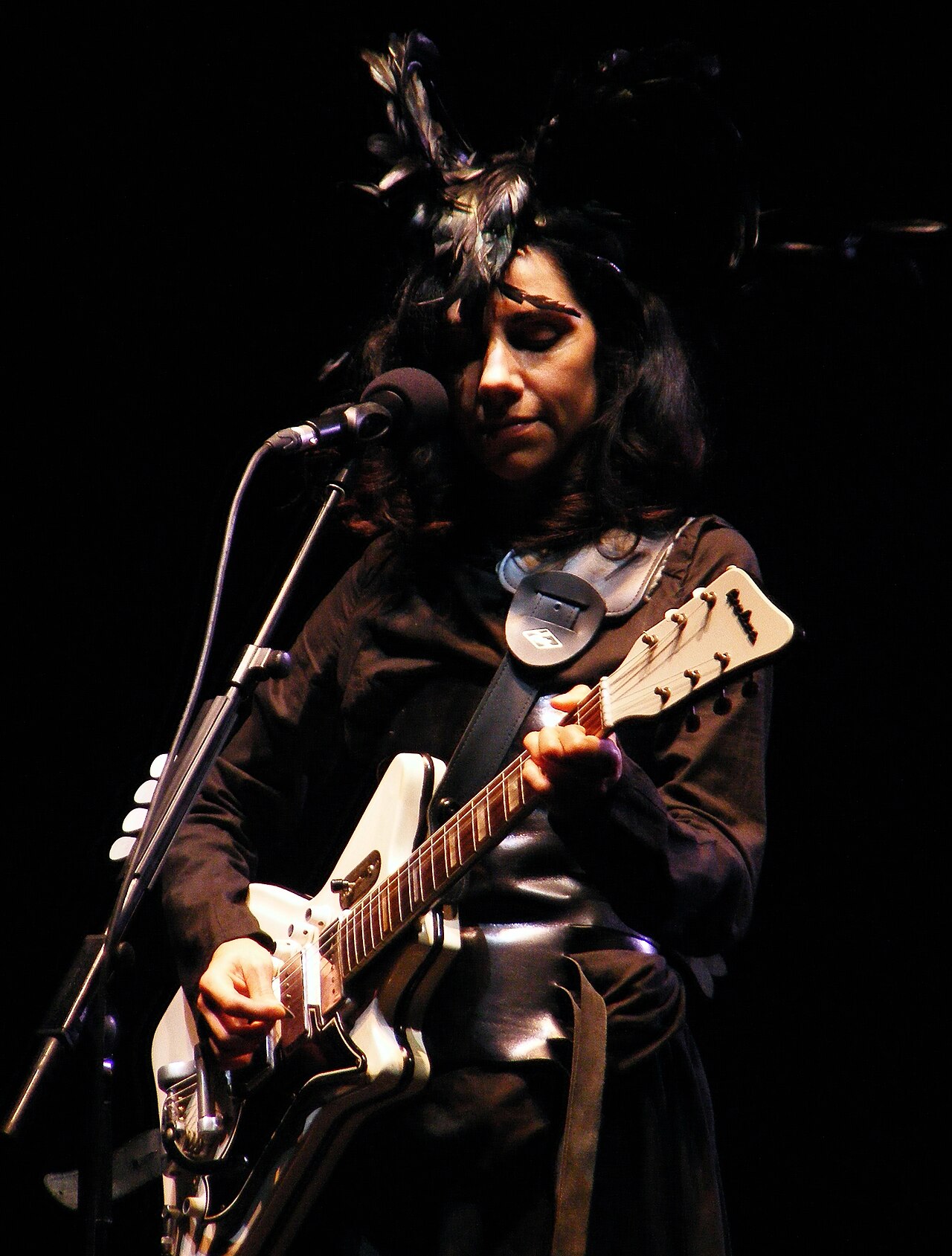
A farm in Corscombe, a stone quarry on Ham Hill, and a teenager learning saxophone in an instrumental group called Bologne: the early life of PJ Harvey, the English songwriter and multi-instrumentalist born Polly Jean Harvey on 9 October 1969 in Bridport, Dorset, reads like two different biographies stitched together. Her parents ran a stone-cutting business, her father and older brother worked as stonemasons, and her mother was a sculptor. Yet the same household fed her blues, Captain Beefheart and Bob Dylan, and paid for guitar lessons with the folk singer Steve Knightley. By eleven she could handle cello, saxophone and piano; guitar and drums came later.
Leaving Automatic Dlamini
The question that shapes her story is simple: why would a young musician leave a band that was touring Europe to start again with almost nothing? Harvey joined the Bristol group Automatic Dlamini in July 1988, playing guitar and saxophone and singing backing vocals. The band had been founded by John Parish in 1983, and Harvey met him in 1987 through a mutual friend, Jeremy Hogg. With Automatic Dlamini she toured East and West Germany, Spain and Poland. That is a solid working life for any nineteen-year-old, but Harvey wanted her own material and her own name.
The break came in January 1991, when she left Automatic Dlamini to form her own trio. The new group took the name PJ Harvey because other options simply sounded wrong to her. She recruited Rob Ellis on drums and Ian Oliver on bass, and the three of them played their first show in April 1991 at Charmouth Village Hall. The debut was described as disastrous: the hall nearly emptied. A lesser musician might have crawled back to the security of an established band, but Harvey pushed on to London that June.
London, Too Pure and John Peel
London changed the arithmetic. The independent label Too Pure released the debut single 'Dress' in October 1991, and the influential DJ John Peel made it his single of the week in Melody Maker. A BBC Radio 1 session followed on 29 October with 'Oh, My Lover', 'Victory', 'Sheela-Na-Gig' and 'Water'. By February 1992 the second single 'Sheela-Na-Gig' was out, and in March came the debut album Dry. The record landed with enough force that Kurt Cobain placed it sixteenth among his favourite albums in his journals, and Rolling Stone named Harvey songwriter of the year and best new female singer.
The trio's rise was fast but fragile. In mid-1992 they signed to Island Records after a tussle between labels, a move that gave Harvey major-label muscle without softening her sound. The follow-up to Dry was recorded in December 1992 with Steve Albini in Cannon Falls, Minnesota, and released as Rid of Me in May 1993. Rolling Stone described the album as charged with aggressive eroticism and rock fury, mixing blues, gothic and grunge. The singles '50ft Queenie' and 'Man-Size' pushed it further into view.
What the early years really show is a musician who treated every institution as optional. She had learned sculpture at Yeovil College and moved to London at eighteen to study it further, but a fire at the college destroyed part of her work. She had played in a folk duo called Polekats, written early material there, and then walked away. She had joined Automatic Dlamini, toured four countries, and then walked away again. Each departure looked like a risk, but each one cleared space for the next record.
Each departure looked like a risk, but each one cleared space for the next record.
The trio's final tour came in August 1993, opening for U2, and then the group dissolved. By that point Harvey had already recorded a solo version of 'Rid of Me' for The Tonight Show with Jay Leno in September 1993, and the demo collection 4-Track Demos appeared that October to open her solo career. The band that had nearly emptied a village hall in 1991 had lasted barely two years, but it had produced two albums, a Peel session, a bidding war and a reputation that outgrew the trio itself. Fifty-seven years after her birth in Dorset, the question is not why she left Automatic Dlamini, but what would have happened if she had stayed.