
The first instrument Yusef Lateef ever bought was an alto saxophone. He was born William Emanuel Huddleston on October 9, 1920, in Chattanooga, Tennessee, and by the time he finished high school at eighteen he was already an experienced saxophonist ready to start a professional career. Within a year he had switched to the tenor saxophone, drawn by the playing of Lester Young. That switch set him on a path, but the instrument itself would never be enough for him.
That switch set him on a path, but the instrument itself would never be enough for him.
Savoy, Prestige and the Eastern instruments
Lateef began recording as a leader in 1957 on Savoy Records, the label that gave him his first real platform. His early albums for Prestige and its subsidiary New Jazz overlapped with the Savoy sessions, and the music he made in those years already pointed somewhere unusual. By 1961, with the albums Into Something and Eastern Sounds, he had become a noticeable figure in group settings. On those records the so-called Eastern influences were unmistakable: he played the rahab, the shanai, the argul, the koto, and Chinese wooden flutes.
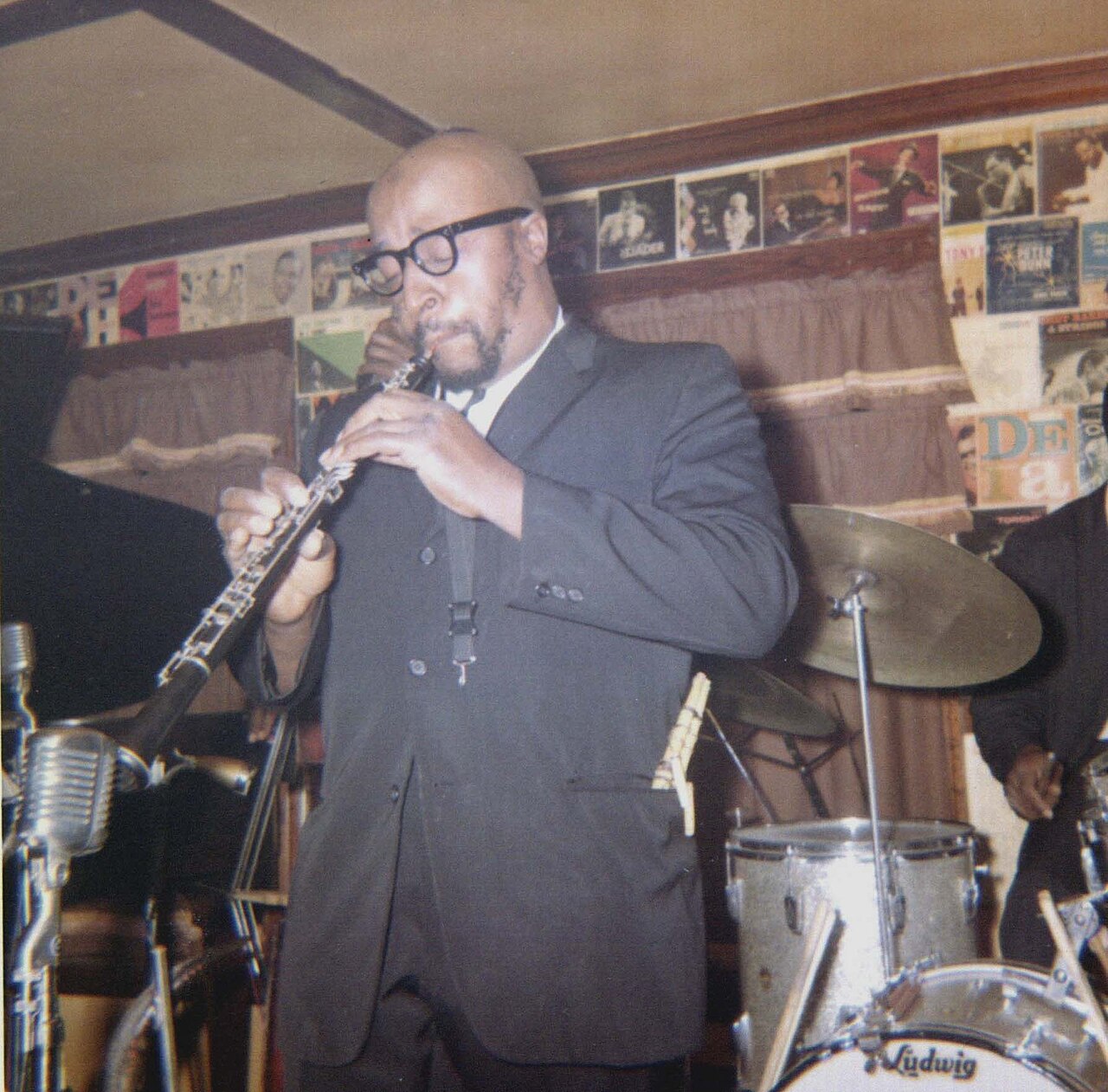
What made Lateef stand out was not just the exotic instruments but the way he used them. His Western oboe sounded strange in a jazz context because the oboe was not a standard jazz instrument at all. The melodies on those albums mixed jazz standards, blues, and film music. Lateef himself grew unhappy with the words 'jazz' and 'jazz musician,' which he felt were too general. He was building a sound that refused to stay inside the lines, and the labels people used for it seemed to him like a cage.
The Minor Key and alcohol-free stages
In 1960, Lateef played a long engagement at the Minor Key club in Detroit, a venue that served no alcohol. That detail mattered to him deeply. Two decades later, in 1980, he announced that he would no longer perform anywhere that served alcohol. In 1999 he explained why: too much blood, sweat, and tears had gone into making the music to play it where people smoked, drank, and talked. For Lateef, the music was not entertainment to be consumed with a cocktail; it was a serious practice, almost a form of devotion.
His main instruments were the tenor saxophone and the flute, but he also played the oboe and the bassoon, both rare in jazz. Beyond those, he used bamboo flutes, the shenai, the shofar, the argul, and the koto. This was not decoration. Lateef became known as an innovator in blending jazz with Eastern music, and the critic Peter Keepnews wrote in his obituary for The New York Times that Lateef 'played world music before world music had a name.' That sentence captures the strange position he occupied: too early for the category that would later define him.
Lateef died of prostate cancer on December 23, 2013, at the age of 93. After his death, his family put many of his instruments up for auction, hoping they would continue to be played. The saxophonist Jeff Coffin bought Lateef's main tenor saxophone and his bass flute. The instruments went on to new hands, but the sound Lateef had built with them remained his own: a music that crossed borders before the industry had a word for crossing borders.