
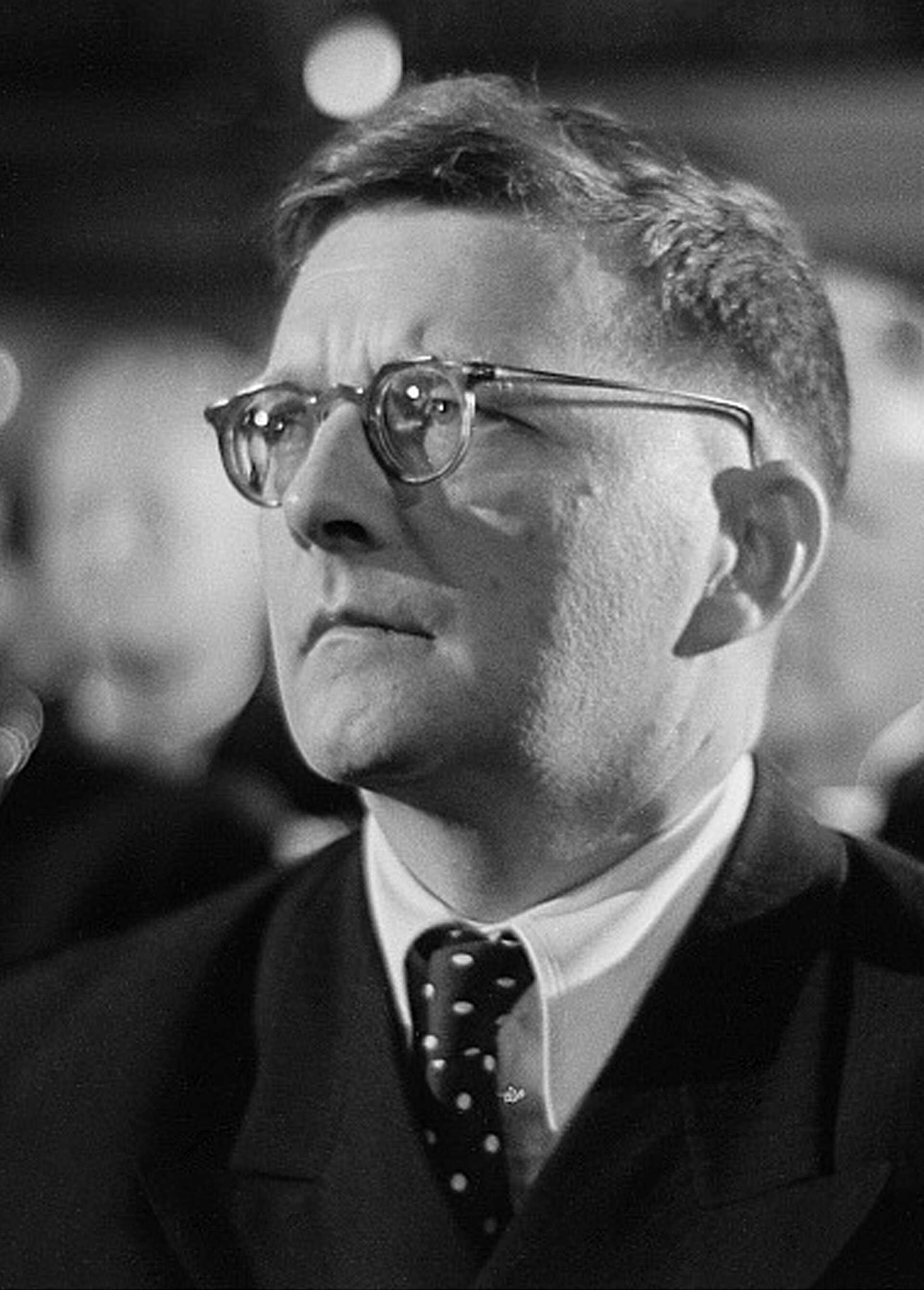
A man who collected five Stalin Prizes also had his opera pulled from the stage and his career formally condemned. Dmitri Shostakovich lived both halves of that sentence, and the tension between them powered a body of work that made him the most significant Soviet composer of the twentieth century. Born in Saint Petersburg on September 25, 1906, he would spend nearly seven decades navigating a system that alternately crowned and censored him. This year marks 120 years since that birth.
An unstoppable early career
The early trajectory looked unstoppable. Shostakovich was a pianist and composer who found fame inside the Soviet Union while still in his teens, then broke through internationally when his First Symphony premiered in 1926. That work announced a voice already fluent in irony, scale, and orchestral color. Within a decade he was writing across every major form: symphonies, chamber music, opera, ballet, film scores, and theater music. The catalog would eventually include fifteen symphonies and fifteen string quartets.
Then came Lady Macbeth of the Mtsensk District. The opera premiered in 1934 to genuine success, a sharp, sexually charged adaptation that ran in theaters across the country. But the approval did not last. Soviet authorities condemned the work, and the fallout put Shostakovich's career in immediate danger. He withdrew his Fourth Symphony before its premiere and recalibrated his language toward a more direct, monumental style. The Fifth Symphony that followed became his public rehabilitation.
Denunciation and public rehabilitation
The pattern repeated in 1948, when the Zhdanov doctrine targeted Shostakovich and other leading composers. His music was officially denounced, and the professional consequences stretched for several years. Teaching positions, performances, and commissions all contracted. Yet the same state that punished him had already made him a member of the Supreme Soviet of the RSFSR in 1947. By 1962 he held a seat in the Supreme Soviet of the USSR, a post he kept until his death in Moscow on August 9, 1975.
The honors accumulated even as the interventions continued. Censorship was formally lifted in 1956, but state interference did not disappear. His Thirteenth Symphony, premiered in 1962 and built around Yevgeny Yevtushenko's poem Babi Yar, faced direct government pressure. Shostakovich was named People's Artist of the USSR in 1954, Hero of Socialist Labour in 1966, and received the Order of Lenin. He chaired the RSFSR Composers' Union from 1960 to 1968 and served as secretary of the USSR Composers' Union board from 1957 to 1974.
The survival ledger of prizes
The prize list reads like a ledger of survival. Five Stalin Prizes arrived in 1941, 1942, 1946, 1950, and 1952. The Lenin Prize followed in 1958, the USSR State Prize in 1968, and the Glinka State Prize of the RSFSR in 1974. Western institutions noticed too: an Oscar nomination for his work on the film Khovanshchina, and two Grammy nominations for the Second Piano Concerto and the Fourth Symphony. The man being denounced in Pravda was simultaneously the most decorated composer in the country.
The music itself kept expanding. Beyond the fifteen symphonies and fifteen quartets, Shostakovich wrote six concertos, two operas, an operetta, three ballets, and a vast body of chamber music. His teaching shaped generations of Soviet musicians. The family background was modest: his paternal great-grandfather, Pyotr Mikhailovich Shostakovich, was a veterinarian born in the settlement of Shemetovo in what is now the Myadzyel district of Belarus, and in official documents he identified as a peasant.
Contradictions composed into music
That lineage makes the trajectory even stranger. A great-grandson of a self-declared peasant became the face of Soviet classical music, a man whose portrait hung in conservatories while his scores sat under review. The contradictions were not resolved; they were composed into the work. The Eighth Quartet quotes his own themes as a kind of self-memorial. The Fifteenth Symphony ends on a ticking percussion figure that sounds like a clock running out.
The two Grammy nominations and the Oscar nod suggest how far the music traveled beyond the Soviet sphere. But the deeper measure is in the repertoire itself: the quartets remain a summit for any chamber ensemble, the symphonies a test of orchestral nerve. Shostakovich wrote music for films and theater, for state occasions and private grief. The same hand that accepted the Order of Lenin wrote the Thirteenth Symphony knowing what it would cost.
The same hand that accepted the Order of Lenin wrote the Thirteenth Symphony knowing what it would cost.
He died in Moscow in 1975, still a member of the Supreme Soviet, still the chairman emeritus of a composers' union that had once denounced him. The catalog stands at fifteen symphonies, fifteen quartets, six concertos, two operas, three ballets, and dozens of film and theater scores. A great-grandson of a veterinarian from a Belarusian settlement, born in Saint Petersburg in 1906, became the sound of an entire century's contradictions.