
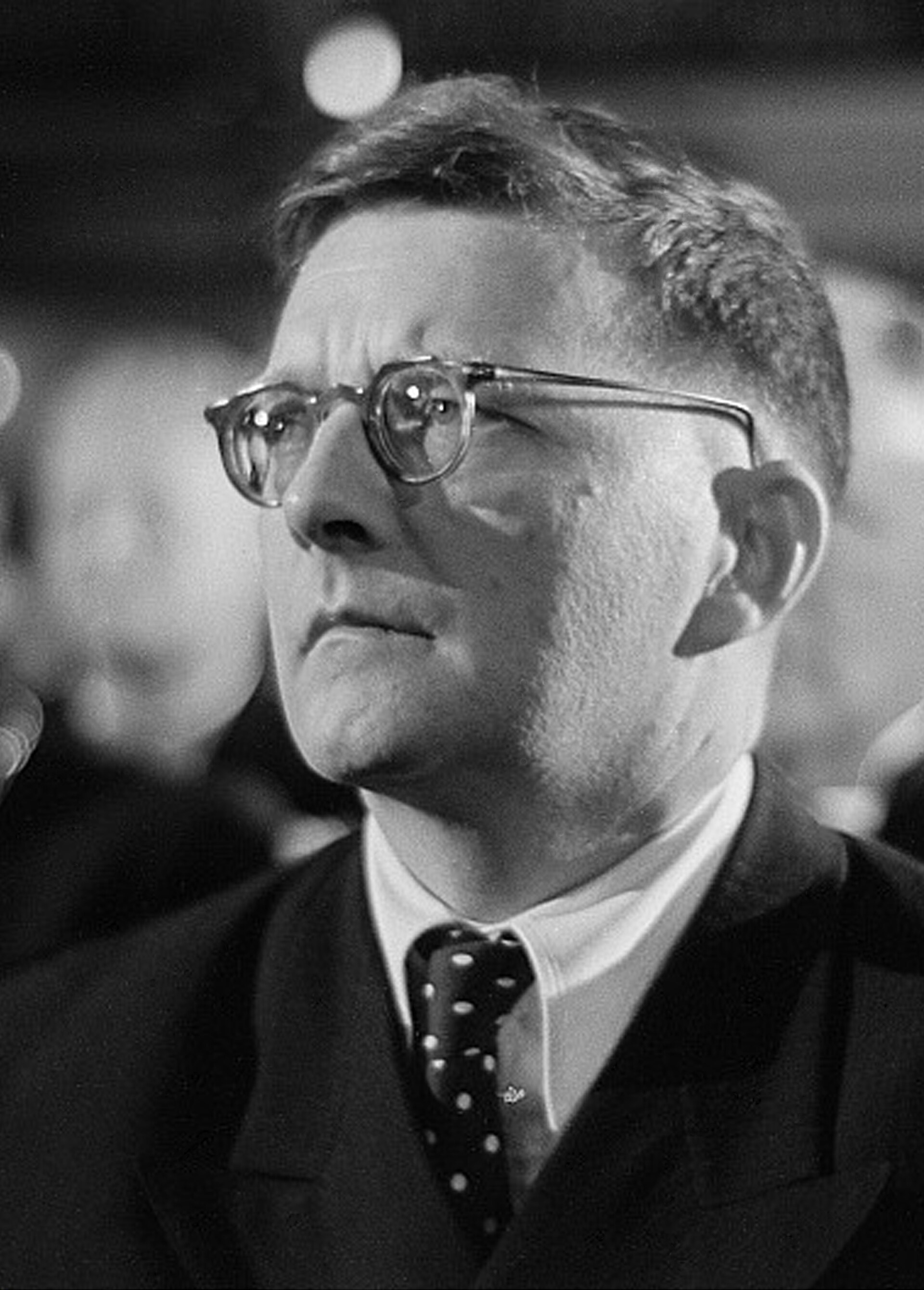
The boy sat at the piano pretending to read the score while actually playing from memory. His mother, Sofia, had started giving Dmitri Shostakovich piano lessons when he was nine, in their St. Petersburg apartment. Born on September 25, 1906, the second of three children, he learned early that appearance and reality need not align. A century later, that childhood trick reads like a premonition of a composer whose music would hide impossible meanings inside official forms.
A century later, that childhood trick reads like a premonition of a composer whose music would hide impossible meanings inside official forms.
Family history and political weight
Family history already carried the weight of political consequence. His paternal grandfather, of Polish-Lithuanian descent, had fought in the Polish uprising of 1863–1864 and was exiled to Siberia. After the sentence ended, the grandfather stayed in Irkutsk and became a banker. Shostakovich's father, Dmitri Boleslavovich, worked as an engineer at the Bureau of Weights and Measures under Mendeleev. The household valued precision, measurement, and survival.
At the Petrograd Conservatory, which Shostakovich entered in 1919, he studied with Leonid Nikolaev, Maximilian Steinberg, and Nikolai Sokolov. In 1925 he also attended conducting classes led by Nikolai Malko. The First Symphony emerged as his graduation project, written at nineteen. On May 12, 1926, Malko conducted the premiere. The audience's reaction was so intense that the scherzo had to be repeated as an encore.
Early career and international recognition
After the Conservatory, Shostakovich pursued a career as a concert pianist. Critics often described his playing as dry. In 1927 he entered the First International Chopin Piano Competition in Warsaw, where he received only a diploma while Lev Oborin took first prize. That same year, Bruno Walter heard the First Symphony in Berlin and was impressed enough to conduct its first performance outside Russia. In 1928, Leopold Stokowski led the American premiere.
The Second Symphony, completed in 1927, met a far cooler reception. By the late 1920s Shostakovich was working at TRAM, the proletarian youth theater. His opera The Nose, based on Gogol, was performed in concert form in 1929 against the composer's wishes. When the staged premiere followed in 1930, reviews were harsh. The period between the First Symphony and the coming storm was one of relentless experimentation without a safety net.
The 1936 turn against the composer
In 1932 Shostakovich married Nina Varzar. Two years later, Lady Macbeth of the Mtsensk District premiered to success with both audiences and official bodies. That changed in 1936 when Stalin attended a performance and left without speaking to anyone. Pravda soon published an editorial titled 'Muddle Instead of Music,' attacking the opera for its 'deliberately dissonant, muddled stream of sounds.' In February 1936 the same newspaper condemned the ballet The Limpid Stream.
The financial consequences arrived with brutal speed. Shostakovich's income collapsed from 12,000 to 2,000 rubles a month. The year 1936 also brought mass repressions that swept up friends and relatives, including Marshal Tukhachevsky and the composer's close friend Nikolai Zhilyaev. The Fourth Symphony was pulled from rehearsals in December 1936. Shostakovich refused to abandon it and kept its number, but the premiere did not take place until 1961.
A lifetime of symphonies and quartets
The Fifth Symphony, completed on July 20, 1937, was deliberately more conservative. Its premiere that November 21 brought phenomenal success. Over a lifetime Shostakovich wrote 15 symphonies and 15 string quartets, along with six concertos: two for piano, two for violin, two for cello. Neoclassicism and the music of Gustav Mahler shaped his language of sharp contrasts, grotesque humor, and ambivalent tonality. He also composed three finished operas, three ballets, film scores, a piano quintet, and two piano trios.
Official condemnation returned in 1948 under the Zhdanov doctrine. The censure was lifted in 1956, though works like the Thirteenth Symphony still faced censorship. From 1947 Shostakovich sat in the Supreme Soviet of the RSFSR, and from 1962 until his death in the Supreme Soviet of the USSR. He chaired the RSFSR Composers' Union between 1960 and 1968 and received the Order of Lenin. He died in Moscow on August 9, 1975, at sixty-eight.
Since the late twentieth century, scholarly interest in Shostakovich has surged, driven largely by disputes over how his music encoded his relationship to Soviet power. The debate resists easy resolution, which is precisely why the work endures. Early Soviet pressings of the Fifth Symphony on the Melodiya label, with their thin cardboard sleeves and Cyrillic typography, carry that unresolved tension in physical form. The question is not whether the music meant something beyond the notes, but how many meanings one score could hold.