
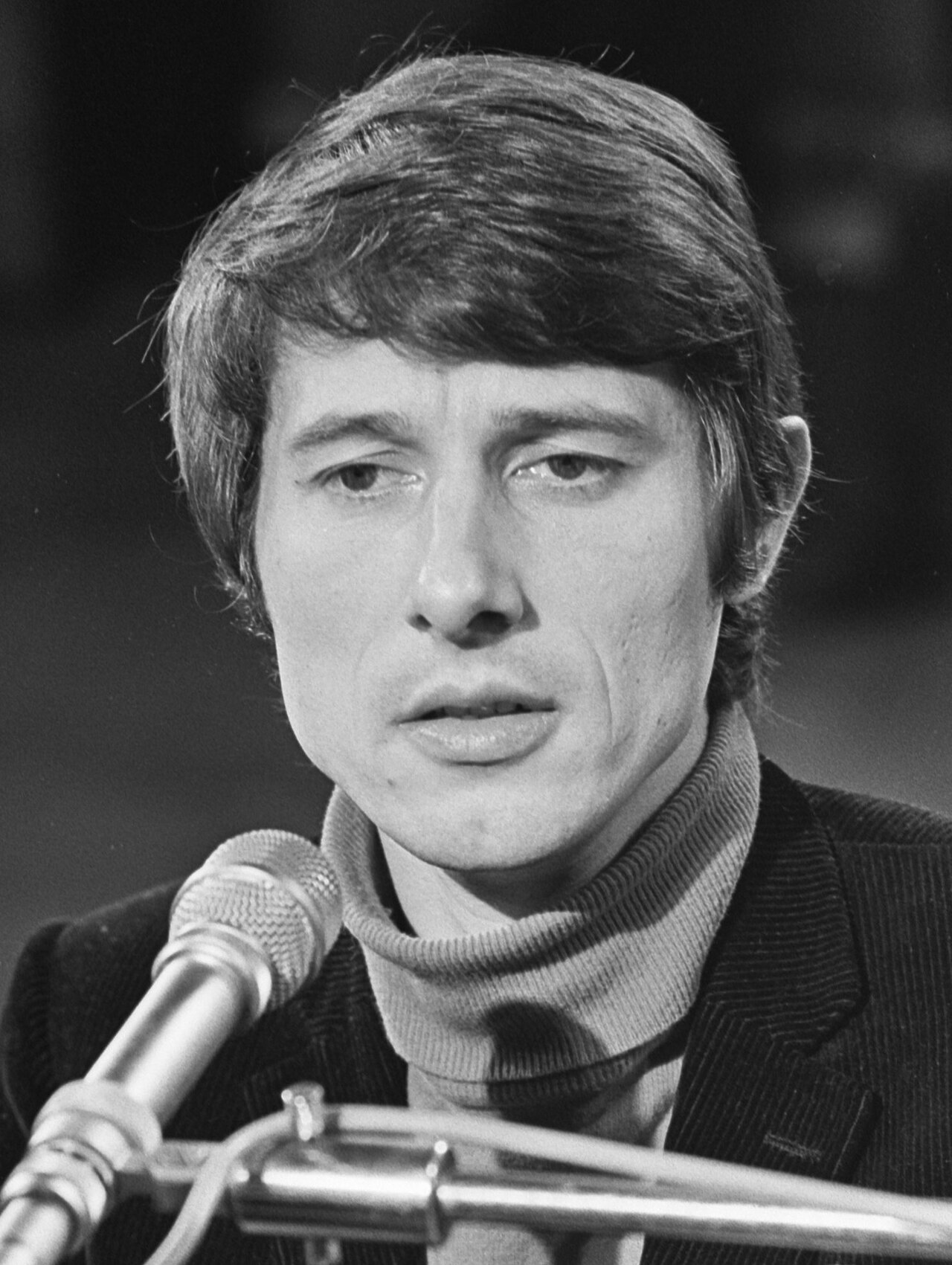
A boy grows up in a castle, yet spends decades filling concert halls with songs about ordinary heartbreak. Udo Jürgens, born on 30 September 1934 in Klagenfurt, lived that contradiction. The Austrian singer and composer would become one of the defining figures of German-language pop in the second half of the twentieth century, but the road there began in a family estate in Magdalensberg, surrounded by the echoes of a vanished Russian fortune.
His real name was Udo Jürgen Bockelmann. The family history read like a novel: his paternal grandfather directed a Moscow bank before the revolution, and his father Rudolf was born in Moscow. When the First World War began, the family fled Russia for Sweden. After the war, they settled into a castle in Carinthia that the grandfather had purchased. That setting shaped a childhood far removed from the beer tents and dance halls where Udo would later earn his living.
From castle to conservatory
Music arrived early and in sequence. At five, he picked up the harmonica. At seven, the accordion. By thirteen, he was at the piano, the instrument that would anchor his career. In 1948 he enrolled at the Klagenfurt Conservatory, and two years later he won a composers' competition organized by Austrian radio. The trajectory looked classical, almost academic, until he started performing in restaurants under the name Udo Bolan.
The restaurant circuit led to something bigger. In 1954, Werner Müller, who led the RIAS big band in Berlin, invited him to collaborate. That invitation pulled a young pianist from Carinthia into the orbit of professional German-language entertainment. But the polished big-band world wasn't where his identity settled. Before that, in 1952, he had formed the Udo Bolan Quartet in Klagenfurt, a group that would quietly shape his instincts.
The Café Obelisk quartet
The quartet played regularly at Café Obelisk in Klagenfurt, working dance halls and jazz venues across the region. The lineup was strikingly international: Johnny Richards, an Englishman, on drums, Klaus Bemel on guitar, Bruno Geiger on bass. Their programs aired on Radio Alpenland and the British Forces Radio network, produced by Mike Fior. A teenager from a castle was now broadcasting to audiences that spanned occupied zones and shifting borders.
That early exposure to jazz, dance music, and radio production gave Jürgens a toolkit the schlager world of the 1950s couldn't contain. He expanded German-language pop beyond its traditional formulas, bringing in the style of French chanson and a modern pop sensibility. His arrangements attracted fans across generations. The songs felt contemporary in a market still dominated by sentimental orchestral ballads, and the difference was audible within a few bars.
The songs felt contemporary in a market still dominated by sentimental orchestral ballads, and the difference was audible within a few bars.
Eurovision and a thousand songs
The breakthrough came in 1966, when he won the Eurovision Song Contest for Austria. By then he had been recording and touring for over a decade, but the victory turned a national star into a continental one. The catalogue kept growing: roughly a thousand songs, more than 104 million records sold. The numbers suggest an industry, but the output remained personal, built on the chanson tradition he had absorbed and reshaped since his quartet days.
He never stopped working. In 2007, at an age when most careers have long faded, he took Swiss citizenship, adding another layer to a biography that already spanned Russia, Sweden, Austria, and Germany. Until his death on 21 December 2014 in Münsterlingen, at 80, he was still filling halls across Germany, Austria, and Switzerland. The touring schedule alone would have exhausted performers half his age.
Ninety-two years after his birth, the strangest detail remains the first one: a harmonica in a Carinthian castle, then a radio broadcast from a café quartet, then a thousand songs. Somewhere between the estate and the Eurovision stage, Udo Jürgens stopped being the boy with the accordion and became the voice that made German pop sound like it belonged to the present.
His mother Käthe came from Schleswig-Holstein, his father from Moscow, and the music came from everywhere at once. The quartet's broadcasts on British Forces Radio meant that long before Eurovision, British soldiers and Austrian teenagers were hearing the same piano lines. That transience, the sense of performing for whoever was listening that night, stayed with him. He died with the halls still full, and the repertoire still moving.