
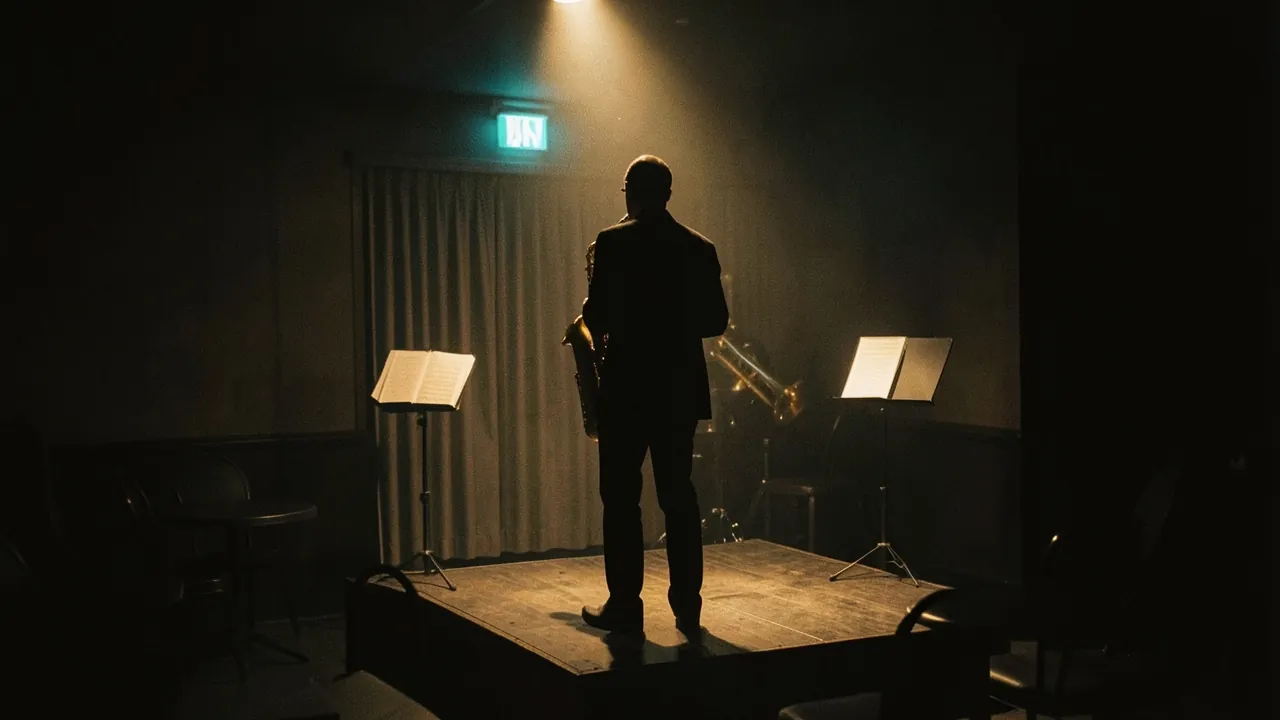
A saxophone case closed one evening in Amsterdam, and a sound that had spent decades filling dance halls and recording studios went quiet. Ben Webster, the American jazz musician and tenor saxophonist, died in the Dutch capital on September 20, 1973. Fifty-three years have passed since that moment, yet the subtonic breath of his horn still surfaces in conversations about swing and in the listening habits of anyone chasing the warmest possible tenor sound.
From piano to saxophone
Webster was born in Kansas City, Missouri, on March 27, 1909, but his first instruments had nothing to do with the saxophone. In school he studied violin and piano, and his neighbor Pete Johnson, the ragtime and boogie-woogie pianist, showed him how to play jazz on the keys. That early piano education shaped a musician whose phrasing would later feel percussive and melodic at once, a player who understood harmony from the inside before he ever held a reed.
His first public work came as a pianist with a jazz ensemble in Oklahoma, and he spent the late 1920s traveling across the American Southwest with local orchestras, mostly seated at the piano. Then, in 1929, a pivotal encounter in Albuquerque, New Mexico, rearranged everything. Webster met the family ensemble of William Young, and in that group he set aside the piano and picked up the saxophone.
A three-month apprenticeship
The shift was not gradual. Webster completed what was described as a full course of saxophone study under Young in three months, a compressed apprenticeship that pushed him into a new role. Soon he was taking engagements as a pianist, alto saxophonist, and tenor saxophonist across many ensembles and orchestras. Among the Youngs he also played alongside Lester Young, and he performed and recorded with Blanche Calloway.
The Kansas City orbit pulled him deeper into swing. Webster became a member of Bennie Moten's orchestra, working alongside Count Basie, Hot Lips Page, and Walter Page. Through the 1930s he moved through bands led by Willie Bryant, Benny Carter, Cab Calloway, Fletcher Henderson, Andy Kirk, and Teddy Wilson, absorbing the rhythmic drive and blues phrasing that would define his mature style. Each engagement added another layer to a sound already recognizably his own.
The Ellington years
In 1940 Webster joined Duke Ellington's orchestra as a soloist, and the collaboration produced some of the most striking tenor work of the era. He appeared on the recording of 'Cotton Tail,' a performance that showcased his blend of breathy intimacy and rhythmic attack. Webster himself pointed to Johnny Hodges, the alto saxophonist in Ellington's band, as the primary influence on his playing, a connection that deepened through their many shared sessions.
Gunther Schuller, writing in 1989, argued that Hodges's influence pulled Webster away from his original inspiration, Coleman Hawkins. That observation captures the tension in Webster's style: Hawkins gave him power and harmonic ambition, while Hodges drew him toward lyricism and a singing tone. Webster also became close with Jimmy Blanton and Billy Strayhorn during the Ellington years, relationships that placed him at the center of one of jazz's most fertile creative circles.
His discography sprawls across labels and continents. Webster recorded extensively with Duke Ellington, Billie Holiday, Johnny Hodges, and many others, and he performed in both the United States and Europe. The subtonic sound he developed, that whispering, velvety attack on the low register, became a reference point for tenor saxophonists of every generation that followed. His influence on the instrument is measured less in imitation than in the way players learned to breathe through a phrase.
His influence on the instrument is measured less in imitation than in the way players learned to breathe through a phrase.
Blue Note and other imprints kept his work in circulation long after the Amsterdam night of 1973, but the dates that matter most to listeners are the ones Webster himself lived through: 1909 in Kansas City, 1929 in Albuquerque, 1940 with Ellington. Fifty-three years after his death, the strange arithmetic of his career still holds: a violinist and pianist who became one of the defining tenor voices in swing, a man who needed only three months to change instruments and the rest of his life to change the sound of jazz.