
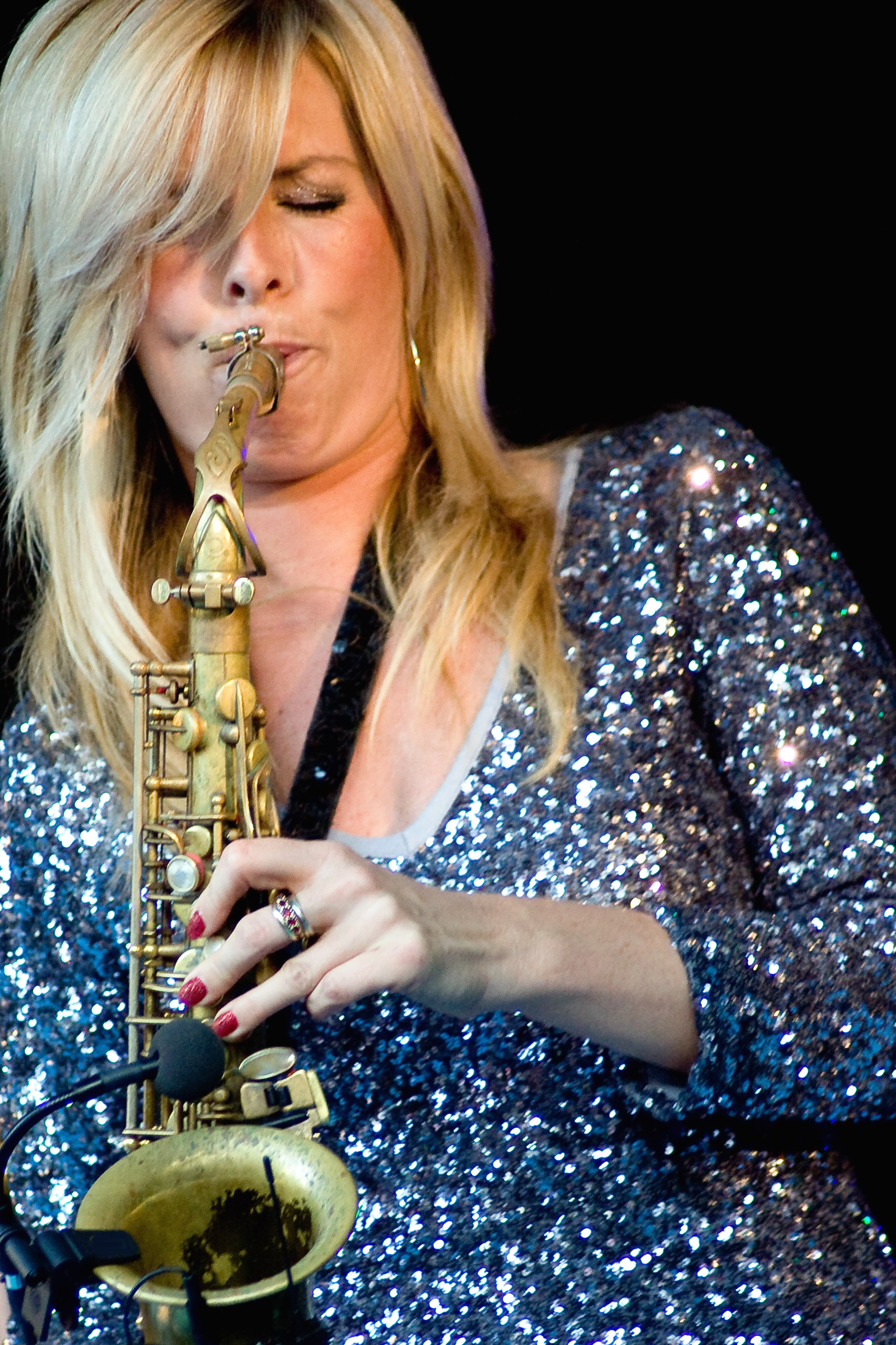
Six years old is a strange age to commit to a horn taller than your torso, but Candy Dulfer picked up the saxophone before most children learn to tie their shoes. The Dutch saxophonist celebrates her birthday on September 19, and the arc from that childhood start to Grammy nominations and Prince collaborations spans nearly six decades. Born in 1969, Dulfer grew up in a household where reeds and brass were furniture, not hobbies.
Her father, Hans Dulfer, was already a fixture on the Dutch jazz scene, which meant young Candy absorbed phrasing and stagecraft before she could read music fluently. By fourteen she was performing with Funky Stuff, a group that gave her early exposure to live audiences and the discipline of horn-led funk. That apprenticeship would shape the bright, melodic tone that collectors and critics still associate with her playing.
The Saxuality breakthrough
The breakthrough arrived in 1989 with Saxuality, a debut album that sold more than a million copies and earned a Grammy nomination. Arista Records released the record, and those early Arista pressings remain the ones vinyl collectors seek out first. The album's blend of funk, soul, and pop saxophone put Dulfer in a lane few women occupied at the time, and it arrived just as smooth jazz and crossover funk were peaking commercially.
Prince heard something in that sound and pulled Dulfer into his orbit. She contributed to the Graffiti Bridge sessions and joined him onstage, a stamp of approval that instantly expanded her audience beyond jazz clubs. Around the same period, Dulfer recorded Lily Was Here with David A. Stewart, a collaboration that became an international hit and climbed charts across Europe. The track's cinematic hook made her saxophone recognizable to millions who had never bought a jazz record.
The track's cinematic hook made her saxophone recognizable to millions who had never bought a jazz record.
A decade of collaborations
The 1990s turned Dulfer into one of the most visible female saxophonists on the planet. She toured relentlessly, appeared at jazz festivals worldwide, and built a reputation for an energetic stage manner that defied the seated, restrained image of the instrument. Collaborations with Van Morrison, Pink Floyd, Aretha Franklin, and Maceo Parker followed, each adding a different texture to her catalog while reinforcing her versatility.
Dulfer's style has often drawn comparisons to David Sanborn, though her phrasing leans harder into funk and danceable grooves. By the time she had released more than ten studio albums, the saxophonist had also become a fixture on television and in film. She played herself in Batman Returns, and her music began appearing in movie soundtracks, including the score for Girl with a Pearl Earring.
Formal recognition and honors
Recognition came in formal forms too. Dulfer received an Edison Award in the Netherlands and was later inducted into the Dutch Music Hall of Fame. She performed at the Grammy ceremony and appeared on the cover of DownBeat, a magazine that rarely reserved its front page for crossover artists. These honors placed her work in conversation with both jazz tradition and mainstream pop success.
Family remained central to her story. In 2013, Dulfer released Dulfer & Dulfer with her father, a record that paid tribute to the man who had first put a saxophone in her hands. The album arrived on BMG, a label that also carried earlier Dulfer titles, and it offered a rare duet dynamic between two generations of Dutch saxophonists. Beyond recording, she works as an ambassador for music education in the Netherlands.
Now 57, Dulfer continues to tour and record, moving between funk-jazz festivals and studio projects with the same energy that marked her teenage years. Her early Arista vinyl, the Prince-era collaborations, and the Lily Was Here-era singles form a distinct collecting arc for those chasing the sound of crossover jazz saxophone from 1989 into the 1990s. The girl who started at six never really stopped blowing.