
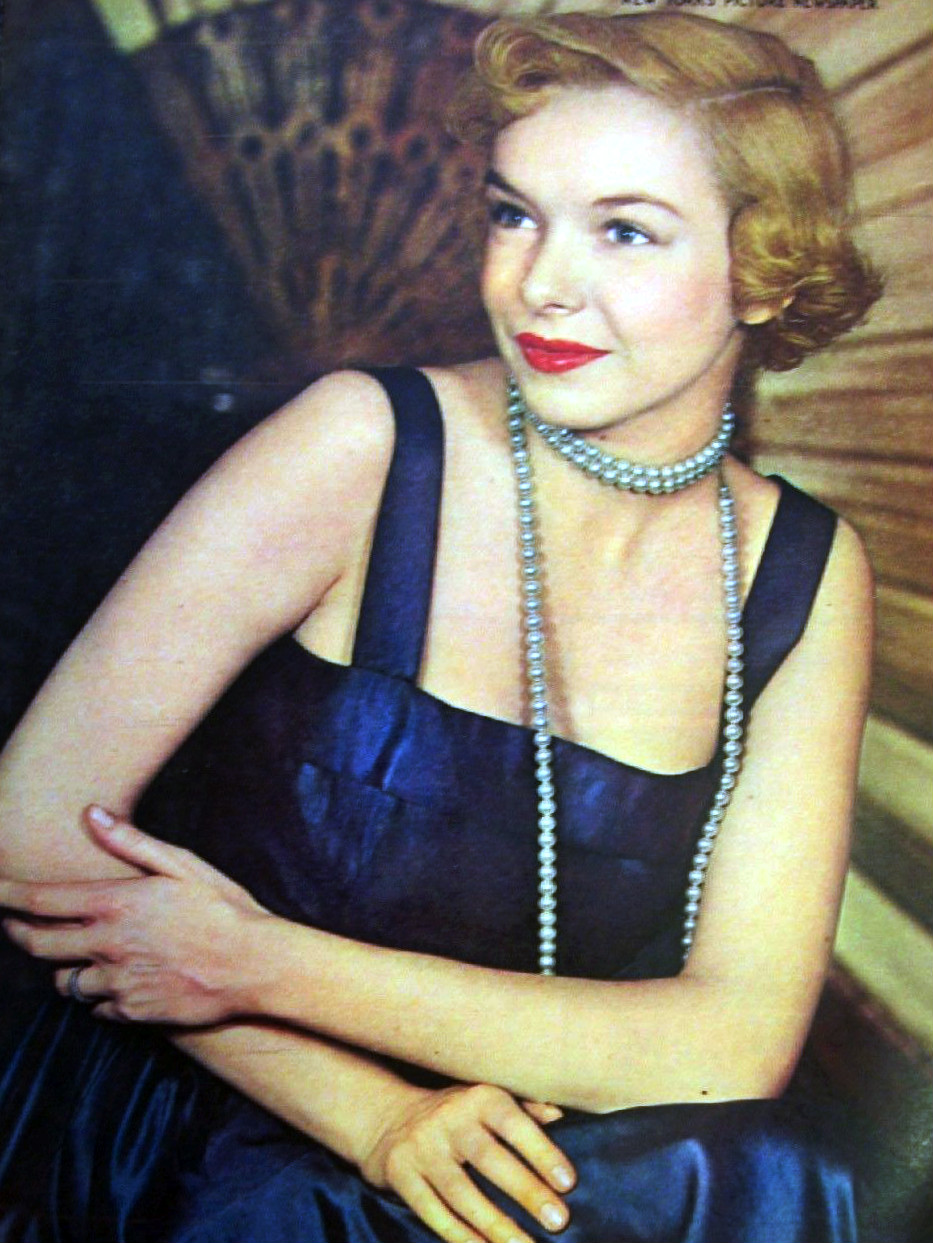
On a July day in Los Angeles, a baby girl was born to a family that already had music in its walls. Her mother was a concert pianist, and her father ran an oil company, so the household had both discipline and money. They named her Dolores Mary Loehr, but the world would soon know her as Diana Lynn. From the start, she was treated as a child wonder, the kind of kid who sits at a piano and makes adults stop talking.
From piano prodigy to Paramount contract
The piano came into her life when she was four, and by twelve she was performing with the Los Angeles Junior Symphony. That early training was not a hobby; it was the engine of her first break. In 1939 she appeared in the film They Shall Have Music, playing the piano on screen. Paramount Pictures saw something in her and gave her a new name, Diana Lynn, then started handing her roles that matched her bright, quick personality.
The studio system knew how to build a star, and by 1942 a magazine for parents was calling her the most talented young actress around. That same year she shared comic scenes with Ginger Rogers in The Major and the Minor, and audiences liked what they saw. Two years later she was in Preston Sturges's The Miracle of Morgan's Creek, a film that pushed her further into the public eye. She was no longer just a girl at a keyboard; she was a working actress with a growing list of credits.
Box-office hits with Martin and Lewis
Her biggest box-office moment came with the comedy My Friend Irma, where she played opposite Marie Wilson and two newcomers named Dean Martin and Jerry Lewis. The film was a hit, and she returned for the sequel a year later. Around the same time she made Bedtime for Bonzo with Ronald Reagan, playing the female lead in a story about a professor and a chimpanzee. That film later became a punchline in American politics, but at the time it was simply another job for a busy young actress.
Music never left her. In 1947 she released a three-record album of her piano playing, with pieces that included Mozart's Rondo, the song Laura, and the standard Body and Soul. She also recorded at least one single for Capitol Records with Paul Weston's orchestra. This was not a side project; it was the other half of her identity. Hollywood had made her a face, but the piano had made her a person first.
By the late 1960s she was living a different kind of life. In 1968 she let a friend, Mart Crowley, stay at her house while she was out of town. Over five weeks, Crowley wrote most of his play The Boys in the Band, a landmark work about gay life in America. That quiet act of hospitality—handing over her keys—became part of theatre history. She never asked for credit, and the play went on to change how audiences saw gay characters on stage.
That quiet act of hospitality—handing over her keys—became part of theatre history.
Her own story ended suddenly. In December 1971 she suffered a stroke and died in a New York hospital at the age of 45. The girl who had played Mozart for movie cameras, who had traded jokes with Martin and Lewis, who had once been called the most talented young actress in America, was gone before she could see what her friend's play would become. Her body was cremated, and the memorial services were held on both coasts, in New York and Beverly Hills.
Diana Lynn's career ran from 1939 to 1971, a span that covered the last golden years of the studio system and the first years of television. She was a prodigy, a comic actress, a recording pianist, and finally a quiet enabler of someone else's masterpiece. The girl born Dolores Loehr never stopped being the person who could sit down at a piano and make a room listen. That is the Diana Lynn worth remembering on her hundredth birthday.