
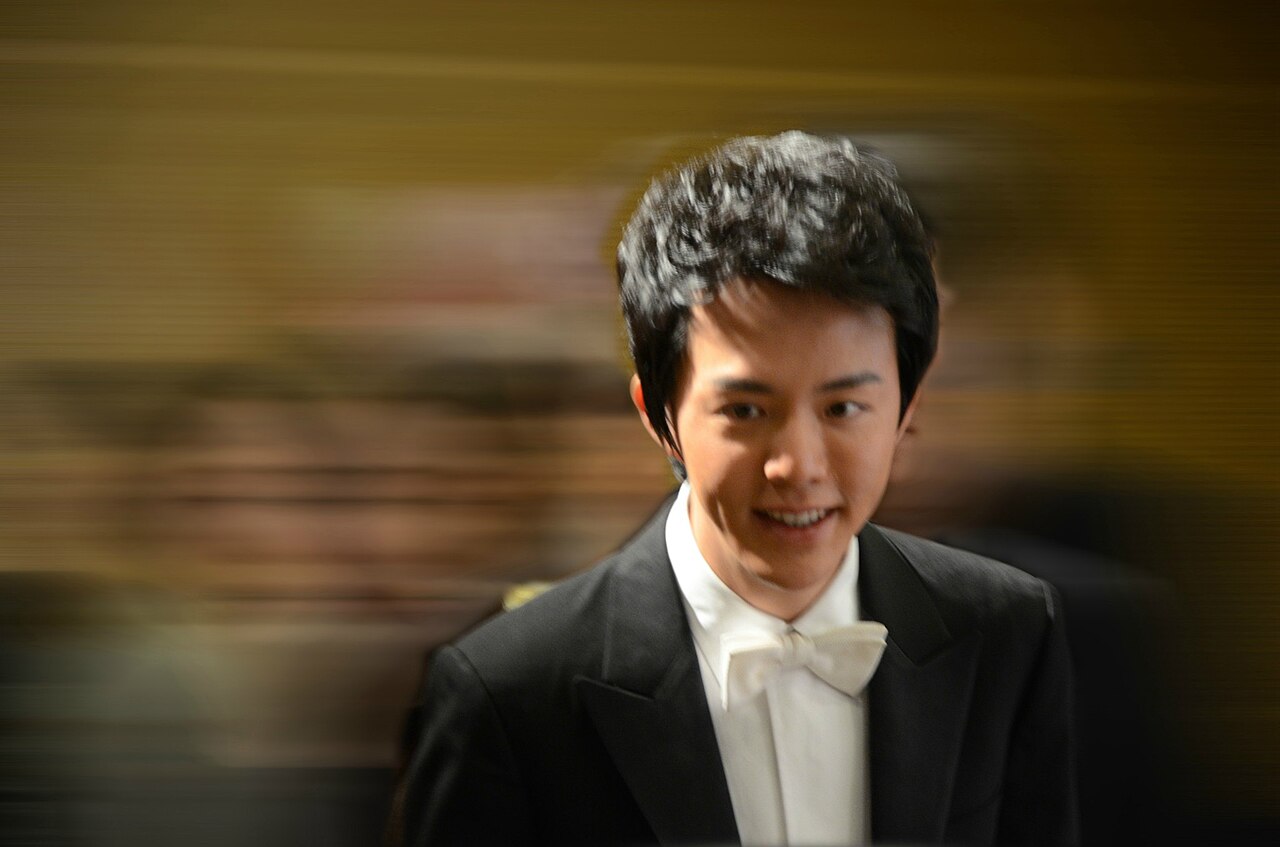
The first piano in the Li family home arrived only because a three-year-old in Chongqing would not stop staring at an accordion. Yundi Li was born in that industrial city on the Yangtze in 1982, to a father and mother who both worked at the local steel plant. There were no musicians in the family, no records of Chopin on the shelf, no reason to think the boy would ever leave the factory district. But the accordion led to a local teacher, and the accordion led to a children's competition, and by the time he was seven the instrument had changed: his parents bought a piano, and Yundi began lessons with a teacher named Wu Yong. He was born on October 7, 1982.
From steel town to Shenzhen
The real shift came when Wu Yong introduced the boy to Dan Zhaoyi, one of China's most respected piano pedagogues. For nine years Yundi studied with Dan, first privately and then at the Shenzhen Arts School, where he enrolled in 1994. The school's leadership did something unusual: they covered his travel costs for international competitions and built an individual study plan around him. That investment was a bet on a teenager from a steel town, and it paid off in ways nobody in Shenzhen could have predicted.
By the autumn of 2000, Yundi was eighteen and standing in Warsaw at the XIV International Chopin Piano Competition. The stakes were brutal. The jury had not awarded a first prize in fifteen years, not since Stanislav Bunin took it in 1985. They would rather give nothing than give it to the wrong pianist. Yundi played, and the silence broke. He won first prize outright, becoming the youngest winner in the competition's history and the first Chinese pianist ever to take the top award.
He won first prize outright, becoming the youngest winner in the competition's history and the first Chinese pianist ever to take the top award.
Signing with Deutsche Grammophon
The win did not stay in Warsaw. Within a year, Yundi became the first Chinese pianist to sign a contract with Deutsche Grammophon, the German classical label that had recorded the greats for over a century. His debut album, Yundi Li: Chopin, came out in December 2001. In Japan it sold two hundred thousand copies. In Hong Kong it went platinum within ten days of release. A pianist from a non-musical family in Chongqing was suddenly moving units like a pop star.
The next few years were a blur of firsts. In 2003 he made his debut at Carnegie Hall in New York, playing at a concert marking the hundred and fiftieth anniversary of Steinway & Sons, the piano maker. That same year he released his second album, Yundi Li: Liszt, which The New York Times named one of the best classical discs of the year. The German Echo Klassik award followed for the same record, in the solo recording category. He was no longer a competition winner; he was a recording artist with a global audience.
What makes the story stick is not the list of achievements but the gap they crossed. The Li family had no musical traditions. The father and mother worked at a steel plant. The boy started on an accordion because that was what a three-year-old in Chongqing could get his hands on. And yet by the time he was in his early twenties, Yundi had done what no Chinese pianist had done before: won the Chopin, signed with the biggest classical label, and sold records in numbers that made the industry take notice.
The Chopin win in Warsaw remains the hinge. Before it, Yundi was a promising student from Shenzhen. After it, he was a name that could fill Carnegie Hall and sell two hundred thousand copies of a Chopin album in Japan. The jury's fifteen-year silence made the moment louder. When they finally gave the first prize again, they gave it to a teenager from a steel town who had started on an accordion and ended up changing what the classical world thought possible.