
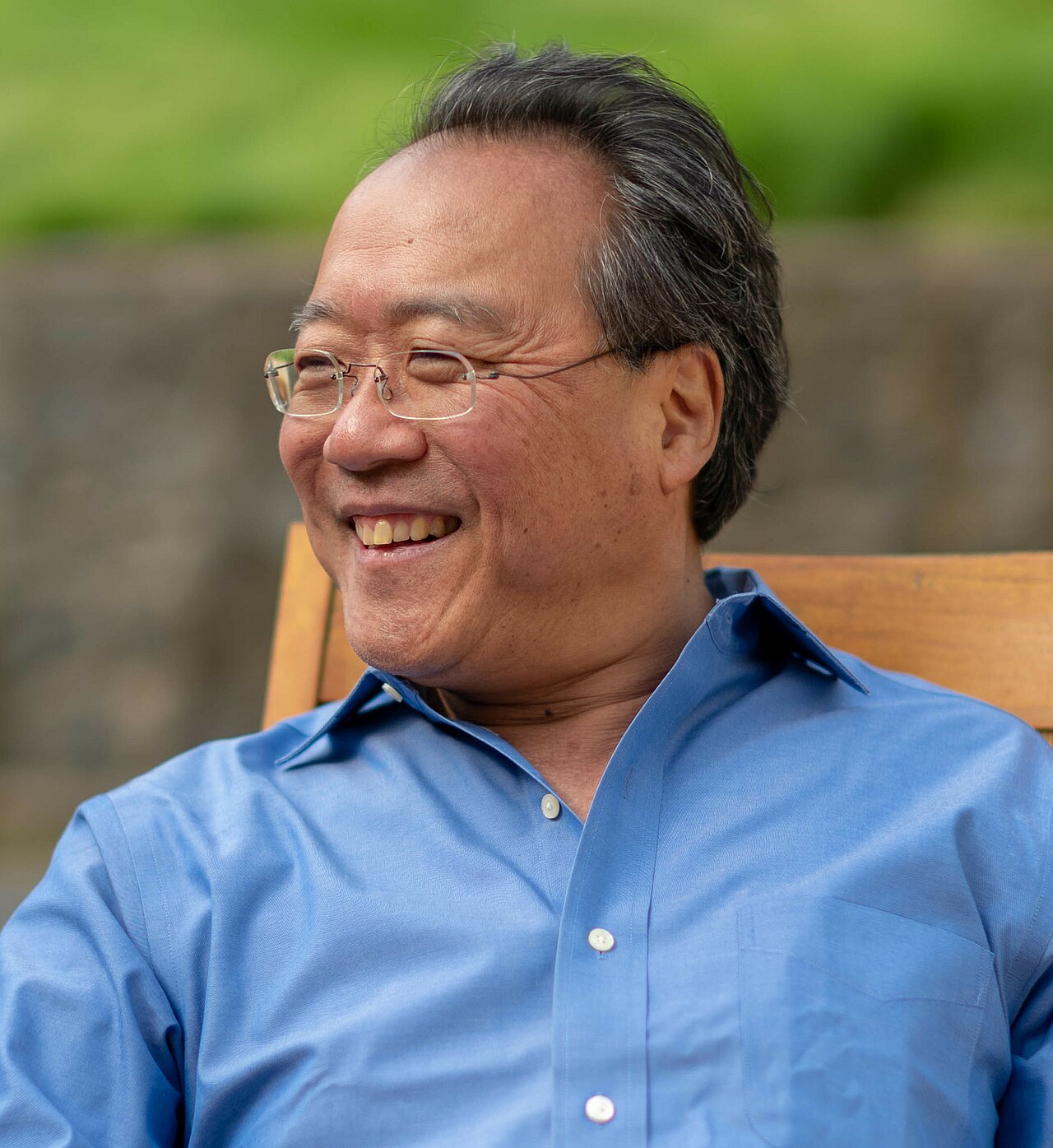
A four-year-old boy in Paris stands before a family friend's cello, an instrument almost as tall as he is. The boy is Yo-Yo Ma, and this moment in 1960 will set the course of his entire life. He has already tried the drums, the violin, the piano and the viola, but something about the deep, human voice of the cello holds him. He was born on October 7, 1955.
A musical family in France
Why would a child from a family of musicians choose this instrument above all others? His mother, Marina Lu, was a singer. His father, Ma Siao-jun, was a violinist, composer and music professor. Both parents had left China for France, and their home was filled with music and discipline. The cello he picked that year became his answer to that world.
Five was the age of his first public performance. By seven he had played for Presidents Dwight Eisenhower and John F. Kennedy. A year later he appeared on American television with his sister, performing in a concert led by Leonard Bernstein. These early years were a whirlwind of prodigy appearances, but the real work was taking shape quietly.
Juilliard and Marlboro training
In the early 1970s, Yo-Yo Ma studied at the Juilliard School with Leonard Rose, the great cello teacher. He also spent four summers at the Marlboro Music School, beginning in 1972, playing in the orchestra under Pablo Casals. There he learned something beyond solo brilliance: how to listen, how to breathe with other musicians, how to make an ensemble bigger than any one player.
The cello itself became part of the story. His main concert instrument is the Davidov cello, built by Antonio Stradivari in 1712. It had previously belonged to Jacqueline du Pré, who left it to him. An instrument like that carries history in its wood, and Yo-Yo Ma's job was to make that history speak in the present.
The Davidov cello and the taxi
Not every moment with a priceless cello was elegant. In 1999 he left the Davidov in a New York taxi. The city held its breath, and then the instrument came back undamaged. It was a reminder that even a master can have a very human moment of forgetfulness, and that the bond between player and cello is built on care as much as talent.
The child who chose the cello in Paris grew into a musician who wanted the instrument to connect worlds. He formed the Silk Road Ensemble, bringing together musicians from countries historically linked by the Silk Road trade routes. The cello became a meeting place, an instrument that could hold Chinese folk melodies, Western classical forms, and the sounds of many cultures in one conversation.
That ensemble was not a side project but a philosophy. Yo-Yo Ma had won 18 Grammy Awards and played the most prestigious concert halls, yet he kept returning to the idea that music is a form of listening across borders. The Silk Road Ensemble's recordings on Sony Classical became documents of that belief: that a cellist from Boston could sit with musicians from Central Asia and the Middle East and find a shared rhythm.
The boy who chose the cello in 1960 is now a man whose instrument has traveled from the White House to taxi cabs to the wild landscapes of America. What began as a four-year-old's preference became a lifelong argument that music is not a possession but a bridge. And it all started with a cello almost too big to hold.
What began as a four-year-old's preference became a lifelong argument that music is not a possession but a bridge.