
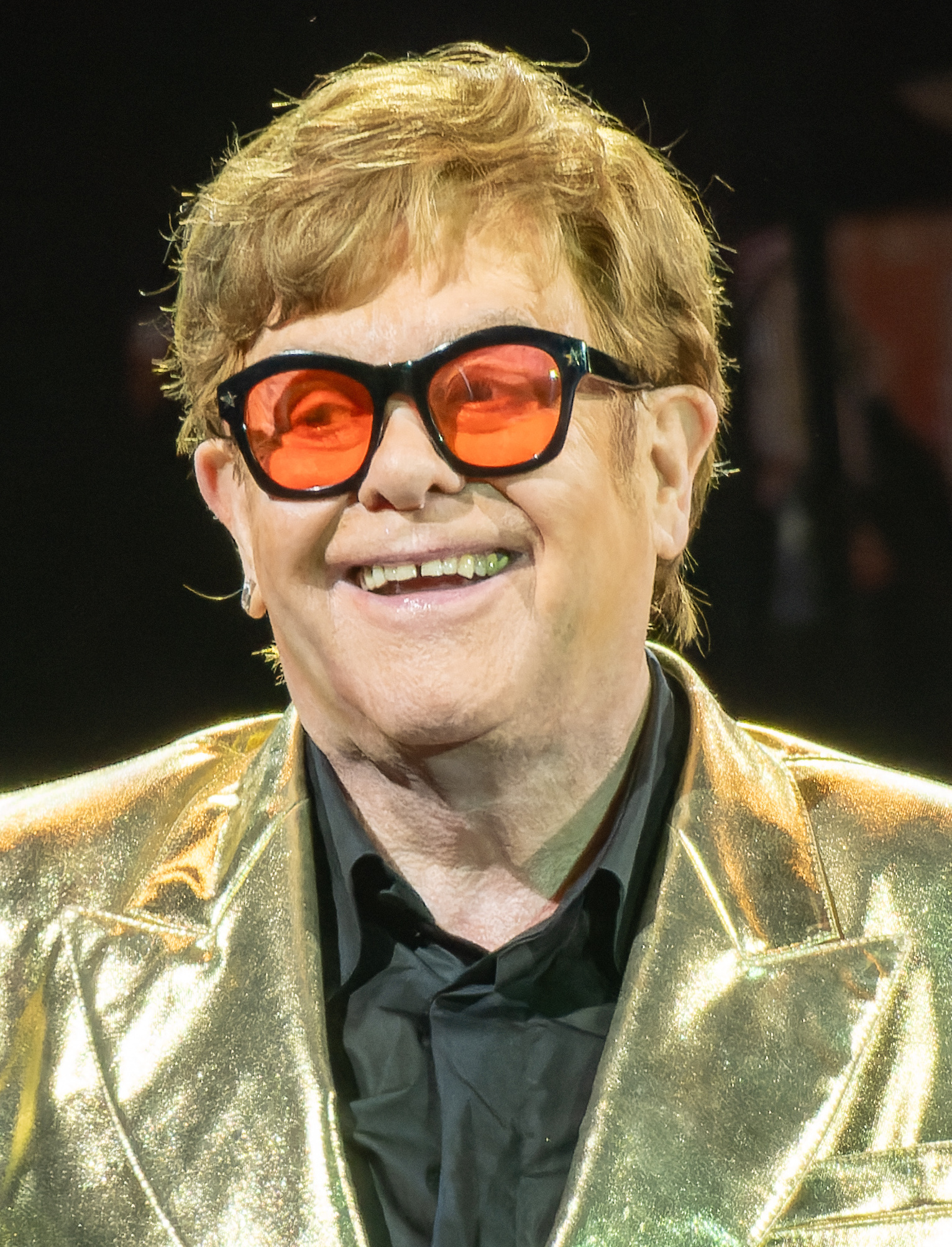
The newsroom phrase "date of death" never quite fit the autumn of 1997. On September 20 of that year, the world marked a different kind of loss, while Elton John stood at the center of a global farewell for Princess Diana. His rewritten single 'Candle In The Wind 97' had already spent six weeks at number one in the UK, turning a private grief into the best-selling single in recorded history. The man born Reginald Kenneth Dwight in Pinner, Middlesex, on March 25, 1947, was not gone. The date instead became a strange punctuation mark in a career that had already sold over 300 million records.
The man born Reginald Kenneth Dwight in Pinner, Middlesex, on March 25, 1947, was not gone.
From scholarship to Bluesology
The path to that moment began with a scholarship. At age 11, the boy who would become Elton John won a place at the Royal Academy of Music, a formal training ground for a future built on instinct and excess. By 1962, he and his friends had formed the blues group Bluesology. The name itself was a portmanteau of blues and the suffix from John Baldry's band, a nod to the saxophonist Elton Dean and vocalist Long John Baldry. In 1967, he answered an advertisement in New Musical Express and received a batch of lyrics from Bernie Taupin. That same year he took the stage name Elton John, and by 1968 the pair had joined DJM Records as staff songwriters.
The catalog began quietly. Empty Sky arrived in 1969, a debut that barely hinted at the machinery being assembled. The self-titled Elton John followed in 1970, carrying 'Your Song' to number seven in the UK and number eight in the US. His first American concert happened on August 25, 1970, at the Troubadour in Los Angeles, a venue that turned a shy pianist into a spectacle. Tumbleweed Connection, released in October 1970, leaned into a conceptual Americana that had little to do with his English roots. By 1971, Madman Across the Water produced 'Levon' and 'Tiny Dancer', two singles that would outlive their chart positions.
Conquering America with seven number ones
The American takeover was methodical. Honky Château in 1972 became his first number one album in the US, recorded at the Château d'Hérouville in France. Don't Shoot Me I'm Only the Piano Player followed in 1973, hitting number one in both the UK and the US, with 'Crocodile Rock' giving him his first Billboard Hot 100 chart-topper. That October, the double album Goodbye Yellow Brick Road topped charts on both sides of the Atlantic. Seven consecutive number one albums in the US would eventually follow, a run that made him the most successful solo artist in Billboard chart history.
The strangest turn came with a football club. In 1976, Elton John became chairman of Watford, a position he held until 1987 and then again from 1997 to 2002. The role was not a vanity project; he poured money and attention into the team while his personal life unravelled. From the late 1970s through the end of the 1980s, he struggled with severe drug and alcohol addiction. A marriage to Renate Blauel in 1984 ended in divorce by 1988. The sober life began in 1990, and two years later he founded the Elton John AIDS Foundation, shifting his public identity from hitmaker to institution.
Beyond music: film and theater
The catalog kept expanding in directions no one predicted. In 1994, he wrote the music for The Lion King, a Disney project that earned him an Oscar. The musical Aida arrived in 2000, followed by Billy Elliot in 2005. By then he had collected five Grammys, two Oscars, an Emmy, a Tony, two Golden Globes, and a Laurence Olivier Award. The knighthood came in 1998 for services to music and charity. His induction into the Songwriters Hall of Fame and the Rock and Roll Hall of Fame confirmed what the sales figures already suggested: the man who once answered a newspaper ad had become a genre unto himself.
The 1997 moment remains the strangest intersection of grief and commerce. 'Something About The Way You Look Tonight' was released as a double A-side with 'Candle In The Wind 97', a rewritten version of the 1974 hit originally dedicated to Marilyn Monroe. The new lyrics turned the song toward Princess Diana, and the single became the fastest-selling record in history. The date September 20, 1997, marked not an end but a peak: a pop star mourning a princess while his own catalog continued to move in quantities that defied the digital transition already underway.
The later years read like a victory lap with a stopwatch. The Farewell Yellow Brick Road tour, running from 2018 to 2023, became the highest-grossing tour in history at that time. The biopic Rocketman arrived in 2019, starring Taron Egerton, and reintroduced the catalog to an audience born after the Troubadour shows. In 2005, Elton John entered a civil partnership with David Furnish, and they married in 2014. The nine number one singles in the UK and the US, the seven consecutive chart-topping albums, the 300 million records sold: the numbers kept arriving long after the obituaries should have stopped mattering.
Rolling Stone placed him on lists of the greatest artists, singers, and songwriters of all time, a triple crown few performers manage. The catalog from DJM Records through the Rocket label era remains in constant repress, with Goodbye Yellow Brick Road and Honky Château among the most reissued titles in pop vinyl. A collector flipping through bins in 2026 will find pressings that span 79 years since his birth, 64 years since Bluesology, and 29 years since that strange September day. The date of death never arrived. The catalog simply kept living, one reissue at a time.