
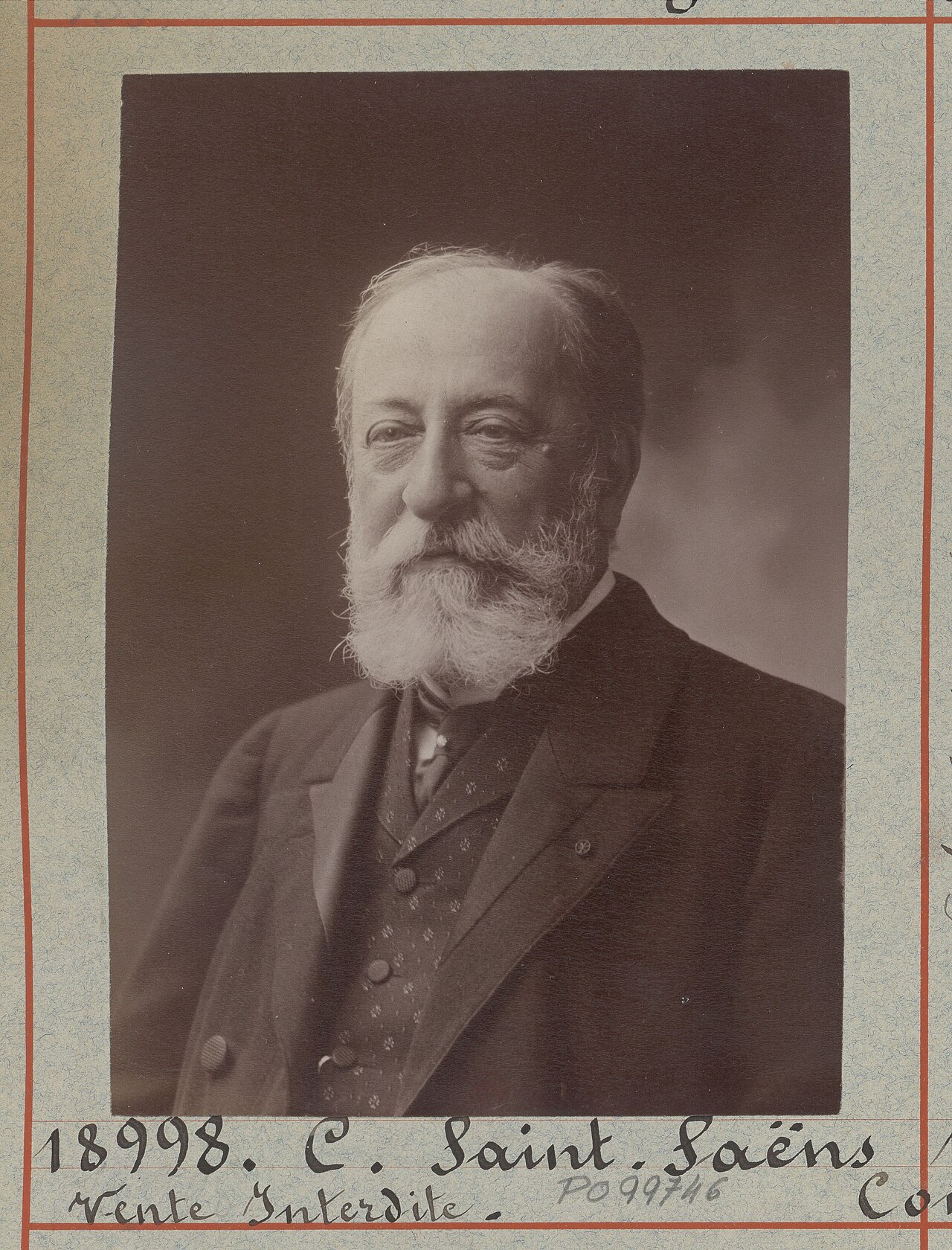
On a Paris stage, a ten-year-old played two demanding works: Mozart's concerto K450 and a Beethoven concerto. The boy was Camille Saint-Saëns, born in Paris on 9 October 1835. He played both pieces from memory, which was unusual for the time. The official debut was a formal public occasion, not a family recital. It marked the moment when a child with an unusual preparation stepped into public musical life. The two works came from composers whose names set a high bar for any pianist.
Family and first piano lessons
His father, a civil servant at the Ministry of the Interior, died of tuberculosis two months after Camille was born. The boy was raised by his mother and by his great-aunt Charlotte Masson, who introduced him to the piano. Saint-Saëns showed absolute pitch as a small child. His earliest composition was a romance called "Le Soir". That home training gave him something to show when formal lessons began. The household had already built the foundation before professional teachers took over.
Saint-Saëns studied piano with Camille Stamaty. Stamaty introduced him to the organist Alexandre Boëly. Through Boëly, Saint-Saëns came to love the music of Bach, which was little known in France at the time. For a French child, Bach was an unusual early companion. The training behind the Paris debut went beyond piano technique; it included a composer's language that many French listeners rarely heard. Bach was not yet a common reference in Paris, so the connection was striking for a young pianist.
Conservatoire training and the organ
At thirteen, Saint-Saëns entered the Paris Conservatoire in 1848. His organ teacher there was, in Saint-Saëns's judgment, a mediocre organist but an excellent teacher. The Conservatoire gave him a formal route into the instrument Boëly had opened up for him. He entered that institution not as a vague talent, but as a boy with a public debut already behind him. He left it as a trained church organist, ready for a paid post in a city that had already seen what he could do. The boy who had once needed no score on a concert stage was now being shaped for a profession.
In 1853 he took the post of organist at a Paris church with a very large parish. The parish was large enough to give the organist a good income from weddings and funerals. Saint-Saëns was no longer a boy prodigy giving a concert; he was a working church musician. The post kept the organ at the centre of his daily life at exactly the moment his public reputation was forming. He had moved from the brilliance of a debut to the steady demands of a job. The income from weddings and funerals made the post practically valuable.
In 1858 he moved to the official church of the Empire. Ferenc Liszt heard him play the organ and called Saint-Saëns the greatest organist in the world. The verdict was a strong confirmation of what the boy at the Paris concert hall had shown. It also showed that the Parisian child's early promise had taken on an international dimension. That reputation rested on the organ, the instrument that had shaped his daily work in Paris parishes. The organ loft of the Empire's church was a public stage of a different order.
Ferenc Liszt heard him play the organ and called Saint-Saëns the greatest organist in the world.
In 1861 Saint-Saëns became a teacher at the Niedermeyer school in Paris, where his student was Gabriel Fauré. It was the same city that had produced his own early training, and now he stood on the other side of the lesson. Fauré remembered the relationship with an almost filial affection and immense gratitude. The child once taught by Charlotte Masson had become the older musician from whom another student learned. What began with a great-aunt's lessons had reached a new generation of French music.